![GreenPort[PortStrategy]](https://www.portstrategy.com/greenport/wp-content/uploads/sites/4/2026/09/GreenPortPortStrategy.svg)
EXCLUSIVE: Building port resilience through effective berthing systems
In this article, Richard Hepworth, president of Trelleborg Marine & Infrastructure, shares his insight with Greenport on the touchpoints across berthing systems that can impact ports’ operations and efficiency.
Fender systems are critical for safe, efficient and sustainable port operations. Despite their unassuming appearance, the failure of a single fender can have wide-reaching implications.
That is why taking the time and attention to develop an effective fender system is so important, especially if it is to perform for its entire lifespan which should be around 15 to 20 years.
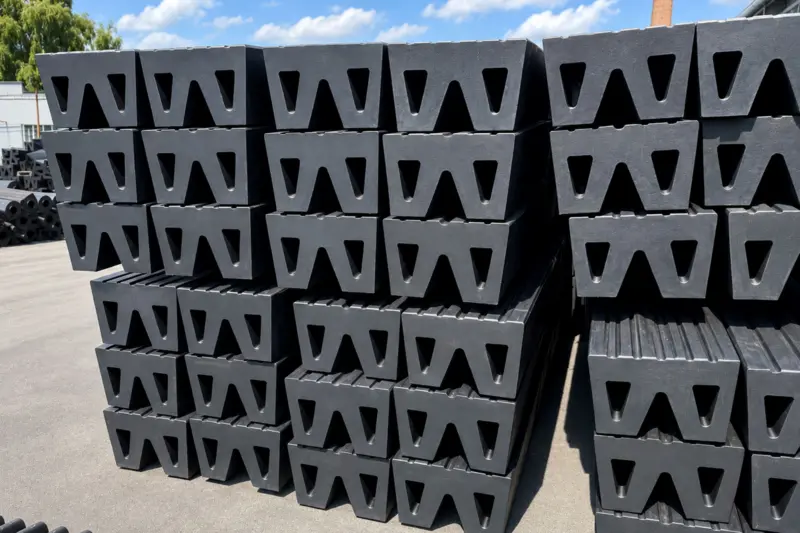
There are several factors to be considered that might not be immediately obvious. For example, the rubber parts – the energy absorbers – need to be made of high-quality rubber that must be proven and tested to work for extended periods. The accompanying steel parts should also be designed to help properly absorb energy and spread the load endured by the fender. Environmental conditions, such as weather and climate have to be taken into account.
A robust fender system must be designed to meet the specific requirements of each port to withstand these various environmental conditions, while considering the design of vessels that will come into contact with the fenders. Regardless of environmental or operational exposure, prioritising the maintenance of fender systems is also an underlying part of avoiding potential disruptions in the future.
Quality assurance
We’ve been working hard for the last ten years to raise the standards of fender quality and set new industry benchmarks for fender systems.
This has been a priority, especially as we’ve seen fenders becoming commoditised. The emergence of low-cost suppliers in the market who aren’t experts in the design of fender systems, has made it more crucial to address this issue.
Although these products can look identical to premium fender systems, they are often not made of the right materials. As a result, they are sold at a significantly lower cost, sometimes even at half the usual price. This is a false economy as poor-quality fenders will inevitably fail to sustain their intended lifetime.
When this happens, berths are rendered inactive, which can lead to lost revenue, as well as inevitable additional costs to repair or upgrade the fender system to restore its functionality.
A sustainability issue also arises due to port operators replacing fenders that should last for 20 years, two or three times during that period. The reality is that it’s far more sustainable to install a product that’s durable and lasts for an extended period of time.
That’s why we believe that raising industry standards is critical. Fenders need to be designed and tested correctly.
The World Association for Waterborne Transport Infrastructure (PIANC) set guidelines for the design of marine fender systems, but they have become outdated over time.
Trelleborg has been working closely with PIANC to develop a new set of guidelines which were published in March 2024.
These provide guidance on the design, manufacture, and testing of fender systems to ensure sufficiently safe installation and operation on both vessel and berth, with optimal TCO.
Docking and mooring
Meanwhile, and in addition to fender systems, Trelleborg has been adding to and perfecting its suite of products that work at the interface between the ship and the quay wall, including docking and mooring systems.
We also have control systems and safety systems, which, especially for LNG projects, help to ensure the safe and efficient transfer of LNG on or off the ship and onto the jetty – or vice versa.
There are also navigation guidance and piloting systems which very accurately guide ships into the port and ultimately onto the cable.
For the LNG sector, we’re providing a whole package of products. A proprietary berthing aid system offers very accurate positioning of the ship over the last 200-300 metres, using laser or GPS type monitoring and a large display board on the quayside.
More recently, on a recent project for Höegh LNG’s FSRU Liquified Natural Gas LNG terminal in Wilhelmshaven, we’ve provided our SafePilot solution. This navigation and piloting solution, boasting accuracy to within one centimetre, assists the pilot of the ship in guiding the ship into port. They can then guide the vessel alongside the quay wall and line the ship up accurately with the LNG pipeline envelope outlet manifold.
We offer a full package of products centred around safety and efficiency. LNG terminals have a safety requirement that requires quick release systems in operation. Ships are moored with their nine or 12 mooring lines onto quick release hooks so that if there is a potential problem with the ship berthing, the mooring lines can be released quickly, enabling the ship to disembark swiftly.
This system includes a load monitoring system, which measures loads to ensure that mooring lines are not over-tensioned, which is a crucial safety feature.
Sustainability focus
For Trelleborg, there are two main aspects to sustainability when it comes to our products and solutions. Firstly, we take pride in the way we develop our operations to be as sustainable as possible. For example, our factories and production methods now use renewable energy to reduce our CO2 footprint.
When it comes to producing rubber fenders, sustainability plays a key role in how we source our rubber and approach our manufacturing processes. Going forward, we will be placing greater emphasis on circularity to re-use materials where we can to minimise waste. By replacing traditional materials with greener alternatives as well as using more recycled materials in the future, we hope to continuously improve our environmental performance.
While we strive to improve our internal practices, we’re also committed to extending this approach to our product offering, so that our customers can meet their own sustainability goals. As well as being mindful of the sourcing of our products, we also look at environmental implications more broadly. For example, our SafePilot navigation and piloting system not only make operations safer, they are also designed to improve the efficiency of vessels coming into ports.
As ports strive to become more efficient, competitive, and sustainable, many are turning to smart systems to drive these advancements. As a reflection, we are digitalising many of our processes and for the last four or five years we’ve been working on a solution called SmartPort. Having access to data plays an important role in the seamless functionality of our products. By using data insights, we can improve our customers’ experience. For example, we’re using sensors to collect data ethically and gaining insights, which is then shared with customers to help make their operations more efficient.
In addition, data allows us to offer lots of information to the customer about how long a fender is going to last or whether there’s an issue with a fendering system, or when a mooring system needs to be serviced.
Challenges and opportunities
Vessels have been getting larger for some time, reflecting the demands of maritime commerce.
The industry is experiencing a significant shift with container ship capacity rising from around 16,000 TEU to 24,000 TEU. This is requiring more ports to upgrade their facilities to accommodate larger ships and digitalisation is often an integral part of this.
Within this, we’re passionate about improving port safety. Data shared in early 2023 by ship vetting company Rightship, highlighted that half of maritime incidents occur in ports and terminals. This includes while at berth, waiting at anchorage, and transiting harbours. We recognise that accidents frequently occur due to mooring line failures which is why we developed our Automated Mooring System which uses vacuum systems instead. Not only does it eliminate the need for mooring lines, but it can also speed up the process from one to two hours to 90 seconds, consequently minimising idling time, reducing fuel usage and costs and emissions.
The move away from traditional processes can be challenging as it is with any technology. But we’re starting to see increasing uptake of this new mooring system. We’ve seen particular traction in Scandinavia and other places in the Baltic Sea, where ports are experiencing the advantageous impact on their operations.
We also see big opportunities for growth in the navigation and piloting market for vessel positioning, whether that’s in port or helping ships come into the port.
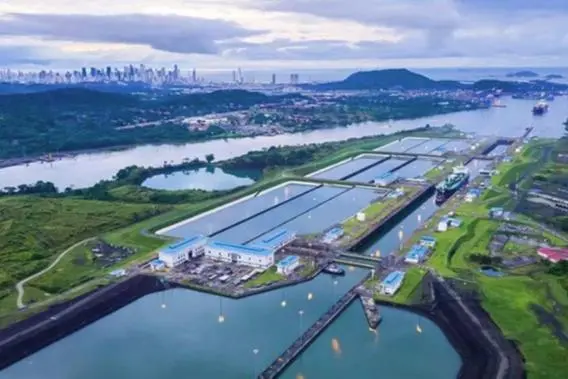
One of the larger projects we’ve been working on in the last year involves new piloting regulations, coming into effect in the Panama Canal in October 2023. The regulations require all Neo Panamax ships to be fitted with permanent piloting hardware to improve the safety and efficiency of transiting vessels. Previously, the piloting system was carried on by the marine pilot when boarding the ship. To facilitate compliance with these regulations, we launched SafePilot P3, which was developed based on our experience of working closely with the Panama Canal Authority, and it has now been installed on more than 1000 ships.
Looking to the future, the growth of marine operations – and in turn, our own business – is going to be driven by our ability to adapt systems to support the use of cleaner energy. The use of new, alternative marine fuels such as methanol, ammonia, and hydrogen will create new customer requirements and open up new markets. Based on our experience, we’re already looking ahead at what these might be and getting ready to respond
Related Articles
 ENERGY & TECHNOLOGY GREENPORT
 ENERGY & TECHNOLOGY GREENPORT
 PRODUCTS & SERVICES GREENPORT