![GreenPort[PortStrategy]](https://www.portstrategy.com/greenport/wp-content/uploads/sites/4/2026/09/GreenPortPortStrategy.svg)

EXCLUSIVE: Digital safety as a key driver of sustainability
Stephan Trauth managing director Mi-Jack Europe and member of the Board of Directors of the Port Equipment Manufacturers Association (PEMA) on how digital intelligence can achieve true energy efficiency.
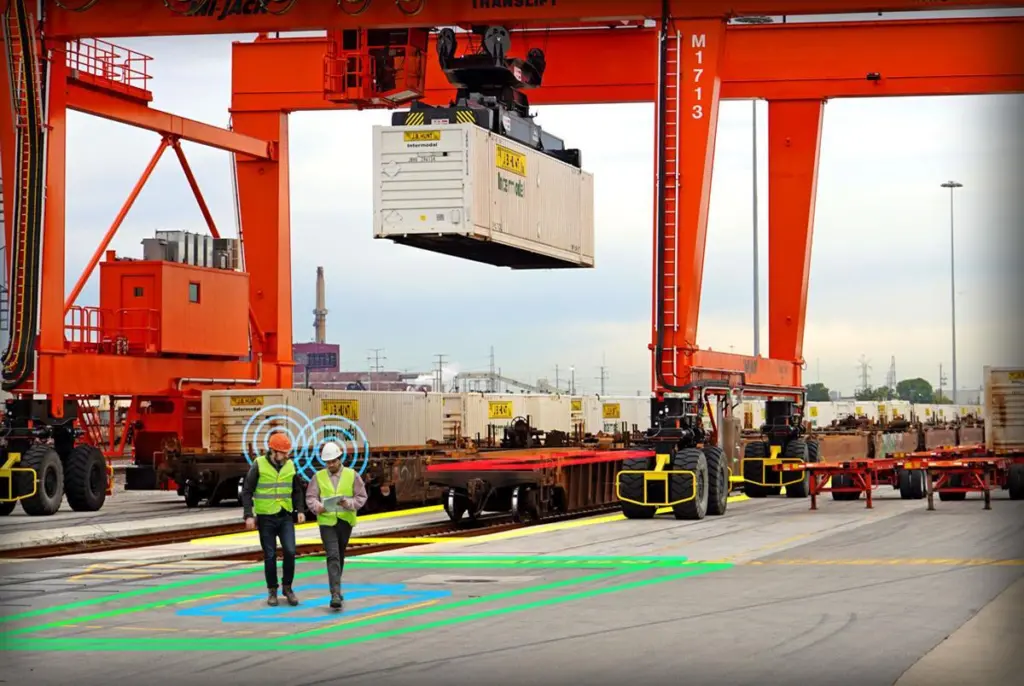
The maritime logistics sector is undergoing one of the most significant transformation phases in its history. Ports and terminals are under pressure to reduce emissions, protect their workforce and manage rising throughput at the same time.
While the industry often focuses on electrification and alternative energy sources, another lever is frequently underestimated: Digital transparency and process intelligence. These elements form the invisible infrastructure that makes true energy efficiency possible.
Real-time visibility
Container terminals operate in environments where people, cranes, vehicles and stacking processes interact continuously.
Without real-time visibility, operations slow down, safety risks increase and inefficient movements multiply.
These factors not only impact productivity but also contribute directly to higher energy consumption and emissions. Modern digital technologies address these challenges by providing a continuously updated view of personnel, equipment and container activity across the terminal.
One of the most persistent operational challenges is the interaction between people and machines. Traditional safety measures often rely on stopping equipment whenever personnel enter critical areas – effective but costly in terms of downtime and energy use.
Technologies that enable precise real-time tracking of personnel and equipment, along with dynamic safety zones and automated movement adjustments, allow safer coexistence without repeatedly bringing operations to a halt.
This reduces unnecessary interruptions while maintaining a high standard of protection for on-site workers.
Fleet management presents another avenue for efficiency gains. Vehicles can only operate efficiently when their condition and utilisation are understood. Real-time monitoring of parameters such as fuel levels, engine status, temperature and idle time enables early detection of issues and supports more accurate planning of maintenance and deployment.
Reducing avoidable idle time and preventing breakdowns contribute directly to lower energy consumption and more stable operations overall.
Unified picture
A further step towards sustainable terminal operations is the availability of a unified operational picture. Digital twin environments bring together real-time data from personnel, equipment, and containers into a single visual interface. This allows operators to analyse ongoing activities, trace events retrospectively and test process changes before implementing them in the real world.
Enhanced situational awareness not only improves day-to-day decision-making but also strengthens long-term planning and safety management.
Inventory accuracy is equally important for smooth operations. Technologies that automatically capture container positions and reconcile them with the terminal operating system help avoid misplaced units and unnecessary reshuffling. Better accuracy reduces equipment movements, shortens search times, and increases planning reliability – all of which support both operational efficiency and sustainability objectives.
Terminals that invest in real-time process transparency are better positioned for the challenges ahead. Understanding what happens on the ground, in detail and in the moment, is essential for moving containers not only more efficiently but also more sustainably.
Mi-Jack Europe GmbH, part of the Lanco Group of Companies, provides advanced digital and operational technology solutions for container terminals across the world. Its portfolio includes real-time tracking, workforce safety systems, fleet and inventory management tools and digital twin technology.
These solutions support operators in improving situational awareness, reducing risk and enabling more efficient, resilient and sustainable terminal operations.
Related Articles
 ENERGY & TECHNOLOGY GREENPORT
 ENERGY & TECHNOLOGY GREENPORT
 PRODUCTS & SERVICES GREENPORT