![GreenPort[PortStrategy]](https://www.portstrategy.com/greenport/wp-content/uploads/sites/4/2026/09/GreenPortPortStrategy.svg)


EXCLUSIVE: Digitising the way to safer, smarter ports
For ports and terminals under increasing pressure to improve efficiency and reduce emissions, digitalising induction and onboarding processes is emerging as a practical first step.
Paul Martin, director at Intasite, has seen first-hand how outdated manual systems continue to hinder operations across industrial sites.
He says that despite advances in automation elsewhere, many ports still rely on paper-based inductions, manual record keeping and time-consuming gatehouse processes. The result is inefficiency, congestion and unnecessary emissions.
A legacy problem at the gate
The origins of Intasite lie in lived experience. Mr Martin, who has spent more than three decades producing industrial content, encountered the inefficiencies of port inductions first-hand while working across sites in Teesside and beyond.
Historically, access to industrial sites required physical attendance at a gatehouse, often involving lengthy inductions delivered via DVD, VHS or paper documentation. These processes were not only time-consuming but inconsistent and difficult to manage.
At busy port environments, the consequences were magnified. Long queues of hauliers, administrative bottlenecks and language barriers created friction at the point of entry, while engines idled and productivity stalled.
Mr Martin recalls: “You’d have several gatehouses, several entrances and then of course you’ve got a big line of traffic, drivers, HGVs, bottleneck, everyone waiting at the gatehouse now.”
A digital solution
Recognising the inefficiencies, Intasite was developed as a specialist platform designed to digitise and streamline the induction process.
At its core, the system enables users, whether drivers, contractors or visitors, to complete site-specific inductions remotely before arrival.
Content is tailored to the user group and delivered through interactive video modules, ensuring comprehension through validation checkpoints.
“By doing it online, obviously it relieves a fair few of the issues straight away,” Mr Martin explains. “Emissions wise, yes, frustration wise, among lots of other things.”
Once completed, users receive a QR code or digital credential, allowing site operators to verify compliance instantly. This removes the need for manual checks and significantly reduces congestion at access points.
Transforming inductions at scale
Intasite’s first major deployment was with PD Ports in 2015, where the platform was piloted to address persistent operational challenges.
Prior to implementation, PD Ports relied on a manual induction process that created delays, administrative burdens and poor user experience. Queues of hauliers at gatehouses were common, while tracking induction records proved difficult and inefficient.
Working in collaboration with PD Ports’ security and safety teams, Intasite developed a tailored digital solution. The platform delivered site-specific induction content across multiple locations, including Teesport and Hartlepool.
The inductions included vivid 2D and 3D animations that brought the site to life, depicting access routes, one-way systems, and speed limits in a way that was easy to digest. This resulted in improved comprehension and engagement, making the induction process a smooth and enjoyable experience for everyone.
Crucially, the system addressed the diversity of port users. Inductions were customised for drivers, contractors and visitors, with multilingual capabilities introduced to support international hauliers.
Unitised operations
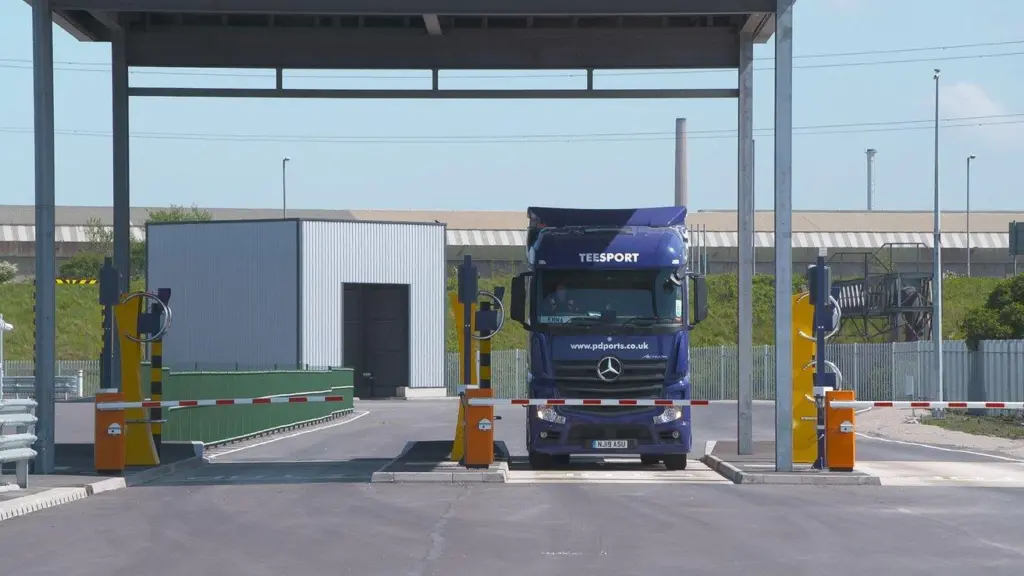
As part of PD Ports strategic plans for the future of unitised operations, it also turned to Intasite when the time came to integrate with new automated gate infrastructure
The new autogate, which provides efficient and automated processing of cargo and transportation data, required an API from Intasite to enable seamless communication between access cards and induction records.
“We have used the Intasite Induction Platform for several years, and they have consistently exceeded our expectations. Their platform has streamlined our site induction process, making it more efficcient and user-friendly.
“Our induction process is now seamless, ensuring that our site visitors are inducted onto site as seamlessly as possible,” says Mick Robinson, group security manager, PD Ports.
The results at PD Ports demonstrate the operational impact of digitisation.
More than 210,000 inductions have been completed through the platform over the past decade, with an average duration of around ten minutes.
This represents a significant shift from lengthy, in-person sessions that previously disrupted workflows.
The sustainability dimension
While efficiency gains are clear, the environmental benefits are equally significant.
Manual induction processes often result in vehicles idling at port entrances, contributing to unnecessary emissions. By enabling pre-arrival completion of inductions, digital platforms reduce waiting times and improve traffic flow.
This aligns closely with the sustainability objectives of ports seeking to meet increasingly stringent emissions targets.
Mr Martin says that digitalisation not only streamlines operations but also addresses “green wise” concerns by removing inefficiencies embedded in traditional processes.
A scalable platform
Although initially focused on inductions, the Intasite platform has evolved into a broader access and compliance tool.
Portico Shipping and Peel Ports for example, are already using the system for additional functions, including visitor sign-in, integration with regulatory systems and digital management of certifications.
“You can upload all the certificates ahead of time, lifting qualifications or forklift, rope access, working at heights,” Mr Martin explains. “It allows the site manager to check it and make sure everything’s in place.”
This capability shifts administrative work upstream, ensuring that compliance is verified before personnel arrive on site. The result is a more controlled, predictable and secure operational environment.
Bespoke approach
A defining feature of Intasite’s approach is its emphasis on bespoke content.
Rather than relying on generic training materials, the platform uses site-specific visuals and messaging to reflect real operational environments. This improves engagement and ensures that users understand the unique risks associated with each location.
“I think there’s nothing quite like showing people actually what to expect as well,” says Mr Martin.
This level of customisation also supports consistency across complex operations.
Large port groups can deploy multiple inductions across different sites while maintaining a unified standard of safety and communication.
While large operators benefit from economies of scale, the platform is also designed to accommodate smaller ports and facilities.
Modular functionality allow organisations to adopt digital inductions without committing to full-scale transformation.
“It might seem like something that is out of reach or too much,” Mr Martin notes.
“But actually, we understand the pain and we can take that away or help minimise that by giving advice throughout the process.”
This customisation is important in a sector where digital maturity varies widely. For smaller ports, induction digitisation can serve as a practical entry point into broader digital transformation.
The energy transition
The applicability of digital induction platforms extends beyond traditional port operations.
Intasite is already working across renewable energy and infrastructure projects, including offshore wind and carbon capture developments. These environments present unique challenges, particularly where physical sites are still under construction or inaccessible.
“Offshore is a trickier one… because there’s nothing there,” Mr Martin explains. “So you’ve got to make content that’s catering for progress or you’re endlessly updating it.”
Despite these challenges, the core principle for Intasite remains the same: Delivering clear, accessible safety information in a digital format that can evolve alongside the project.
As ports diversify into alternative fuels and new energy sectors, the need for robust, adaptable onboarding systems is only likely to grow.
A practical starting point
For many ports, the scale of digital transformation can appear daunting. However, Mr Martin argues that induction and onboarding represent a logical and manageable starting point.
“It suddenly seems like, why didn’t we do this a while back,” he reflects. “It’s well worth it, there’s a little bit of time investment needed upfront but ultimately it will just enhance and free up their time to look at other safety aspects.”
He says that by addressing a universal operational process, digital inductions deliver immediate, tangible benefits. They improve safety, reduce administrative burden and enhance the overall experience for site users.
Mr Martin says that the work at PD Ports illustrates how targeted digital solutions can unlock significant operational improvements while supporting wider environmental goals.
He says that the message to the industry is clear – the barriers to adoption are lower than many assume and the benefits can be realised quickly.
“And possibly, it might not be as expensive or as painful as you think.”
Related Articles
 ENERGY & TECHNOLOGY GREENPORT
 ENERGY & TECHNOLOGY GREENPORT
 PRODUCTS & SERVICES GREENPORT