![GreenPort[PortStrategy]](https://www.portstrategy.com/greenport/wp-content/uploads/sites/4/2026/09/GreenPortPortStrategy.svg)
EXCLUSIVE: Electrification, automation and the long view
Ports and terminals around the world are under pressure like never before, this article discusses electrification, automation and the long view and what ports need now, writes Achim Dries, CEO, VAHLE Group.
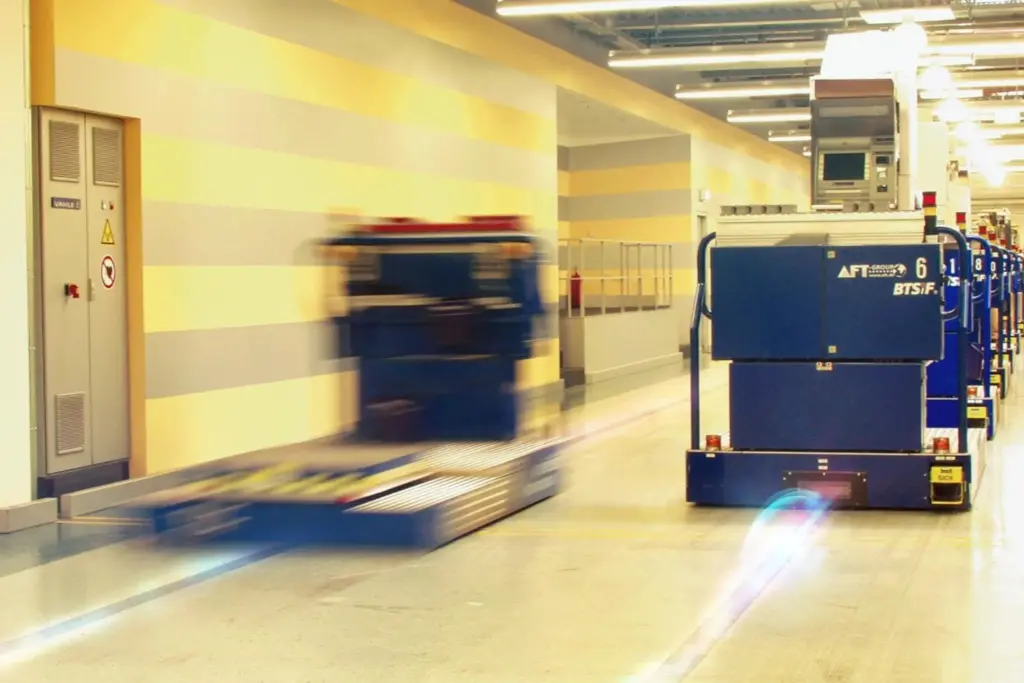
In conversations with customers across regions and terminal types, three interconnected challenges consistently emerge: Rising energy costs, increasingly strict decarbonisation targets, and the need to maintain high productivity in an environment marked by labour shortages and growing operational complexity.
What has fundamentally changed in recent years, however, is not the nature of these challenges, but the way they are evaluated economically and strategically.
A shift in focus
Not long ago, discussions with terminal operators were dominated by CAPEX. The primary question was simple: What does the investment cost?
Today, that focus has clearly shifted. Operators are far more concerned about OPEX, total lifecycle costs and operational risk. Energy efficiency, system availability, maintenance effort and long-term reliability now outweigh the initial purchase price.
This change in mindset is one of the most significant transformations we see in the market, and it is reshaping investment decisions across the entire port and terminal industry.
A key driver behind this shift is uncertainty. Operators know they must invest in more sustainable, electrified and increasingly automated equipment, yet many are hesitant to commit to rigid solutions that may become costly or inflexible over time.
Overcoming this hesitation requires a fundamentally different approach to system design: modularity, scalability and transparency. Instead of one-off, fixed solutions, ports need infrastructure that can evolve step by step from diesel to hybrid, from hybrid to fully electric and from manual to automated operations, while keeping operating costs predictable and manageable.
At VAHLE, we see our role as that of a long-term partner, providing electrification and data solutions that reduce total cost of ownership and grow with the terminal rather than constrain it.
Automation plays a central role in this transformation. Over the past few years, demand has shifted significantly. What was once largely limited to flagship greenfield projects is now increasingly requested for brownfield terminals and phased modernisation programs. The question is no longer whether to automate, but where automation delivers the fastest operational and economic benefit.
Data driven decision making
Crucially, automation is also the foundation for everything that follows. Without automated and standardised processes, meaningful use of data and therefore artificial intelligence, is simply not possible. Automation creates the stable, repeatable operational environment that enables advanced analytics, optimisation and, ultimately, AI-driven decision-making.
Looking ahead, we expect automation to become more modular, selective and intelligent. Not every terminal requires full automation, but every terminal can benefit from smart subsystems such as energy management, condition monitoring and data-driven optimisation.
At the same time, we see a strong and growing demand for digital services and predictive maintenance. Operators want to avoid unplanned downtime, optimise maintenance intervals and gain real-time transparency into system performance. Data is becoming a decisive production factor and AI will increasingly be used to turn that data into actionable insights.
Alongside these technological shifts, there is also a profound social change underway in the world of work. Younger generations entering the workforce have different expectations.
They are far less willing to accept isolated, physically demanding working conditions, such as sitting alone in a crane cabin for hours. Instead, they expect safe, connected and ergonomic workplaces, often in control rooms or offices, supported by digital tools and automation. Automation therefore not only improves efficiency and safety, but also plays a crucial role in making port operations attractive to future talent.
Future-ready architecture
For VAHLE, this leads to a very clear strategic focus. Our priority lies in intelligent electrification solutions that combine reliable power transmission with digital capabilities. We are continuously expanding our portfolio in high-performance conductor systems, energy storage and contactless power solutions, all designed to support automated and semi-automated equipment with low operating costs.
Digital services, condition monitoring and predictive maintenance are no longer optional add-ons; for us they are integral components of a future-ready system architecture.
So what advice would I give to ports and terminal operators embarking on modernisation or equipment replacement projects?
First, think in terms of lifecycle costs rather than initial investment. Second, prioritise flexibility, automation readiness and digital capability, there is no single “right” technology, but there must be a clear upgrade path.
Lastly, choose partners who understand both day-to-day terminal operations and the long-term technological and social transformation of the industry.
Sustainable, automated and attractive ports will not be built overnight. But with the right focus today, on OPEX, reliability, automation and intelligent systems, they can be developed step by step, efficiently and with confidence in the future.
Related Articles
 ENERGY & TECHNOLOGY GREENPORT
 ENERGY & TECHNOLOGY GREENPORT
 PRODUCTS & SERVICES GREENPORT