![GreenPort[PortStrategy]](https://www.portstrategy.com/greenport/wp-content/uploads/sites/4/2026/09/GreenPortPortStrategy.svg)




EXCLUSIVE: How automation and AI are rewiring logistics
Real-time data insights are transforming logistics performance, driving down costs and improving CO2 emissions management.
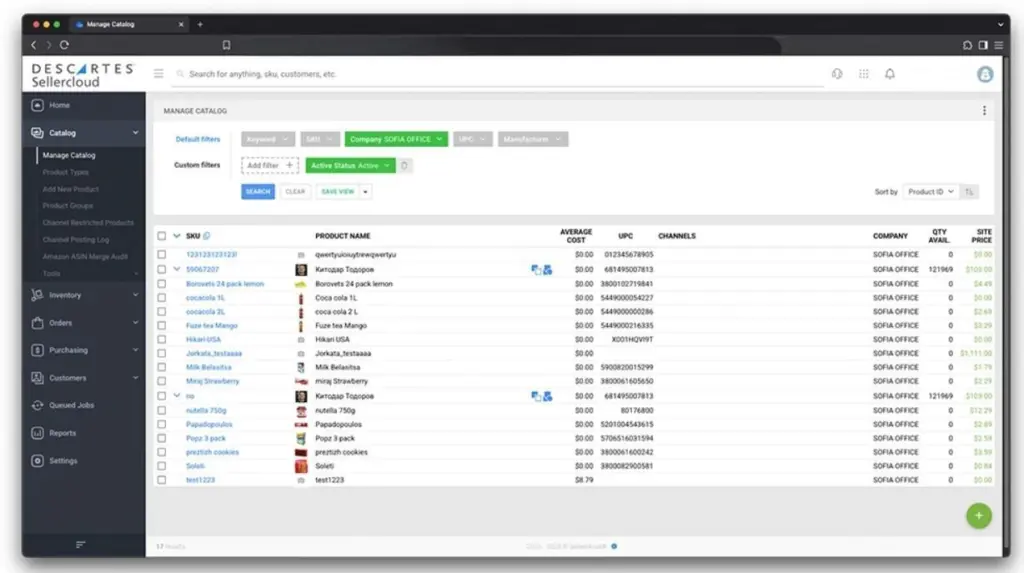
The addition of automation to Transport Management Systems (TMS) is set to further enhance the depth and breadth of data, extending automation and enhancing predictive insights for operators.
“Digitisation and automation of port processes, via the implementation of a CSP Inventory system such as the Descartes Pentant solution, replaces a manual process that is disconnected, inefficient and far from “real time”,” says Mark Phippen, customer success manager at Descartes.
Better connected
A port is a complex ecosystem, with many parties playing a part in its processes – from the shipping lines to customs agents, hauliers, government bodies such as Border Force and Port Health and the port operator themselves.
To co-ordinate all of these stakeholders efficiently relying on disconnected manual processes such as phone calls, emails and spreadsheets is a challenge that simply cannot be met in the current fast paced world of port management.
“Introducing a CSP Port Inventory system brings all parties together into a single digital ecosystem controlled by the port operator,” says Mr Phippen.
The inventory system contains all of the data relevant to the goods flowing into and out of a port – the goods that have been unloaded, those that are due on any given vessel, and those that are due to be loaded for export – and their current customs status.
Agents who have the responsibility to clear these goods will do so via the Inventory system, so all parties will be updated on the release (or otherwise) of consignments.
Likewise, government agencies will have the ability to obtain information on, and put digital holds on, goods that they may want to inspect, meaning that everyone is updated in real time on the release of goods, enabling efficient co-ordination of resources, and the collection or delivery by hauliers to be timed correctly, reducing congestion.
Real-time visibility
The Descartes Pentant CSP, being one of only five fully approved Community System Providers for Inventory in the UK, offers a full suite of modules, including Marine inventory for Ports, Air inventory for Airports, and, as a specialism, a specifically designed Inland ETSF (External Temporary Storage Facility) system, built for truck movements at a vehicle level.
“This enables goods to be moved away from the ports, moving under Transit, for clearance at the operator’s inland location. This reduces congestion and delays at the ports and enables processes such as Border Force inspections to be done inland, reducing handling and time,” Mr Phippen says.
The Descartes Pentant solution is in operation at the UK Dover site Motis and the Stop24 clearance site near the Channel Tunnel, as well as the inland ETSFs of major fast parcel operators, moving all these processes out of the port environment and creating greater efficiencies.
For many years now, the Port of Dover has processed any vehicles that require customs clearance and document presentation to Border Force by using an inventory linked customs controlled clearance system.
This is focused on RORO traffic using the shorts straight crossings which is extremely busy and increasing year on year. The CSP for the Shed at the Port of Dover, operated by MOTIS is Pentant.
“There are many benefits of using this 24/7 operation. The agent declaring goods can pre-enter the shipment onto the Pentant system so when the vehicle arrives, the goods can be cleared immediately,” says Tim Dixon, general manager at MOTIS Freight Services Ltd.
“We have complete control over shipments that use the Pentant system and also recorded data should an agent have any queries about their shipments.”
The growing availability of real-time data throughout global supply chains is transforming operational performance.
Real-time shipment tracking is allowing companies to automatically update end customers with accurate delivery timescales. Immediate access to a global logistics network provides a real-time view of carrier options, facilitating next level decision making based on costs, timing, performance record, even CO2 emissions.
Used in tandem with a Transport Management System (TMS), real-time data can drive automation, such as carrier confirmation and the creation of relevant transport documents, as well as customer updates.
Of course, in a complex, multi-layered global logistics network, data gaps are inevitable, which is where the addition of AI into this process is set to deliver significant benefits.
For example, when a truck’s telematics device goes offline for any reason, the back-up information is provided via a mobile app. If, however, the driver has not downloaded the app, the vehicle cannot be tracked.
Using an AI agent to automatically contact the driver and request installation is a simple, cost-effective process that quickly resolves any data gaps.
While these processes could in the past have been undertaken manually, in an industry enduring tight margins and significant disruption, this has rarely been a cost-effective option.
Yet with customer invoicing increasingly automated and prompted by proof of delivery, any missing tracking data can result in payment delay. The closer organisations can move towards 100% shipment tracking throughout every journey, the more automation can be achieved, further improving efficiency and reducing the need for manual exceptions management.
AI for business value
AI can also help to improve the depth of Scope 3 emissions reporting, building on the existing insight provided by a TMS about the CO2 generated by each vehicle based on a number of factors, including size, weight, distance and speed.
Where vehicle specific information is not available, and the TMS defaults to generic estimates, the addition of AI to this process allows the system to explore more data sources, adding greater accuracy to the emissions assessment process.
AI is also set to play a key role in combating the escalating risk of freight fraud. Measures such as enhanced carrier vetting and onboarding are key to improving the verification of carriers, monitoring insurance and preventing fraud.
The adoption of AI throughout the transport management industry is at an early stage. But the significant on-going investment now, building on the value of real-time data resources to improve efficiency, add automation and enhance predictive analytics is compelling.
For those organisations still reliant on out-dated systems and intermittent data updates, the gulf in agility and resilience is becoming a concern.
As AI adds ever more valuable intelligence to efficient transport management, the adoption of innovative technology is delivering a step change in competitive advantage.
Practical advice
Mr Phippen offers some practical advice to ports and terminals looking at embarking on their own automation journeys.
The starting point should always be “where are your pain points?”, be those in terms of delays or costs.
For instance, are hauliers turning up at your port for goods that are not yet customs cleared, filling up the site (and surrounding roads!) with lorries?
Are vessel arrivals or departures being delayed through a lack of clarity in the status of the goods they are carrying? Are Border Force turning up for inspections for goods that have not yet arrived, or, worse, that have already been released (potentially resulting in fines)?
Are you reliant on people being on site to communicate clearance status to all stakeholders at all hours of the day to ensure goods are moving efficiently?
“All of these can be resolved by the introduction of a digital ecosystem, such as a CSP Inventory solution,” he says.
Mr Phippen says that in the ever-evolving world of customs compliance, staying on top of the latest system changes and legislation can be a challenge.
With upcoming Government driven changes, such as the introduction of controls for Low Value Imports (LVI) and the developing guidance for business continuity planning in the event of CDS downtime, it is a constantly changing environment.
“But with the right core IT infrastructure, such as a CSP Inventory system, you will always be compliant, as it’s the CSP that must ensure the provision of systems and processes to the ports to enable them to meet the latest legislation,” Mr Phippen says.
“It is the port’s legal responsibility to follow procedures for the control of goods, but with a CSP Inventory system underpinning those processes, this can be done most efficiently and cleanly.”
Related Articles
 ENERGY & TECHNOLOGY GREENPORT
 ENERGY & TECHNOLOGY GREENPORT
 PRODUCTS & SERVICES GREENPORT