



EXCLUSIVE: Why tyres are the hidden asset in port operations
At first glance, tyres may seem an unlikely candidate for driving efficiency and sustainability in port and terminal operations.
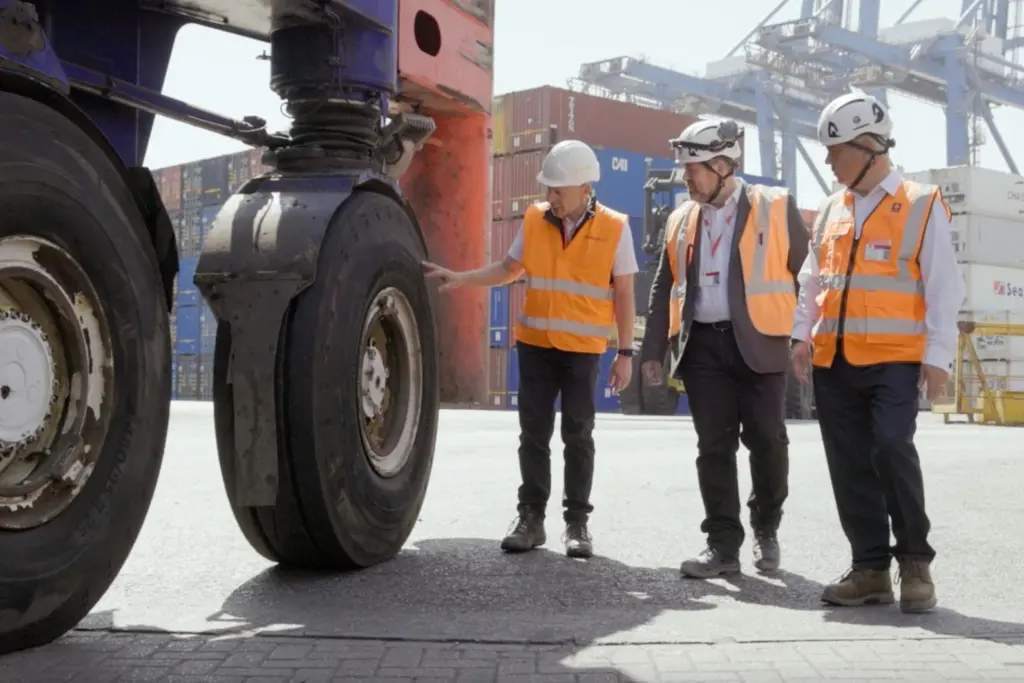
Yet, as Mike Leedham, OTR sales manager, Continental Tyre Group Ltd. explains, they are one of the most overlooked fundamentals that can make a major difference to operational performance.
“Tyres may seem like a small detail, but in ports and terminals, they play a big role in overall efficiency and sustainability,” he says.
“The right tyre choice and proper maintenance can reduce fuel consumption, lower emissions, extend tyre life and minimise downtime. Sometimes, it’s the fundamentals that unlock the biggest gains.”
This philosophy underscores Continental’s approach to sustainability: By rethinking tyre technology and embedding digital tools into everyday operations, the company is helping ports slash fuel use, reduce emissions and keep equipment rolling with less downtime.
From pioneering carbon-neutral production to introducing predictive maintenance systems on the quayside, Continental is positioning tyres not as consumables but as key equipment to promote sustainable growth.
Sustainable production
Continental’s vision for sustainability is not limited to end-users. It begins at the source, that is how tyres are made.
Over the years, tyre production has transformed from an energy-intensive, gas-powered process into one shaped by renewable power and innovative technology. The clearest example of this is Continental’s ISCC PLUS-certified plant in Lousado, Portugal.
“Since 2024, Lousado has been capable of producing tyres with a CO₂-neutral process,” Mr Leedham explains.
“We installed an innovative electric steam boiler powered by green electricity from on-site solar panels and the renewable grid. This replaces conventional gas-fired boilers, significantly cutting emissions.”
The process is both efficient and flexible. Water is sprayed directly onto electrodes, where an electric current heats it into steam.
Unlike traditional methods, this approach minimises energy loss and maximises the use of renewable power. A conventional boiler remains on-site for backup, but the goal is clear, to lean almost entirely on green electricity, particularly in Portugal’s sun-drenched climate.
Bigger picture
The transformation at Lousado is part of a much broader company roadmap.
Continental has committed to achieving climate-neutral production across all tyre plants by 2040, with an interim goal of reducing energy consumption by 20% by 2030 compared with 2018 levels.
In practice, this ambition is already delivering measurable results. In 2023 alone, the company introduced 160 energy-saving projects that collectively cut around 150 gigawatt hours of energy use – that’s the equivalent of powering 12,500 homes for a year.
The Lousado facility also produces the UltraContact NXT, Continental’s most sustainable series tyre to date, which showcase a balance of durability, safety and environmental performance.
Importantly, Continental is not just focusing on one facility. The company has secured ISCC PLUS certification for all its European tyre production sites, including plants in Germany, France, Slovakia, Czech Republic and Romania.
Mr Leedham says this achievement reinforces the company’s commitment to sustainable sourcing and transparent supply chains across the continent.
“Lousado symbolises how tradition and innovation can come together to create a more sustainable future for mobility,” he says. “It’s not just about producing tyres, it’s about reshaping the industry standard.”
Smarter tyres, smarter operations
The sustainable benefits of Continental’s tyres also extend far beyond the factory floor.
In port operations, where efficiency is paramount, downtime from tyre failures or underperformance can be costly. That’s why the company has invested heavily in bringing predictive maintenance tools such as ContiConnect and ContiPressureCheck to the market.
“In busy port environments, unplanned downtime is disruptive and expensive,” Mr Leedham notes.
“Our digital monitoring solutions give operators real-time insights into pressure, temperature and tyre health, allowing them to fix issues before they cause failures. This means safer, smoother and more efficient performance at the quayside.”
The systems can be adapted to fleets of any size and provide data that allows operators to plan ahead.
By identifying problems early, these solutions reduce maintenance time, prevent tyre failures and extend asset life. For busy terminals, the cumulative benefits – less downtime, fewer tyre replacements and improved fuel efficiency – translate directly into commercial gains.
The Port of Tilbury
The tangible benefits of Continental’s approach are best illustrated by its project at the Port of Tilbury, one of the UK’s busiest container hubs.
According to Andy Darlington, senior procurement & facilities manager at the port, after deploying Continental tyres across the port equipment fleet, results have been transformative.
“This project has been a real step forward for us at the Port of Tilbury,” he says. “We now have more than 500 Continental tyres deployed across our fleet, covering everything from Kalmar straddle carriers to Hyster forklifts, Liebherr cranes and reachstackers.”
“Switching to Continental’s StraddleMaster tyres, designed for low rolling resistance, has delivered fuel savings of up to 30% in some equipment, a significant win in both environmental and cost terms.”
Equally important has been the role of predictive maintenance technology.
“Continental’s ContiPressureCheck and ContiConnect systems have allowed us to move from reactive to predictive tyre maintenance,” Mr Darlington explains.
“We’ve reduced tyre-related downtime, boosted equipment availability, and kept container flow consistent.”
Safety has also improved dramatically. Underinflated tyres, previously a hidden danger leading to uneven wear, overheating and potential failure, are now identified and corrected early on.
“This has already saved multiple tyres from being ruined and has improved operator confidence too,” he adds.
Tilbury has also installed three YardReader Stations across its operational site, automatically collecting sensor data to provide real-time tyre health information.
The success here has led to the rollout of similar monitoring systems for the reachstacker fleet at Tilbury2, underlining the scalable impact of the project.
Another key element of Tilbury’s success has been the customer service support from Halfords Commercial Fleet Services (trading as Universal Tyres).
As Mr Darlington points out, having an on-site partner has been crucial: “They handle inspections, stock management and replacements in a way that fits seamlessly with daily operations, ensuring the tyres remain in top condition without downtime.”
Sustainability runs all the way from bottom up at Tilbury. The StraddleMaster tyres used at the port are produced at Continental’s CO₂ neutral Lousado plant, aligning perfectly with the port’s own low-carbon strategy, which includes on-site wind turbines and a wider commitment to clean energy.
Mr Darlington concludes: “This has been a strong example of how technology, sustainability and operational performance can come together. It’s helped us reduce waste, emissions and costs, all while keeping people safe and improving asset performance.”
Wider industry impact
Continental’s work at Tilbury demonstrates what can be achieved when advanced tyre technology meets operational ambition. But it is just one of several projects under way.
“We’re involved in a number of exciting port and terminal equipment projects and we’re seeing growing interest in smarter, more sustainable tyre solutions,” says Mr Leedham.
One key partnership is with Maritime Transport, one of the UK’s leading logistics operators. By deploying Continental’s tyres and monitoring systems across its fleet, Maritime Transport has been able to enhance efficiency, reduce emissions and better align with customer demand for greener supply chain practices.
“These partnerships highlight how innovation and sustainability can deliver tangible benefits for the industry,” Mr Leedham continues.
“From ports to logistics companies, operators are recognising that tyres are no longer just consumables, they are strategic assets that can drive long-term gains.”
Future proofing
For Mr Leedham, the message is clear: Tyres are far more than a maintenance line item, they are a lever for transformation.
“Even small changes, like better tyre monitoring or optimised pressure management, can lead to big gains in fuel savings, reduced emissions and less downtime,” he says.
Continental’s long-term sustainability goals reflect this mindset. By 2030, the company aims to achieve 40% renewable and recyclable materials in its tyres.
By 2050, it is committed to full carbon neutrality across its value chain. These ambitions are supported by ongoing investment in research and development, circular economy practices and close collaboration with both port operators and OEMs.
The company’s strategy is not just about technology, but about partnership. By embedding its solutions directly into port operations and new vehicle platforms, Continental aims to provide smarter tools that align with the industry’s dual goals of efficiency and sustainability.
Mr Leedham says his message to the industry is one of both optimism and practicality.
“In port and terminal operations, tyres are often overlooked, but they are one of the most critical components in keeping things moving smoothly,” he reflects.
“Even small changes can lead to major improvements in safety, efficiency and sustainability.”
For Continental, the future very much lies in collaboration – working with partners to unlock the untapped potential of tyres.
As Mr Leedham puts it: “Sometimes, it’s the smallest adjustments that make the biggest difference.”
Related Articles
 ENERGY & TECHNOLOGY GREENPORT
 ENERGY & TECHNOLOGY GREENPORT
 PRODUCTS & SERVICES GREENPORT