

GREENCRANES pilot comes to an end
The European GREENCRANES project, led by the Valenciaport Foundation, has marked the end of pilot trials on greener terminal equipment at the Noatum Container Terminal with a public demonstration.
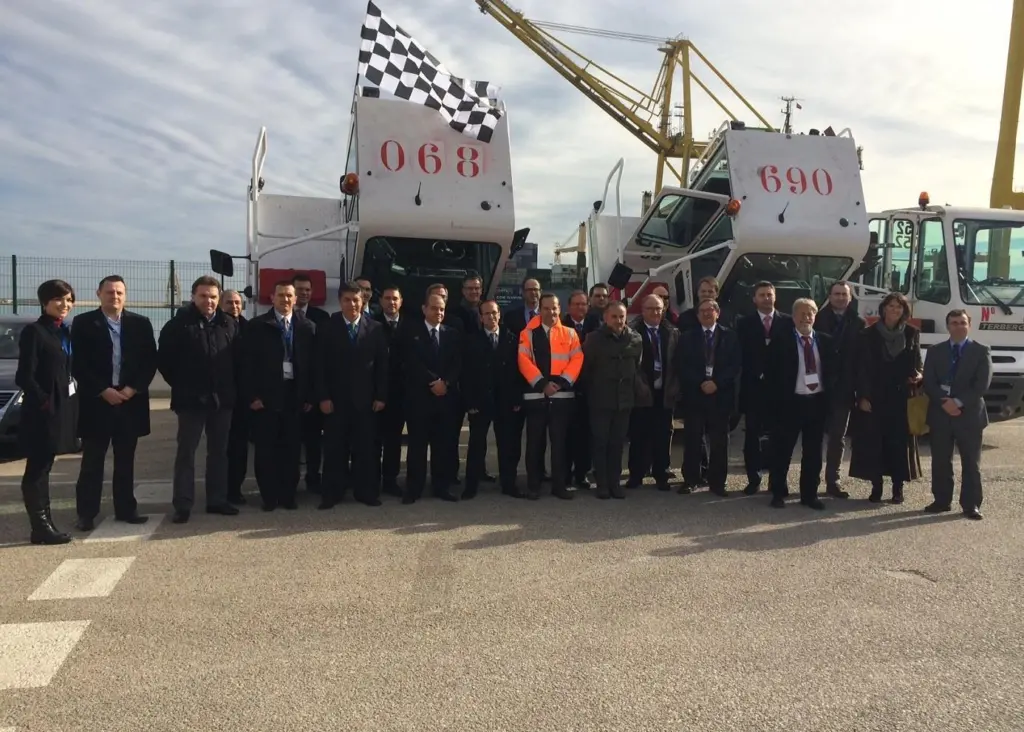
Attendees were able to see the merits of two yard tractors developed specifically by Alfaland and Terberg for the GREENCRANES project for themselves – one propelled by liquified natural gas (LNG) and the other by diesel incorporating the latest technologies to comply with the emission control standards.
The pilot trial started in October and since then both yard tractors have worked for a total of 700 hours in the real conditions of a port terminal, operating almost uninterrupted for more than a month.
Results of the pilot trial indicated that the when compared to a traditional yard tractor, both yard tractors proved to be quieter and have lower emissions. Further development is necessary though to help the LNG-propelled motors to reach the optimisation levels of their diesel-run counterparts.
In light of these results, Noatum has started working with the manufacturers of yard tractors to adapt the port system to hybrid vehicles combining LNG or diesel with electrical engines and energy accumulators with the goal of optimisting sustainability.
During the public demonstration, an ECO-RTG crane that had been optimised in terms of nominal power needed for its operations was also demonstrated to the public.
During the pilot trial, Noatum succeeded in lowering the energy consumption of the RTG by 42%. To achieve this, the power of the engine was reduced by introducing a new engine whilst the configuration of the crane was changed in order for both the crane and engine to work more efficiently. Noatum now intends to proceed with converting its RTGs in line with the pilot trial.
The GREENCRANES project (Green Technologies and Eco-Efficient Alternatives for Cranes and Operations at Port Container Terminals) commenced in August 2012. Its objective is to improve the understanding of investors and container terminal managers as well as the port industry, of those technologies that produce environmental, economic and social benefits and that can be rapidly implemented in Europe.
Related Articles
 PRODUCTS & SERVICES GREENPORT
 ENERGY & TECHNOLOGY GREENPORT
 ENERGY & TECHNOLOGY GREENPORT