![GreenPort[PortStrategy]](https://www.portstrategy.com/greenport/wp-content/uploads/sites/4/2026/09/GreenPortPortStrategy.svg)
Growing a powerful network of inland terminals
Inland Terminals Group (ITG) has acquired the shares of Bolk Container Transport and Nijhof-Wassink in Combi Terminal Twente (CTT) adding three inland terminals to its growing network.
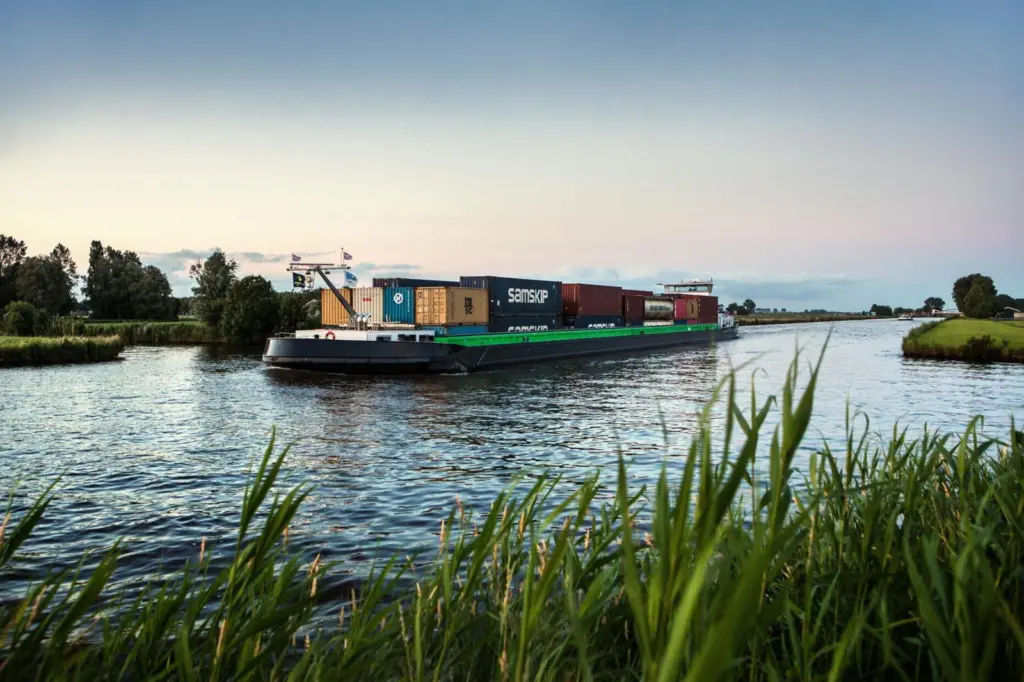
The acquisition creates a partnership of 16 inland terminals in the Netherlands and Belgium.
“This is a great addition to our network. This acquisition creates a strong bundling of cargo flows in the seaports,” said CEO Eduard Backer of Inland Terminals Group.
”In addition, we see many opportunities for mutual cooperation and efficiency in the areas of digitalisation, administration and sustainability.”
Efficient logistics
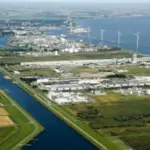
In the east of the country there are inland shipping terminals in Hengelo and Almelo, in Rotterdam-Pernis there is a terminal with rail and water connections. Every year, more than 150,000 import and export containers find their way through the CTT terminals.
Even though the barge networks are separated, all inland vessels pass the BCTN terminal in Alblasserdam and CTT in Pernis. Containers can easily be transferred to another connection if necessary. This ensures timely delivery to the various deep-sea terminals in Rotterdam even better. This bundling creates more efficient and reliable container logistics over water.
These 16 terminals connect large parts of the Netherlands and Flanders with the seaports of Rotterdam and Antwerp. Together the three terminal companies transport more than 800,000 teu per year.
With its extensive network, Inland Terminals Group is anticipating the wishes of shippers and recipients to transport more cargo by water. This relieves the burden on the entire road network.
Companies are growing ever more demanding of sustainable transport. Clean and efficient logistics have become a must. The growing pressure on the European road network is an opportunity for more water transport. Mr Backer said that sustainability is a spearhead within ITG’s business strategy.
“As a group of terminals, we are working on future-proof logistics solutions. With this greater strength, we are working on a solid plan to make the terminals and inland shipping activities emission-neutral,” he said.
“We actively help our customers reduce their CO2 footprint. For example, we focus on ships that run on hydrogen or electricity. We also see a similar development for terminal equipment and trucks.”
Related Articles
 ENERGY & TECHNOLOGY GREENPORT
 ENERGY & TECHNOLOGY GREENPORT
 PRODUCTS & SERVICES GREENPORT