![GreenPort[PortStrategy]](https://www.portstrategy.com/greenport/wp-content/uploads/sites/4/2026/09/GreenPortPortStrategy.svg)

Integrated ballast water treatment for ports
BIO-UV Group and MicroWISE have partnered to deliver integrated ballast water treatment solutions addressing enforcement pressures and growing demand for port reception facility capacity.
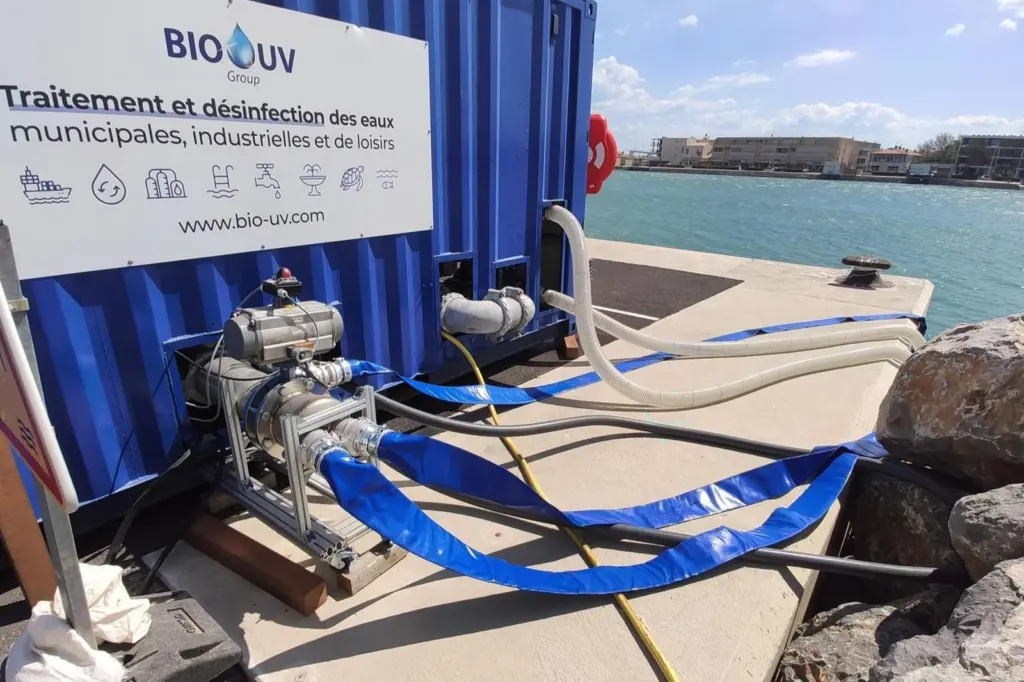
The partnership combines BIO-UV Group’s BIO-SEA technology with MicroWISE real-time organism analysis to support compliant ballast water treatment within port infrastructure, as inspections continue to reveal inconsistent D-2 performance.
“One of the biggest challenges for ports is obtaining reliable biological data in real time,” said Pia Haecky, CEO, MicroWISE.
“By providing independently verifiable organism counts at the point of treatment, we give ports and regulators the confidence to make fast, transparent decisions about ballast-water discharge.”
Managing compliance
The collaboration comes as port-state control inspections increasingly identify systems that fail biological limits during operational testing, while authorities lack rapid verification tools.
In response, ports are exploring port reception facility models to safely manage non-compliant discharges, reduce congestion and avoid vessel detentions.
MicroWISE’s biological monitoring technology enables in-line detection and quantification of viable organisms before discharge. Integrated with BIO-UV Group’s ballast water treatment systems, the solution allows ports to process ballast water efficiently without disrupting vessel operations.
BIO-UV Group said the partnership reflects tightening regulatory expectations and a shift of compliance responsibility toward ports.
The companies will continue joint R&D on sediment removal, flocculation and potential single-pass treatment configurations to improve efficiency and reduce the footprint of port-side installations.
The collaboration also supports BIO-UV Group’s expansion into environmental port infrastructure, as ports consider onshore treatment as part of long-term investment strategies.
Both companies expect integrated treatment and verification to play an increasingly central role as environmental regulation intensifies and inspection regimes expand through 2026 and beyond.
Related Articles
 ENERGY & TECHNOLOGY GREENPORT
 ENERGY & TECHNOLOGY GREENPORT
 PRODUCTS & SERVICES GREENPORT