![GreenPort[PortStrategy]](https://www.portstrategy.com/greenport/wp-content/uploads/sites/4/2026/09/GreenPortPortStrategy.svg)


NatPower builds global charging platform
NatPower Marine has acquired Aqua superPower’s charging network to accelerate port electrification and expand electric charging infrastructure for commercial ports and marinas.
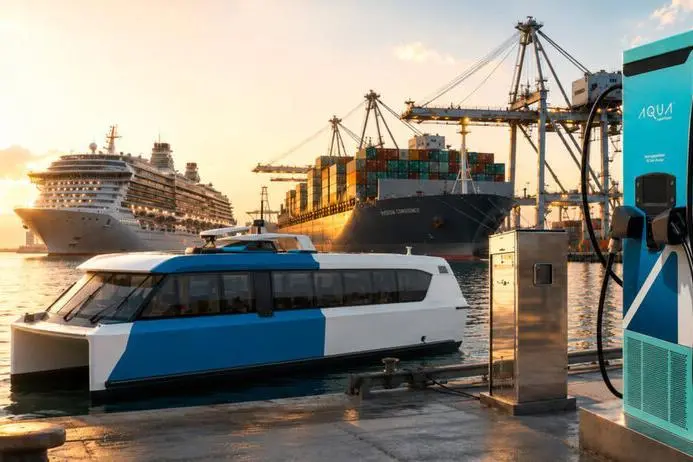
The acquisition brings the largest international network of marine electric charging points under NatPower Marine’s platform, supporting the company’s ambition to strengthen port infrastructure and advance the maritime energy transition through scalable electrification projects worldwide.
“This transaction marks a decisive step forward for us: we are no longer just developing infrastructure, but building a platform capable of operating on an international scale,” said Fabrizio Zago, CEO of NatPower.
“The addition of Aqua superPower to our ecosystem provides us with an immediate operational presence in key markets and strengthens our ability to deliver projects effectively and at scale on a global level.”
Strategic acquisition
Aqua superPower’s network spans more than 80 ports and marinas across Europe and North America, including sites in the French and Italian Rivieras, the Port of Barcelona, the UK South Coast and San Francisco Bay.
NatPower Marine said the acquisition will combine the network’s operational expertise with its own development capabilities to extend electrification beyond recreational boating into large commercial ports and maritime hubs.
The combined platform is designed to address one of the sector’s biggest barriers to electrification by bringing together energy supply, grid access, permitting, financing and operational management within a single execution model.
It combines an established charging network with a pipeline of port and marina projects, engineering expertise and investment capability to accelerate infrastructure deployment across multiple markets.
Stewart Wilkinson, CEO of ATV Power, said joining NatPower Marine would enable the business to scale its charging platform more rapidly while expanding its international reach.
NatPower Marine said the integration reinforces its role in delivering coordinated port infrastructure for the maritime energy transition, supporting wider adoption of port electrification through scalable, globally deployable electric charging solutions.
Related Articles
 ENERGY & TECHNOLOGY GREENPORT
 ENERGY & TECHNOLOGY GREENPORT
 PRODUCTS & SERVICES GREENPORT