![GreenPort[PortStrategy]](https://www.portstrategy.com/greenport/wp-content/uploads/sites/4/2026/09/GreenPortPortStrategy.svg)



Rotterdam goes digital to cut emissions
The Port of Rotterdam has deployed new digital solutions to monitor and reduce emissions and facilitate just-in-time port calls.
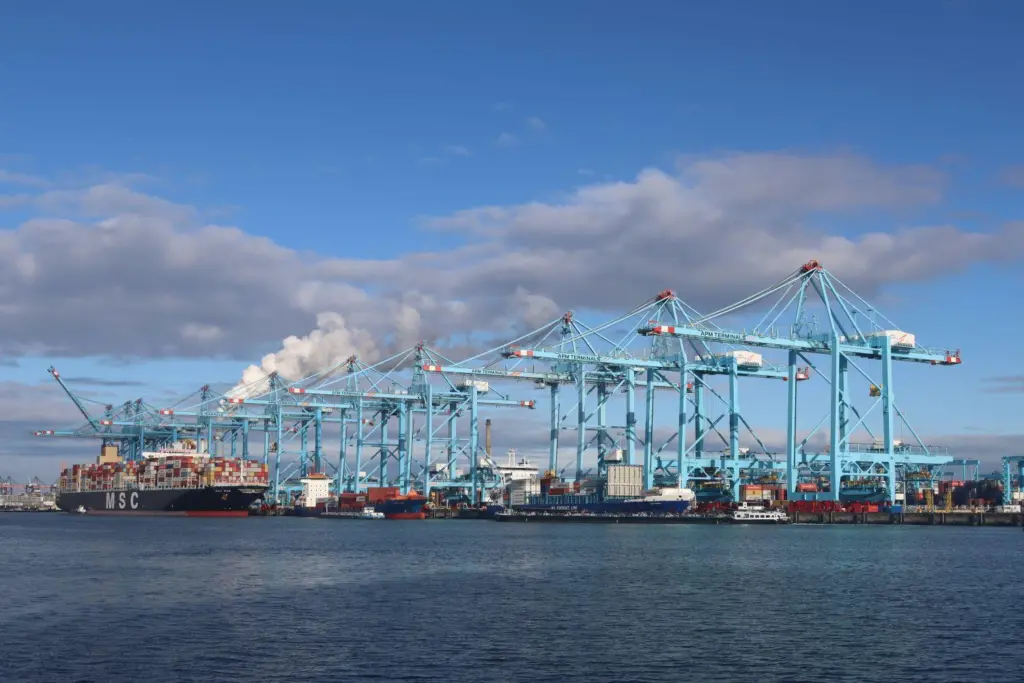
The role of ports in reducing emissions as a key part of decarbonising the maritime industry is becoming increasingly clear as doubt is cast on the effectiveness of other measures, such as slow-steaming.
Recent studies by shipbrokers Simpson Spence Young and maritime consultancy Clarksons have suggested that the benefits of slow-steaming may have been overestimated as a result of unrealistic assumptions around fuel consumption and ship speed.
Instead, the role of ports in hitting both their own and shipping’s emission reduction targets is beginning to be recognised.
A key part of this is the need for quality data to provide baseline levels and inform effective measures for emissions reduction.
To overcome this challenge, the Port of Rotterdam has employed PortXchange Synchronizer developed by PortXchange, a spinoff of the Port of Rotterdam, a digital solution which allows communication between all stakeholders in a port call, and facilitates just-in-time arrivals.
Data from the port has shown a 20% reduction in CO2 emissions and a 15% decrease in NOx from shipping emissions.
The port has also launched EmissionInsider, again developed by PortXchange, to monitor and analyse transport-related emissions. This has given the port greater visibility of emissions, allowing it to standardise reporting and identify areas with the best potential for decarbonisation.
Related Articles
 ENERGY & TECHNOLOGY GREENPORT
 ENERGY & TECHNOLOGY GREENPORT
 PRODUCTS & SERVICES GREENPORT