![GreenPort[PortStrategy]](https://www.portstrategy.com/greenport/wp-content/uploads/sites/4/2026/09/GreenPortPortStrategy.svg)





Safe, sustainable handling drives fertiliser trade
Global fertiliser markets are rising and ever advancing bulk handling solutions are ensuring sustainable handling while keeping safety risks under control.
As populations grow, demand for fertilisers like urea, diammonium phosphate (DAP), NPK, muriate of potash (MOP) and monoammonium phosphate (MAP) is climbing.
These dry bulk fertilisers are dusty, prone to clumping and in some cases classified as hazardous materials, making specialised handling equipment vital.
Sustainable handling
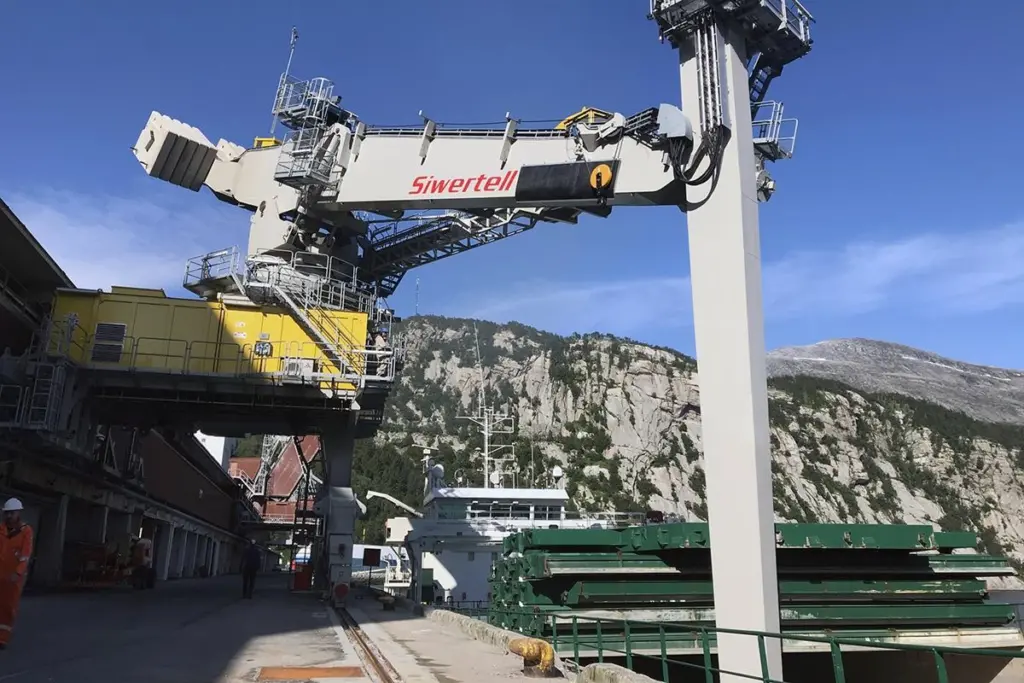
Bruks Siwertell is helping operators tackle the issue head on with its enclosed fertiliser handling systems. They are designed to deliver sustainable handling with minimal dust suppression requirements, reduced spillage and protection against fire and explosion.
One system in operation is at Paradeep Phosphates Limited (PPL) in India, which operates a rail-mounted Siwertell 640 D-type ship unloader. It switched from open-air bucket systems to Siwertell screw-type unloaders.
The result has been dust-free, sustainable handling of sulphur and phosphate imports. This technology has improved vessel turnaround times, cut freight costs and reduced environmental impacts, enabling PPL to expand capacity while meeting stricter sustainability requirements.
PPL now operates a second Siwertell 640 D-type ship unloader, enabling the company to keep pace with its expansion plans and an increase in bulk fertiliser volume demands.
In Norway, Yara International, the world’s northernmost fertiliser producer, turned to a Siwertell ST 490-M unloader for reliable bulk handling in Arctic conditions.
The system, known as SiMon, is equipped with dust suppression and advanced monitoring, efficiently manages fertilisers like potash and rock phosphates in extreme cold, while meeting tough environmental regulations.
Related Articles
 ENERGY & TECHNOLOGY GREENPORT
 ENERGY & TECHNOLOGY GREENPORT
 PRODUCTS & SERVICES GREENPORT