![GreenPort[PortStrategy]](https://www.portstrategy.com/greenport/wp-content/uploads/sites/4/2026/09/GreenPortPortStrategy.svg)



Tracking emissions effectively
New software has been developed that allows ports to easily track their emission profiles
The digital solution from International energy and marine consultancy AqualisBraemar LOC (ABL) enables users to calculate the cost of their carbon footprint and identify a roadmap ahead for sustainable development.
“The first step to cutting emissions is understanding them – what they are and where they come from. emiTr provides a digital inventory of the complex web of a port’s emissions, mapping out both direct and indirect sources, as well as identifying the profile of individual emitters,” said Paul Martin, maritime director, ABL.
”Once a baseline of data is established, visual representations can assist to identify high emitters and inform capex expenditure accordingly.”
Emissions toolkit
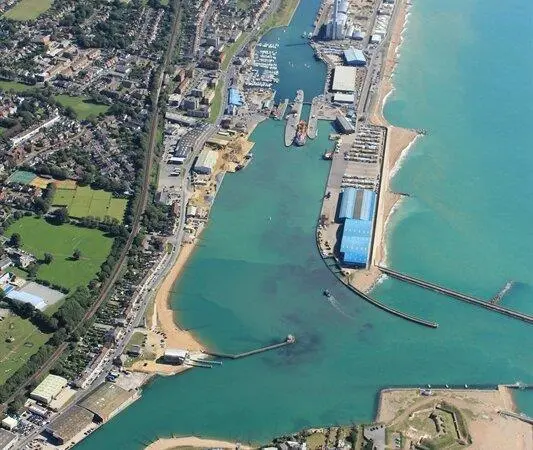
The solution – called emiTr – based on the “Port Emissions Toolkit”, has been designed in collaboration with Shoreham Port in the UK, to enable ports to understand the complex nature of their emissions’ profile, so they can take decisive action in line with national and international reduction targets.
Data is uploaded into emiTr, where the amount of pollutants and greenhouse gases emitted through the port’s operations are calculated. The system also retrieves the live market price of carbon determined by UK and EU Emissions Trading Schemes and uses it to assign a monetary value to the CO2e emissions.
The portal identifies and calculates three different scopes of emitters – direct emissions under the port’s control such as port owned vessels, vehicles and heating infrastructure; indirect emissions such as electricity purchased for use within the port boundary and indirect emissions, which are not under the direct control of the port, such as tenants’ cargo handling equipment and ships.
Samantha Woolven, people, communications & sustainability director at Shoreham Port, said: “This is important data for us to understand the impact we make and we will use this data to inform decisions in the future as we aim to improve our energy efficiency and reduce pollution across the port’s footprint. We are committed to being part of the change that ensures we as a Port are here in a healthy, inclusive and sustainable way for years to come.”
Related Articles
 ENERGY & TECHNOLOGY GREENPORT
 ENERGY & TECHNOLOGY GREENPORT
 PROJECTS & INITIATIVES GREENPORT