![GreenPort[PortStrategy]](https://www.portstrategy.com/greenport/wp-content/uploads/sites/4/2026/09/GreenPortPortStrategy.svg)
American ports step up offshore wind commitment
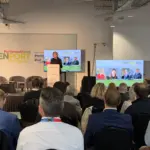
The American Association of Port Authorities (AAPA) has hosted its first-ever Offshore Wind Subcommittee meeting at a time when US offshore wind demand is skyrocketing.

The group will serve as a forum for port officials and industry leaders to share best practice on offshore wind port infrastructure and confer on federal funding that is necessary to expedite the American offshore wind industry.
“Port infrastructure is critical to accelerating a domestic offshore wind industry. Developers are committing hundreds of millions of dollars to port infrastructure, but DOE predicts that the US will need to invest US$6 billion in ports and installation vessels to build 30GW of offshore wind by 2030,” said JC Sandberg, Chief Advocacy Officer, American Clean Power Association.
”The American Clean Power Association looks forward to engaging with the American Association of Port Authorities and The Business Network for Offshore Wind to ensure this need can be met by leveraging both public and private dollars.”
Size of the problem
For the US, meeting national and state offshore wind deployment goals will require significantly more additional port capacity.
Due to the large size of offshore wind components, manufacturing and marshaling facilities for the projects must be situated at ports, so there is plenty of work to be done around port infrastructure.
According to the National Renewable Energy Laboratory, studies estimate that the US offshore wind market has the potential to create as many as 58,000 full-time jobs by 2030.
Offshore wind development along the US Atlantic coast and its accompanying supply chain presents a significant economic opportunity for offshore wind businesses.
This is despite the fact that the US Jones Act currently insists that only US-owned, crewed, registered and built vessels can transport cargo between US ports.
But while the law restricts the use of foreign vessels, design expertise and consultancy is open, posing a significant opportunity for offshore wind players around the world.
The subcommittee, which is a part of AAPA’s Environment Committee, is composed of port leaders from coast to coast who will make the decisions that shape the future of the industry, including representatives from the New Bedford Port Authority, Port of Davisville, Port Fourchon, Port of Cleveland and Port of Longview.
Going forward one of its main aims is to exchange information with AAPA’s members and help amplify calls for public policy that will support the creation of American jobs and power at offshore windfarms.
Related Articles
 ALTERNATIVE FUELS GREENPORT
 ENERGY & TECHNOLOGY GREENPORT
 PROJECTS & INITIATIVES GREENPORT