![GreenPort[PortStrategy]](https://www.portstrategy.com/greenport/wp-content/uploads/sites/4/2026/09/GreenPortPortStrategy.svg)
Blue carbon restoration benefits study
A US port is championing a three-year study looking at blue carbon – the ability of marine plants to sequester carbon from seawater and transfer it into sediments.
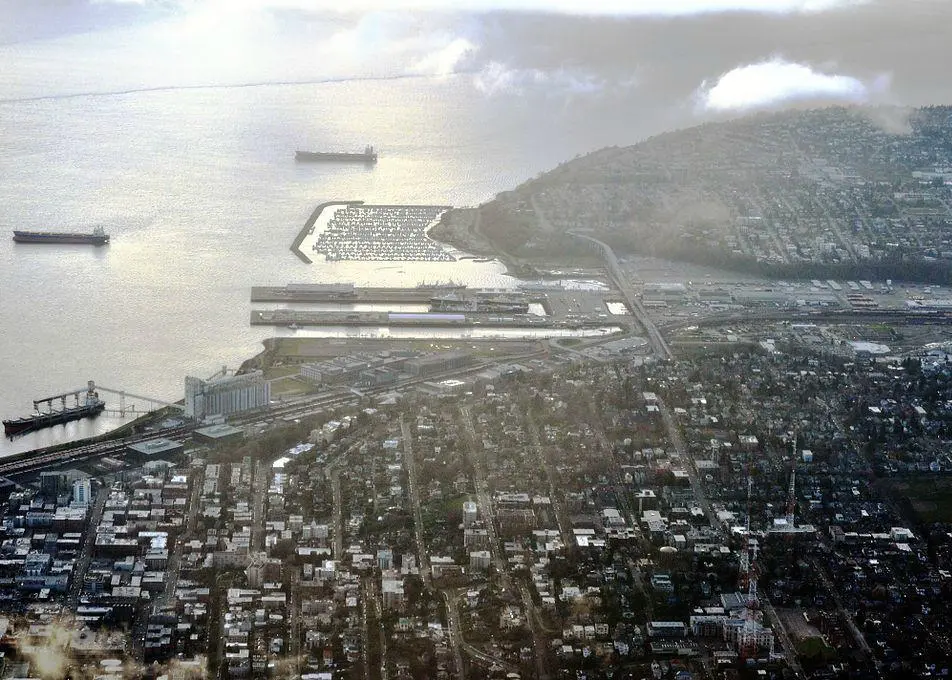
Port of Seattle commissioners have approved inter-local agreements with the Washington State Departments of Ecology and Natural Resources for its Smith Cove ‘Blue Carbon’ pilot project.
The goal of the study is to evaluate how well transplanted kelp and eelgrass offshore of Smith Cove Park sequester carbon and reduce ocean acidification associated with carbon concentrations. Marine scientists and port officials are using the Smith Cove Blue Carbon pilot project to test techniques to restore and improve critical aquatic habitat in urban bays.
The natural resources department responsibilities include monitor water quality/seawater acidity (pH) and shellfish survival and maintaining/repairing water quality sensors and other equipment at the site. The ecology department responsibilities include technical oversight, analysis, and participation by coastal scientist Dr Micah Horwith and integrating Smith Cove into the depatment’s ocean acidification monitoring programme.
“The Smith Cove Blue Carbon Project could make a real contribution to the restoration of the Salish Sea by reducing ocean acidification, restoring Olympia oysters, and creating habitat for salmon and other marine species,” said Port of Seattle commissioner Ryan Calkins.
The 25-acre project is part of a regional interagency effort evaluating how six different sites benefit the health of the Salish Sea.
In partnership with the Puget Sound Restoration Fund, the port’s Smith Cove project has also reintroduced the previously overharvested Olympia Oysters to improve water quality.
The Port of Seattle Commission’s Energy and Sustainability Committee is providing US$250,000 funding to support long-term evaluation in the study.
Data collection is due to start in the summer/autumn.
Related Articles
 ALTERNATIVE FUELS GREENPORT
 ENERGY & TECHNOLOGY GREENPORT
 PROJECTS & INITIATIVES GREENPORT