![GreenPort[PortStrategy]](https://www.portstrategy.com/greenport/wp-content/uploads/sites/4/2026/09/GreenPortPortStrategy.svg)
CO2 friendly green port construction
Nearly a year since it started, the Skandia Gateway fairway deepening project at the Port of Gothenburg is making strides in marine civils while cutting its carbon footprint by 10,000 tons of CO2e.
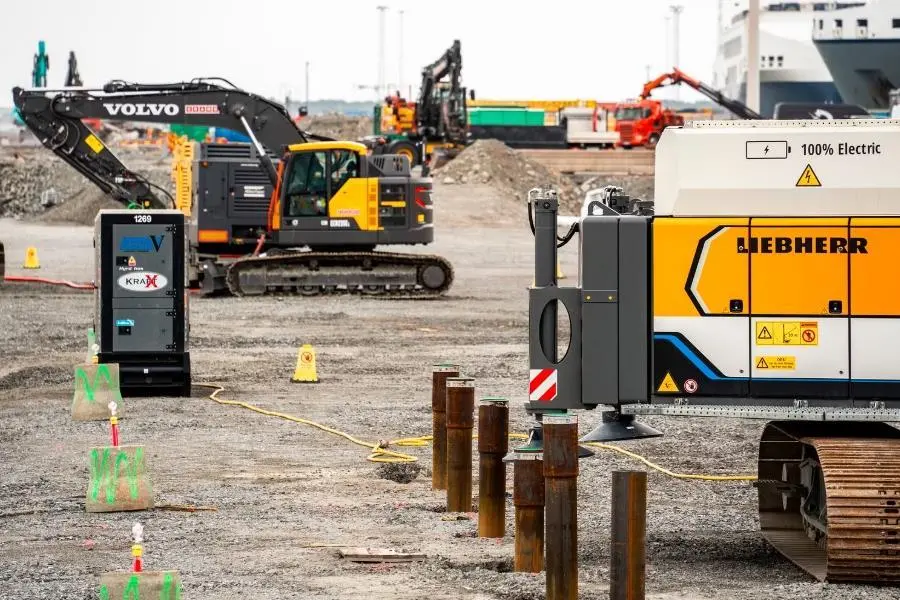
As one of Sweden’s largest dredging projects in over 20 years, the initiative will deepen a five-kilometre fairway from 13.5 metres to 17.5 metres. This requires extensive quay reinforcement, with a commitment to reducing climate impact by 30%, from an estimated 31,000 to 21,000 tonnes of CO2e.
“To meet this ambition, we must first and foremost be ready to prioritise it highly in every decision we make, from material choices to transportation and construction techniques,” said Jan Andersson, project manager for Skandia Gateway.
“It also requires us to be creative and look for reduction opportunities beyond what is conventional.”
Sustainability measures
Among other things, Mr Andersson said that this means being willing to pay extra for environmentally friendly alternatives to materials like concrete and steel.
Green materials generally cost more, but with creativity and circular thinking, exceptions to the rule can be found.
One example where extra thought was given to both technique and material choices concerns the 1,500 piles that are driven through the quay, into the seabed to stabilise the new quay.
A key sustainability measure includes replacing traditional concrete pile filling with recycled gravel from the project, reducing emissions while maintaining structural integrity.
The project’s climate impact is monitored three times a year and emissions have already dropped by 28%, with a projected decrease exceeding 30% by 2028.
Dredging is set to begin in Q3 2026, with the Swedish Maritime Administration implementing stricter environmental regulations. A new incentive model will reward contractors who exceed the project’s baseline sustainability targets.
By embracing green port construction methods, Gothenburg said it is setting a precedent for sustainable infrastructure, demonstrating how greener thinking in marine civils can significantly cut environmental impact from construction projects.
Related Articles
 ALTERNATIVE FUELS GREENPORT
 ENERGY & TECHNOLOGY GREENPORT
 PROJECTS & INITIATIVES GREENPORT