![GreenPort[PortStrategy]](https://www.portstrategy.com/greenport/wp-content/uploads/sites/4/2026/09/GreenPortPortStrategy.svg)


Data exchange promises better port efficiency
Reliable ship arrivals, more efficient ship handling and reduced emissions are the aims of a new digitalisation project in Germany.
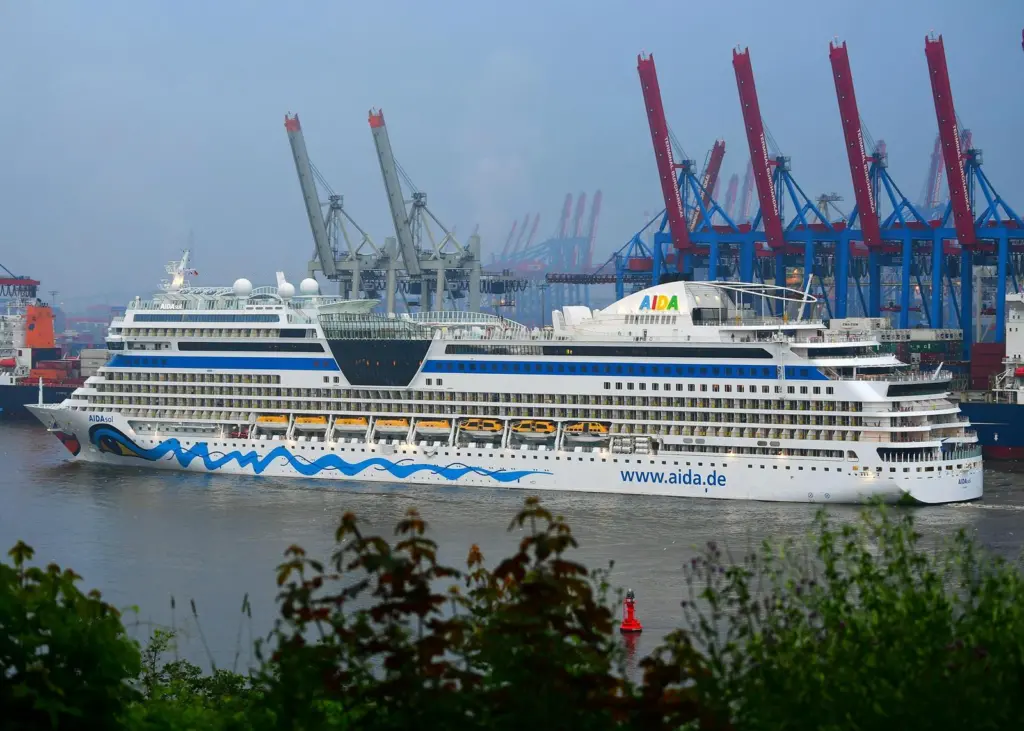
HVCC Hamburg Vessel Coordination Center, Wärtsilä and Carnival have been testing a one-of-a-kind, digital solution for just-in-time ship calls using real-world conditions between port and ship.
“HVCC has always attached great importance to the development of collaborative digital solutions. For us this means ‘passage planning 2.0’ – a further step towards intelligent ship coordination and the digitalisation of port logistics,” said Gerald Hirt, managing director of HVCC.
Optimisation
HVCC Hamburg Vessel Coordination Center has been carrying out live tests on the M/S AIDAperla and M/S AIDAsol, cruise ships which regularly call at the Port of Hamburg.
During these tests, Requested Time Arrival data (RTA) shared between HVCC and Carnival Maritime’s Fleet Operation Center in Hamburg, has been fed directly into the cruise ships’ electronic nautical chart (ECDIS) via a Navi-Port digital platform developed by Wärtsilä.
The continuous, dynamic, real-time data exchange improves coordination and allows for automatic modifications to a ship’s course and speed should conditions at port change during a voyage.
Other project partners include the classification society Bureau Veritas, to ensure that cybersecurity requirements are met. The management consultancy HPC Hamburg Port Consulting is also involved to lend its expertise in port-side project management.
Following the successful tests in the cruise segment, there are now plans to expand into cargo shipping. Talks have already apparently been held with container shipping companies.
Related Articles
 ALTERNATIVE FUELS GREENPORT
 ENERGY & TECHNOLOGY GREENPORT
 PROJECTS & INITIATIVES GREENPORT