![GreenPort[PortStrategy]](https://www.portstrategy.com/greenport/wp-content/uploads/sites/4/2026/09/GreenPortPortStrategy.svg)


Dredging will expand Hedland’s infrastructure
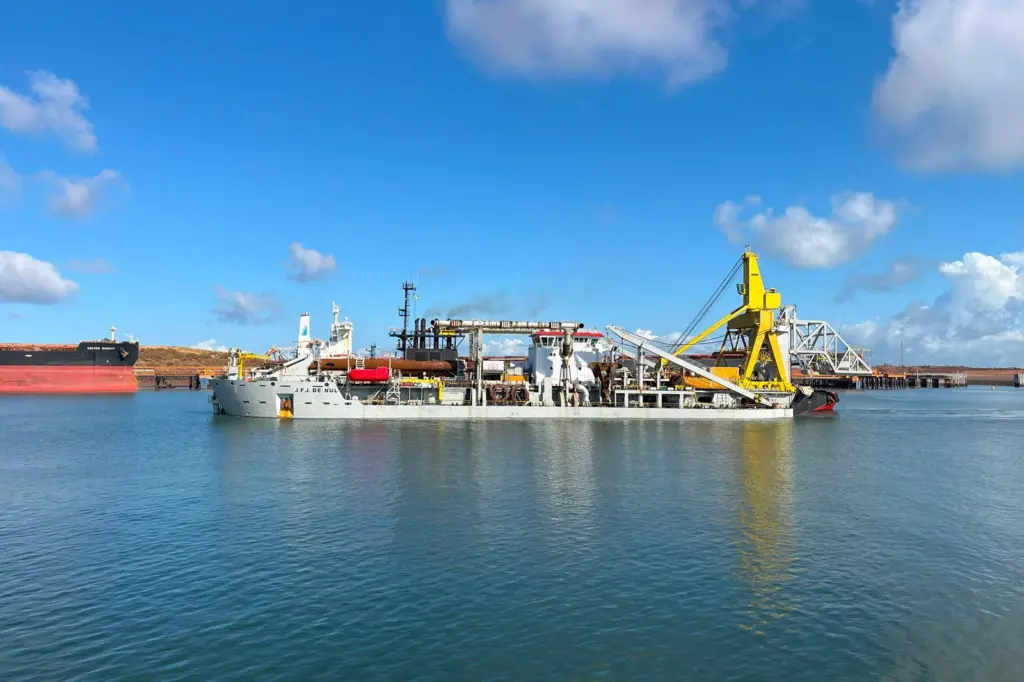
Jan De Nul has commenced dredging operations at Port Hedland, Australia, to support the expansion of port infrastructure and increase cargo capacity.
This expansion will accommodate a range of vessels, including bulk carriers and tankers, improving Port Hedland’s ability to handle both export and import of critical resources, including renewable energy infrastructure.
“This is an exceptionally important phase of the Lumsden Point project,” said Richard King, dredging and survey manager at Pilbara Ports.
“The dredged materials will be used to reclaim the mudflat, creating the foundation for future port infrastructure.”
Increased capacity
These capital dredging and reclamation works will establish deeper access channels, a swing basin and berth pockets at the Lumsden Point General Cargo Facility and Logistics Hub.
The project will involve dredging up to one million cubic metres of material, which will be pumped to a reclamation area. The reclamation process follows strict environmental guidelines, with ongoing monitoring to protect local habitats such as mangroves and corals.
Additionally, an Environmental and Cultural Heritage Management Plan has been put in place to ensure minimal environmental impact.
Jan De Nul’s dredging vessel J.F.J. De Nul is conducting the works, adhering to the highest environmental standards.
This project will ultimately create two additional berths, increasing Port Hedland’s cargo capacity and enhancing its role in exporting battery metals and importing renewable energy equipment.
It’s a critical step in expanding Port Hedland’s infrastructure, helping position it as a key player in global trade and renewable industries.
Related Articles
 ALTERNATIVE FUELS GREENPORT
 ENERGY & TECHNOLOGY GREENPORT
 PROJECTS & INITIATIVES GREENPORT