![GreenPort[PortStrategy]](https://www.portstrategy.com/greenport/wp-content/uploads/sites/4/2026/09/GreenPortPortStrategy.svg)
EXCLUSIVE: A practical way to decarbonise shipping routes
Green shipping corridors are gaining traction as a practical mechanism to decarbonise predictable shipping routes, where vessels operate using zero or near-zero-emission fuels supported by the necessary port and fuel infrastructure, writes Matt Moss, principal consultant – maritime, sustainable transport, WSP.
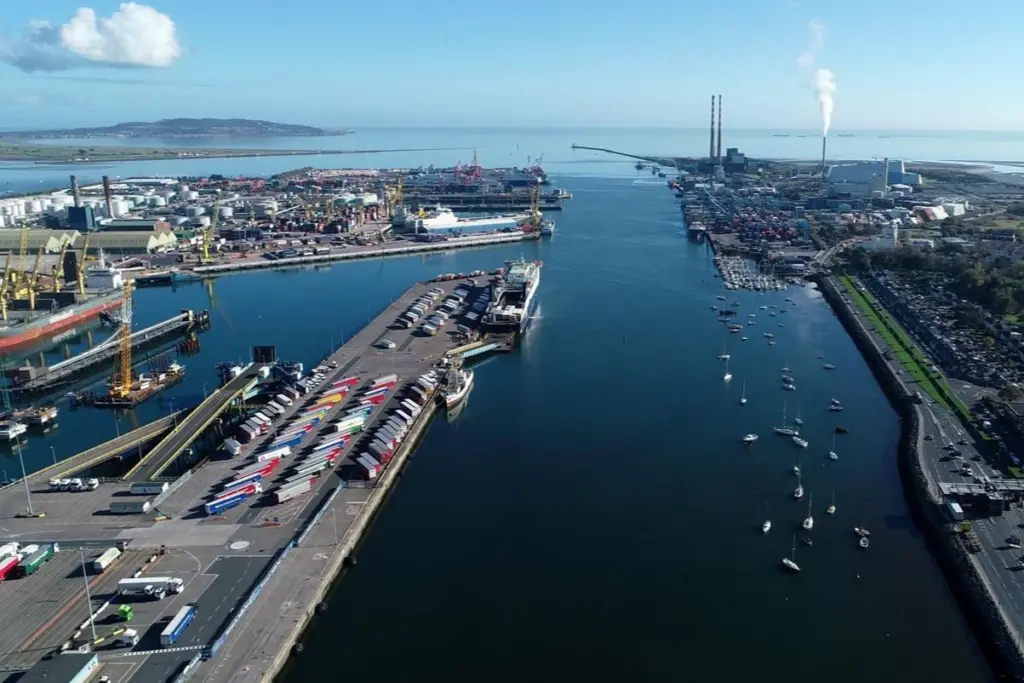
Since the launch of the Clydebank Declaration in 2021, the concept has gained significant global momentum. According to the Global Maritime Forum Green Shipping Corridor Report 2025, more than 60 corridor initiatives have now been announced worldwide, bringing together governments, ports, shipping companies and fuel suppliers to accelerate the transition to low-emission shipping.
Ricardo, now part of WSP, has supported more than ten green shipping corridor feasibility and pre-feasibility studies in recent years, working with governments, ports and operators across Europe and internationally.
These studies span a wide range of shipping segments, from RoPax ferries in the Irish Sea to container shipping across the Atlantic. This portfolio provides a unique cross-section of corridor development at different stages, from early concept design to detailed techno-economic feasibility.
Why green shipping corridors are emerging
For many stakeholders, green shipping corridors provide a structured way to manage the risks and opportunities associated with maritime decarbonisation.
First, corridors help organisations prepare for tightening regulatory requirements. With measures such as the EU Emissions Trading System, FuelEU Maritime and evolving IMO policies beginning to influence shipping operations, corridors provide a practical environment to test new fuels, technologies and compliance strategies before wider fleet deployment.
Second, corridors allow ports and shipping companies to position themselves within emerging alternative fuel supply chains. Early participation can strengthen competitiveness, attract environmentally conscious cargo owners and help secure access to new energy infrastructure.
Finally, corridors help concentrate investment and demand. By focusing decarbonisation efforts on specific routes, stakeholders can aggregate fuel demand, coordinate infrastructure development and create stronger investment cases for low-emission technologies.
Across the team’s work, several consistent findings are emerging about how green corridors are likely to develop, what enables them to succeed, and where the key challenges remain.
Predictable, high-frequency routes lead early deployment
Many of the earliest corridor initiatives focus on fixed liner services, particularly short-sea routes where operations are predictable and infrastructure requirements are manageable.
RoPax ferry services and regional freight routes are especially well suited to early corridor development. These routes typically involve a small number of vessels operating frequent sailings between the same ports, making it easier to estimate fuel demand, plan infrastructure investment and coordinate stakeholders.

Several corridor studies led by WSP’s Sustainable Transport team, formerly Ricardo, have examined such services in the North Sea and Irish Sea. In these cases, the regularity of vessel schedules allows emissions reduction pathways, fuel demand and infrastructure requirements to be assessed with a high degree of confidence.
Predictable operations also reduce uncertainty around fuel demand, infrastructure sizing and investment timelines, making these routes particularly attractive for early deployment of alternative fuels and shore-side energy solutions.
No single fuel pathway dominates
One of the clearest insights emerging from corridor studies is that there is no universal fuel solution for maritime decarbonisation.
Several alternative fuel pathways are currently being explored across the sector, including methanol, hydrogen, ammonia and sustainable biofuels. Methanol is attracting particular attention in the near term due to the growing orderbook of methanol-capable vessels and its compatibility with existing ship designs and fuel handling practices.
However, the long-term role of different fuels remains uncertain and will depend on a range of factors, including fuel availability, production costs, regulatory frameworks and regional energy systems.
As a result, corridor studies increasingly focus on identifying the most suitable fuel pathways for specific routes and vessel types rather than assuming a single dominant solution for the sector.
Electrification represents one area where greater clarity is emerging. Battery-electric propulsion is becoming increasingly viable for shorter ferry routes and other high-frequency services, particularly where vessels have regular port calls and reliable access to shore-side charging infrastructure.
Infrastructure and fuel supply remain the key bottlenecks
While technical pathways for low-emission shipping are increasingly well understood, corridor studies consistently highlight infrastructure readiness and fuel supply as the main barriers to implementation.
Ports may need to develop new bunkering facilities, storage infrastructure, safety procedures and grid connections to support alternative fuels and shore power. These developments often require complex permitting processes, long lead times and significant investment.
At the same time, the availability of green fuels remains uncertain in many regions. While corridor initiatives frequently assume future supplies of fuels such as e-methanol, hydrogen or sustainable biofuels, relatively few projects have secured long-term fuel supply agreements.
Ensuring that vessels, port infrastructure and fuel production develop in parallel will therefore be critical to turning corridor concepts into operational reality.
Corridors as platforms for the transition
While early corridor initiatives focused on specific routes between two ports, more recent studies suggest the concept is evolving.
Increasingly, ports are exploring how green corridors can support the development of alternative fuel bunkering hubs capable of serving multiple shipping routes. Rather than focusing solely on individual port-to-port connections, some initiatives are assessing how investments in fuel infrastructure could support a wider network of low-emission shipping services.
This reflects a broader shift in how ports are positioning themselves within the maritime energy transition. By developing the capability to supply alternative fuels, ports can play a central role in enabling the decarbonisation of multiple routes and vessel segments as the market develops.
Another emerging trend is the role of corridor initiatives as coordination mechanisms across the maritime value chain.
In many cases, the feasibility study itself acts as a platform for bringing together ports, ship operators, fuel suppliers, cargo owners and regulators. Through this process, stakeholders can align infrastructure plans, identify regulatory barriers and explore commercial arrangements needed to support low-emission operations.
This collaborative approach helps reduce uncertainty for investors and provides a shared roadmap for the transition.
Despite the challenges, corridor studies consistently demonstrate that substantial emissions reductions are technically achievable through the adoption of low-emission fuels and technologies.
Depending on the fuel pathway and operational profile, emissions reductions of 70–90% compared with conventional marine fuels are possible. These reductions can increase further as electricity grids decarbonise and renewable fuel production scales.
Green shipping corridors therefore provide a practical mechanism for demonstrating how deep decarbonisation can be achieved in real-world shipping operations.
What comes next for green shipping corridors?
As corridor initiatives mature, the focus is increasingly shifting from feasibility to implementation. Several early projects are now moving toward pilot deployments, infrastructure planning and commercial partnerships that will enable low-emission vessels to operate in practice.
Delivering operational corridors will require continued collaboration across the maritime value chain. Ports, ship operators, fuel suppliers and regulators must align investment timelines, fuel supply strategies and safety frameworks to ensure infrastructure and vessel technology develop in parallel.
Policy will also play an important role in closing the remaining cost gap between conventional and low-emission shipping. Carbon pricing, fuel standards and targeted public funding are likely to remain key enablers in the early stages of deployment.
As these elements come together, green shipping corridors will move from concept studies to real-world demonstration projects, with lessons from early initiatives helping to scale low-emission shipping across global trade routes in the years ahead.
Related Articles
 ALTERNATIVE FUELS GREENPORT
 ENERGY & TECHNOLOGY GREENPORT
 PROJECTS & INITIATIVES GREENPORT