![GreenPort[PortStrategy]](https://www.portstrategy.com/greenport/wp-content/uploads/sites/4/2026/09/GreenPortPortStrategy.svg)

EXCLUSIVE: Blue tech restores marine biodiversity
Marine renaturalisation specialist Ocean Ecostructures says its biomimetic reef technology is delivering measurable gains in biodiversity, biomass and carbon capture, as tightening environmental regulations drive growing demand from ports and offshore industries.
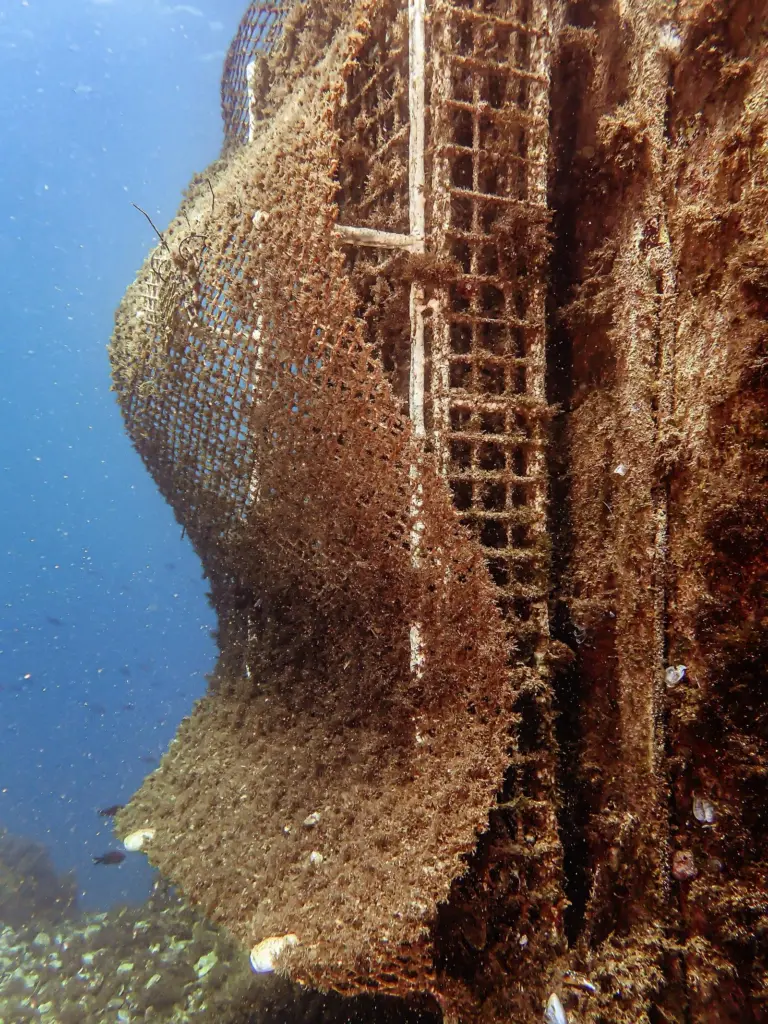
The blue technology company, which operates in more than 40 ports and marinas across Spain and Denmark, is preparing to expand into the United States and Saudi Arabia before the end of the year. Its life boosting units (LBUs) are designed to transform artificial marine infrastructure into functioning ecosystems by recreating the conditions found on natural reefs.
Scientific monitoring, carried out using remotely operated vehicles, artificial intelligence and the company’s iOceans digital platform, measures biodiversity, biomass, carbon sequestration and water quality while providing real-time reporting for customers.
Hector Paris, head of Strategic Growth at Ocean Ecostructures, said the results demonstrated the technology’s ability to restore marine life at scale. “Our main KPIs when monitoring our structures are biodiversity enhancement, biomass generated and CO2 fixed,” he said.
“Our LBUs are capable of creating complex and resilient ecosystems in a very short time – typically within six to 12 months.”
He added: “Compared with untreated marine infrastructure, 100 LBUs can generate an increase of between 100% and 200% in marine biodiversity, produce up to five tonnes of marine biomass per year and fix up to 2.8 tonnes of CO2 annually, representing an improvement of between 50% and 100% over untreated infrastructure.”
The company’s long-term monitoring programme has reinforced those findings. At one commercial port demonstration project, where 48 LBUs have been installed since 2022, researchers recorded 174 marine species during 2025 – almost double the number found on untreated harbour walls. Accumulated biomass reached more than 1.1 tonnes, while carbon fixation totalled more than 480kg over the monitoring period.
Paris believes the technology’s timing is closely linked to changing regulation.
“The EU Nature Restoration Law means offshore operators and port authorities are no longer just responding to voluntary ESG pressure,” he said
“They are facing legally binding restoration obligations and are actively looking for scalable, evidence-based technologies that help them comply.”
He said the technology was suitable for ports, offshore wind farms, oil and gas platforms and subsea cable infrastructure, while its monitoring system provided independently verifiable evidence of environmental improvements, helping companies reduce regulatory, reputational and greenwashing risks.
Looking ahead, Ocean Ecostructures plans to accelerate deployment across the Mediterranean, North Sea, United States and Red Sea while developing its ‘Blue Ports’ model, bringing together port authorities, shipping companies and commercial operators to fund marine restoration projects.
“We believe this collaborative approach, connecting the operators who generate impact with the infrastructure that regenerates it at the same location, is what will allow the Bio Boosting System to scale meaningfully over the next few years,” Paris said.
Related Articles
 ALTERNATIVE FUELS GREENPORT
 ENERGY & TECHNOLOGY GREENPORT
 PROJECTS & INITIATIVES GREENPORT