![GreenPort[PortStrategy]](https://www.portstrategy.com/greenport/wp-content/uploads/sites/4/2026/09/GreenPortPortStrategy.svg)

EXCLUSIVE: Combining efforts in Fijian mangrove regeneration
A groundbreaking five-year mangrove research and rejuvenation programme called Project Halophyte has been launched in the Fiji capital Suva with support from Swire Shipping.
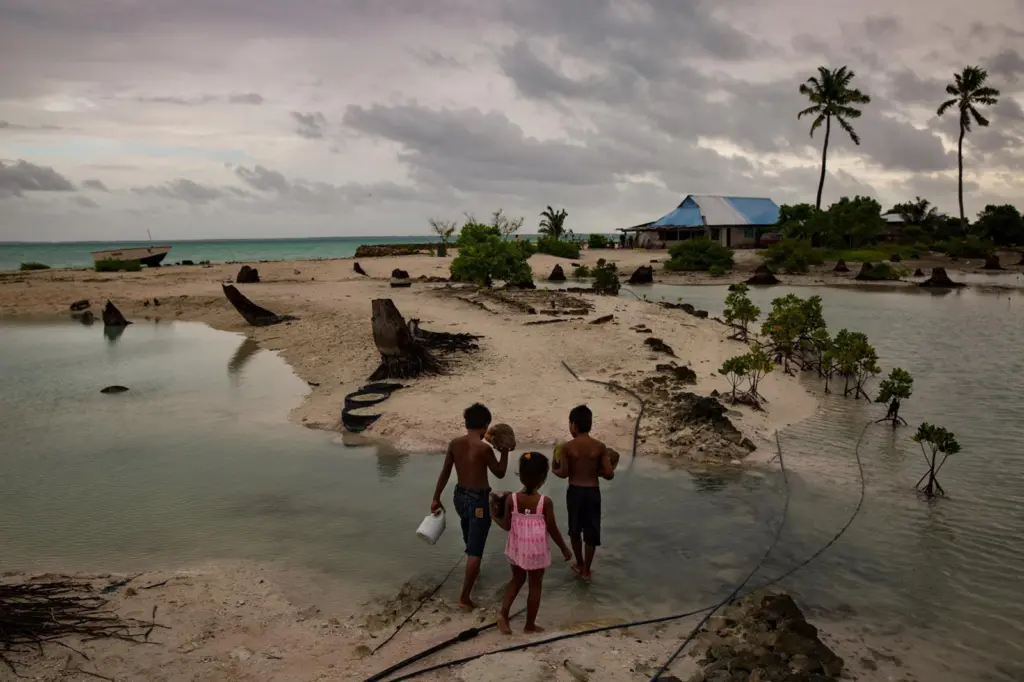
The collaboration between the University of New South Wales Sydney (UNSW) and University of the South Pacific (USP) in Fiji is the most significant such regeneration project ever attempted in Fiji, which like many South Pacific nations is facing issues such as coastal erosion and sea-level rise as a result of climate change.
Project Halophyte will develop innovative floating mangrove pontoons and undertake environmental restoration in partnership with local communities along the coast of Fiji’s main island Viti Levu.
Mangroves are a type of halophyte — a salt-loving plant that grows in or near tidal water sources. They take up 5% of the global coastal area but sequester around 15% of coastal carbon. Carbon capture is important in the fight against global warming.
Mangroves store over than four times more carbon than terrestrial forests and can store up to 76.5% of the carbon from the surrounding ecosystem. Their branch and root structure provides an ideal breeding ground for juvenile coral and fish. Around 30% of global fish species are mangrove-dependent.
Mangroves are also home to various bird species, including egrets, herons, kingfishers, hawks and osprey. The plants filter nutrients from surrounding waters by trapping sediments and limiting water movement.
In some cases, they can also keep pace with sea-level rise through a process called “vertical accretion” that helps them adapt to the challenges of climate change. Mangroves also play an important role in shoreline protection by mitigating the power of waves and storm surges.
Because of their remarkable environmental capabilities, global mangrove ecosystems are seen as “blue carbon superheroes” by the universities involved in Project Halophyte – blue carbon being the carbon sequestered by coastal vegetation.
The challenge
The coastlines of Pacific Island countries and territories face a variety of pressures. The impacts of a warming climate and the draining of coastal areas has reduced mangrove habitat, impacted natural tidal cycles and degraded important ecosystems.
In coastal communities, the impacts have been severe: Changes to tidal systems have increased flooding and the risk of coastal erosion. Mangrove ecosystem loss is resulting in reduced carbon sequestration, declines in marine and estuarine water quality, reduced biodiversity and a decrease in sustainable fishing yields. Impact on the health and biodiversity of adjacent seagrass and coral reef ecosystems is also of grave concern.
Coastal farmers face increasing pressures due to the degradation of lands and crop yields. Degraded coastal environments also negatively impact fisheries, tourism and the livelihoods they support.
Previous efforts to restore mangroves in these regions has typically resulted in high failure rates. A novel lifecycle approach developed at UNSW Sydney offers an alternative method to maximise outcomes and increase on-ground success, using floating mangrove pontoons.
The concept is to have a mangrove habitat floating as an island, providing sustainable ecosystems and a protective shield for vulnerable coastlines. This approach supports the regrowth of blue carbon ecosystems, including mangrove forests.
Researchers from UNSW Sydney and USP will transfer two large-scale nature-based pontoons developed at UNSW and pilot them in Viti Levu. In partnership with local communities, the research team will seek to reinstate natural tidal flows and revitalise the local mangrove ecosystems.
The aims among others are to reduce deforestation pressures on existing mangrove habitats, increase coastal blue carbon sequestration, improve water quality, reduce wave energy and increase healthy mangrove, seagrass and coral reef habitats.
Project Halophyte will see up to 40 PhD students, early-career researchers and academic supervisors from Australia and Fiji collaborate with local communities. Researchers will track the environmental, social and economic outcomes of the project over five years.
Led by UNSW’s Dr Andrew Dansie and Professor Will Glamore, the project is designed to support the UN’s 2030 Sustainable Development Goals and 2021-2030 Decade of Ecosystem Restoration. It is being undertaken in conjunction within UNSW’s societal impact framework which seeks to improve the world by progressing environmental sustainability and resilience, social cohesion, health, wellbeing, and economic prosperity.
Global leader
This project positions Fiji as a global leader in piloting innovative and ambitious approaches to address climate change. It offers significant potential for other countries in the South Pacific.
Fiji’s Assistant Minister in the Office of the Prime Minister, Sakiusa Tubuna said the research undertaken by UNSW and USP, coupled with Swire Shipping’s backing, is a positive step towards mitigating the impacts of climate change while simultaneously battling its causes.
UNSW Vice-Chancellor and President Professor Attila Brungs said it will play a pivotal role in advancing vital research and expertise in nature-based solutions – “Our collaborative efforts with the Fiji and Pacific community position this project as a potential blueprint for creating responsible carbon sinks, with the potential for replication in other Pacific Island countries and territories in the foreseeable future.
“Our planet is at a critical point, with the urgency to address the climate crisis intensifying day by day. However, through strategic partnerships like this one, we can tackle these problems together thereby accelerating progress towards achieving a global net zero economy.”
Swire Shipping chief executive officer, Jeremy Sutton said Project Halophyte reflects his company’s ongoing commitment to support local communities and advancing vital sustainability research efforts in the Pacific.
“This pioneering and transformative initiative harnesses the shared knowledge across the Pacific to address critical sustainability challenges, demonstrating the impact of collective action.
“The project marks the beginning of a promising partnership, and I am optimistic that it will benefit the local community and pave the way for a more sustainable future for Fiji and the region,” he said.
Dr Dansie said Project Halophyte’s partnerships will enable the research innovation and large-scale intervention needed to address the environmental degradation that is becoming a huge problem for the planet.
“We are so thankful to Swire Shipping and the Fijian Government for backing this important project in support of the growing ambition among Pacific nations to tackle climate change,” he said.
Related Articles
 ALTERNATIVE FUELS GREENPORT
 ENERGY & TECHNOLOGY GREENPORT
 PROJECTS & INITIATIVES GREENPORT