![GreenPort[PortStrategy]](https://www.portstrategy.com/greenport/wp-content/uploads/sites/4/2026/09/GreenPortPortStrategy.svg)
EXCLUSIVE: Floating classrooms for marine litter education
A New Zealand organisation is working with the country’s ports and other organisations to rid harbours, port precincts and the coastline of the rubbish that blights our oceans.
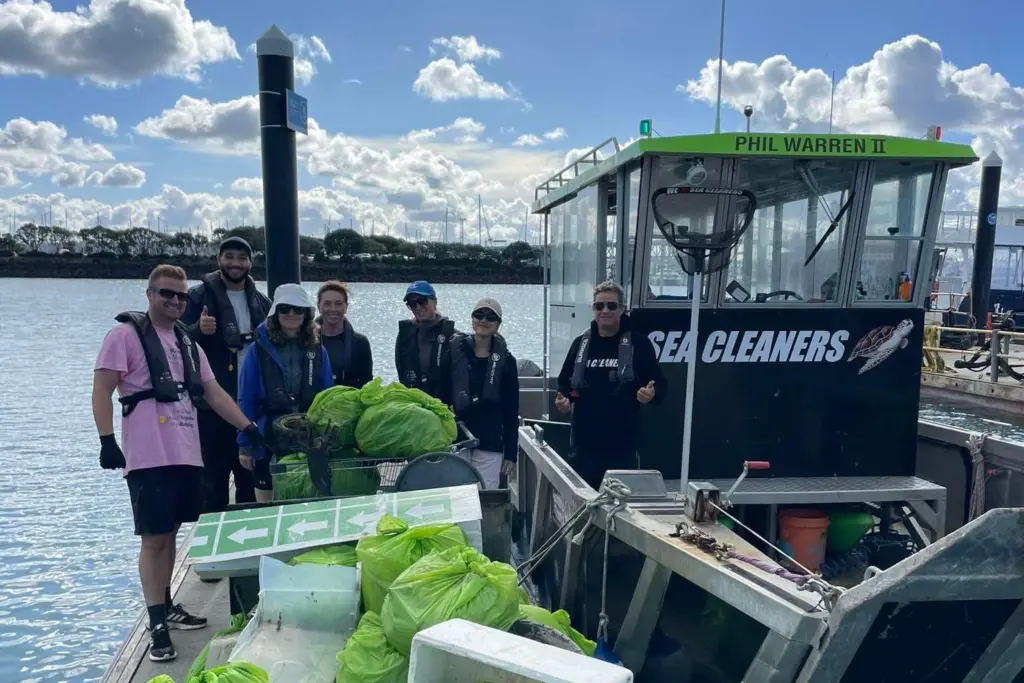
The New Zealand non-profit Sea Cleaners Trust – not to be confused with The SeaCleaners, a French-based organisation started in 2016 that also has a goal of reducing plastic waste at sea and on land – has been going since 2002 and is growing.
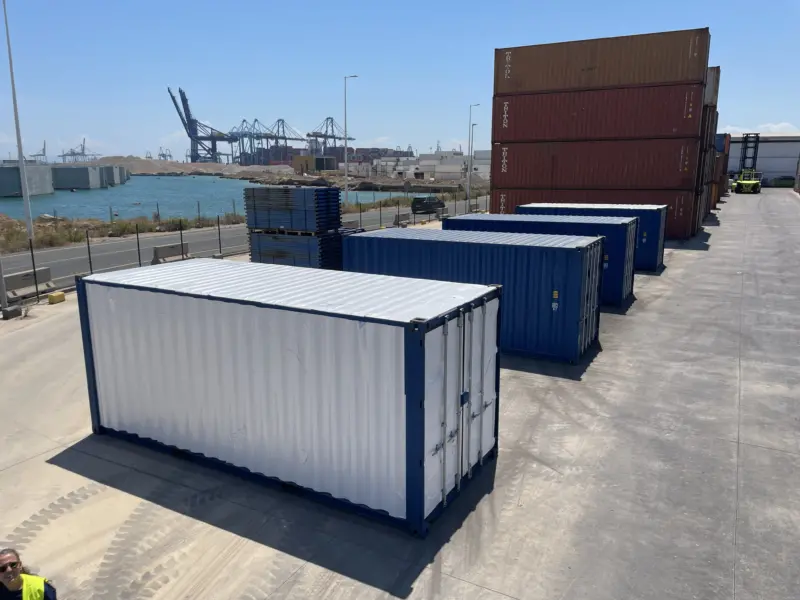
In that time the Trust team of paid staff and volunteers has removed over 20 million litres of waste from marine and freshwater environments, equating to more than 200 million individual pieces, enough to fill 674 shipping containers. That has required over 190,000 hours of volunteer support for the operation.
Fighting marine litter
Several ports are supporting the venture and are benefitting from the work being done.
In its latest quarterly report alone, Sea Cleaners intercepted nearly 643,000 litres of litter from six harbour and sea areas from mid-February 2025, before it could cause irreversible harm to marine life and ecosystems.
Audit data reveals that a staggering 84% of items are plastic, highlighting the scale of pollution threatening the oceans – “Every piece counted is a piece that won’t end up in the stomach of a seabird or a turtle, wrapped around a dolphin, or floating in the Pacific”, says the group.
Its ambitious vision is straightforward and inspiring – it’s committed to preserving New Zealand’s stunning coastline for the ”benefit of marine life and for the enjoyment of all”.
The strategy involves not just bringing teams together in boats to remove rubbish from harbours and beaches, but also educating people, especially the younger generation, on responsible waste disposal practices, such as recycling, to ensure they do not harm the environment.
Founding trustee Hayden Smith had the vision when kayaking up through Auckland’s Waitemata Harbour (where the Port of Auckland is also based) and finding himself surrounded by rubbish. He wondered “Why is there no-one out here cleaning this up?”
He initially thought he might be able to get a contract removing it, but as he knocked on doors around the city he came to realise there was a need for a clean-up of much greater proportions.
Branching out
It took time to get momentum. Mr Smith tells GreenPort that the organisation initially focused on cleaning up the Waitemata Harbour. The support of one of the local mayors, Sir Bob Harvey, gave the organisation momentum and it was gifted a retired Port of Auckland boat to enable it to take to the water.
Funding began to roll in from sponsors such as Auckland Council and other local bodies, plus philanthropic support and grants from other organisations. Ports such as Auckland, Tauranga, Lyttleton and Port Nikau in Northland are strong supporters. A governance structure was set up with the former deputy prime minister Paula Bennett now chairing.
As its reach grew, the Trust realised it had to spread its wings.
“We couldn’t stop at Auckland. Our focus is to get boats into other population centres. We now have three in Auckland, one in Northland, one in the Bay of Plenty, one in Canterbury and we have plans for another four,” says Mr Smith.
The Trust’s work is decided by tides and winds as to where the boats will work. Bad weather does not normally stop operations, as the boats can then work on the shoreline – almost all of the rubbish that is picked up is from the high tide line ashore – or can clean up estuaries where rubbish has collected. Rubbish picked up from the water is done by using a swimming pool scoop.
Plastic waste includes many pegs from oyster farms which use the pegs to maintain the structure and position of longlines, cages, and other gear. A lot of litter also comes from drains and from stormwater systems which carry rubbish from streets.
Ports benefit from the aesthetics of having the port areas cleaned up as well as a more practical benefit – “If we didn’t bag all the plastics or ropes, I’d hate to think how many water intakes or propellers would be fouled,” says Mr Smith.
The latest expansion has seen the Port of Tauranga set up sponsorship awareness sessions and helped launch the expansion of Sea Cleaners to its district in the Bay of Plenty.
A port spokesperson said the port is very proud to be one of the local sponsors funding Sea Cleaners’ important work in Tauranga Moana (sea).
“We’re keen to support initiatives that protect and enhance the natural environment in this special place. It’s a nice complement to our existing sponsorships of the Our Backyard Trust annual harbour clean up and the neighbourhood litter collections involving our team members and their families.”
Education and recycling
A major emphasis of Sea Cleaners is education.
“We’re relentless in building awareness of our project’s vision and goals, forging essential collaborations with local charities, schools, community groups, iwi [local Māori tribes] and corporations. We’re on a mission to educate people about the dire consequences of littering and are actively working to eradicate it,” says Mr Smith.
Recognising that its work is not just clean-up but part of frontline environmental protection at scale, Sea Cleaners is part of the “Recycling Alliance – Waste Stream”, a developing, innovative partnership with other organisations which diverts significant volumes of waste from landfill, transforming them into commercially-valuable products.
One such transformation is the production of posts for farm fencing. Northland Waste processes not only marine waste but also recovers four times more plastic monthly from the general public.
Through the Alliance, these plastics are redirected from landfill and sent to Futurepost, who repurpose them into sustainable fence posts serving the farming, horticulture, and viticulture sectors in New Zealand, and are now reaching global markets, proving the commercial viability of upcycled marine and consumer waste.
Plastics that Futurepost cannot process will soon be redirected to NILO, an innovation hub developing glue adhesives for particle board used in the construction industry. This creates a solution for the lowest-grade plastics and reduces reliance on virgin chemical components.
Two other companies who may be joining the Alliance are Plasrock and Mammoth. Plasrock converts surplus plastics into concrete aggregate while Mammoth repurposes them into building insulation materials.
The Alliance collaboration not only diverts tonnes of plastic from landfill monthly, it reduces carbon emissions through local processing and production, promotes green jobs in waste innovation sectors and educates communities.
Mr Smith says that as funding allows, the team will expand, dealing with one stretch of coastline at a time, focusing on areas adjacent to major population centres to take the mission to the heart of the problem.
He is realistic about the size of that problem. “I don’t believe a human being alive will ever see the ocean without plastics. But our purpose is to reach out and our boats are our classrooms.”
Sea Cleaners is in this for the long haul.
Related Articles
 ALTERNATIVE FUELS GREENPORT
 ENERGY & TECHNOLOGY GREENPORT
 PROJECTS & INITIATIVES GREENPORT