![GreenPort[PortStrategy]](https://www.portstrategy.com/greenport/wp-content/uploads/sites/4/2026/09/GreenPortPortStrategy.svg)

EXCLUSIVE: UNCTAD project boosts Africa’s smart ports’ dream
Africa could be on the path to realising the dream of hosting sustainable and smart ports (SSPs) as several of the gateways fast-track transition to green energy status

This process of transitioning into SSPs has recently received a major boost after the UN came in to finance a project, spearheaded by the United Nations Conference on Trade and Development (UNCTAD), called ’Sustainable Smart Ports for African countries’.
“The post pandemic reality requires new responses and ways of doing business to ensure sector’s resilience and business continuity and allow shipping and ports to effectively service international trade and global value chains,” UNCTAD says regarding the SSP project.
Tri-port project
The project is a three-year initiative to support three port operators in Ghana, Mauritius and Morocco, to harness their potential for producing and distributing renewable energy, as well as improve efficiency in energy utilisation by reducing greenhouse gas emissions and cutting down on their energy costs.
Ghana Ports and Harbors Authority (GPHA), Mauritius Ports Authority (MPA) and Tanger Med Port Authority (TMPA) are involved in this initial phase of the SSP project.
The GPHA, MPA and TMPA ports are expected at the end of the project period, to “leverage on new data environments, achieve energy transition of the maritime sector, as well as effectively utilise artificial intelligence and green technology-based solutions to enhance port operational efficiency.”
Furthermore, there is optimism the ports will be well placed to “promote energy efficiency and clean/renewable energy sustainability, as well as tap into the possibility of producing clean/renewable-energy production and distribution.”
For MPA, the UNCTAD initiative could not have come at a more opportune time as the authority is implementing a sustainability programme in line with global efforts to reduce greenhouse gas emissions.
Currently, MPA says it relies on auxiliary generators, known for emissions of “carbon dioxide, oxides of nitrogen, sulphur and other air pollutants, affecting local air quality and ultimately the health of both port workers and nearby residents.”
But ultimately, seagoing vessels would be connected to an onshore power supply, ideally the Mauritian electricity grid to replace the generators that the authority says, “create a noise nuisance.”
Elsewhere, at the Tanger Med Port Authority, the management has approved an energy transition plan for the three ports of Tanger Med 1, Passenger and Ro-Ro and Tanger Med 2, aimed at achieving “100% zero carbon by 2030.”
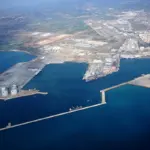
The authority, which is part of the Tanger Med Port Complex, an industrial port ecosytem, located 45km northeast of Tangier and opposite of Tarifa, Spain on the Strait of Gibraltar, has identified four strategic areas for implementation in its energy transition plan.
These include the supply of green electricity to all users of the Tanger Med ecosystem, energy efficiency entailing controlling energy demand and optimising energy consumption in the Tanger Med area, transitioning to sustainable mobility, by putting 100% electric service vehicles on the road at the Tanger Med Port Complex and establishing a circular economy that enables the recovery and optimisation of waste and wastewater.
The UNCTAD SSP for African countries is in line with the activities envisaged in the implementation of UN Sustainable Goal 7.
This aims to “double the global rate of improvement in energy efficiency and expand infrastructure and upgrade technology for supplying modern and sustainable energy services for all in developing countries.”
Related Articles
 ALTERNATIVE FUELS GREENPORT
 ENERGY & TECHNOLOGY GREENPORT
 PROJECTS & INITIATIVES GREENPORT