![GreenPort[PortStrategy]](https://www.portstrategy.com/greenport/wp-content/uploads/sites/4/2026/09/GreenPortPortStrategy.svg)
EXCLUSIVE: Working to electrify the dredging market
In this article, GreenPort talks to Wouter Guijt, CEO and Founder of Nexus, about its work with Van Oord to test the viability of a fully electric dredging project at Dordrecht.
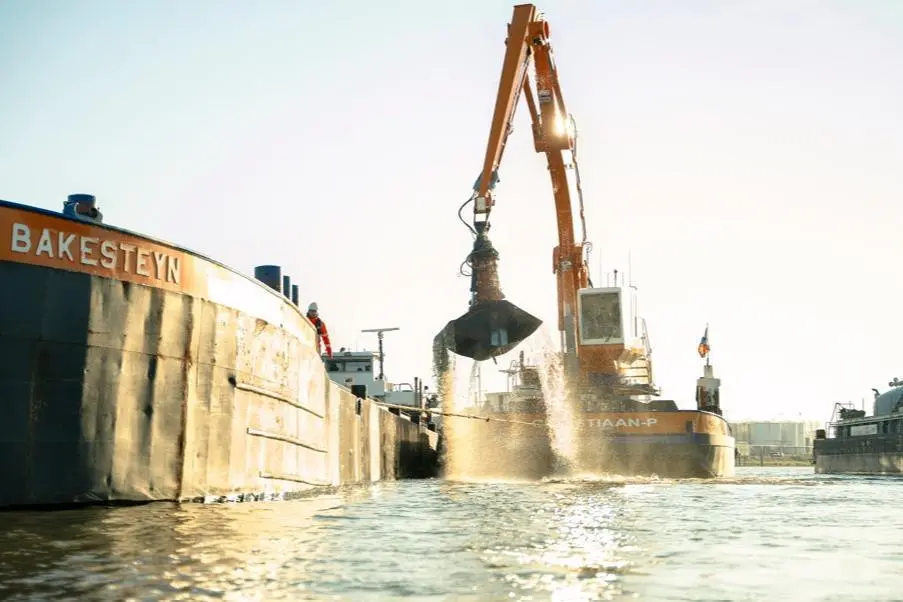
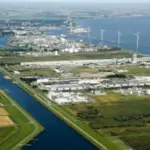
Nexus Energy has recently supplied its PowerPack to a pilot project taking place in the seaport of Dordrecht.
During the project, Van Oord, in cooperation with ZEDHub, Smart Delta Drechtsteden, the Municipality of Dordrecht and Port of Rotterdam, assessed the potential of a fully electric dredging operation using the Van Oord dredger Christiaan P.
The aim of the project was to test the viability of an electric dredging operation and to get more insight into the actual power distribution on board.
“In the fossil fuel era, every captain or fleet manager has a figure in their head about how much fuel oil is used on average per hour, per day or per year,” Wouter Guijt, CEO and Founder of Nexus, tells GreenPort.
“If we want to make the transition to more expensive renewable fuels, we don’t need to know how much gross energy we put into the vessel’s operation, but we want to know as precisely as possible how much energy each system on board demands. How much energy, for how long, at what intervals.”
Pilot focus
During the pilot project, plenty of monitoring was performed in order to gain a clear picture of energy demands on the vessel during operation and during other periods.
With this knowledge, Mr Guijt says that new retrofits or new powertrains can be better designed, with greater efficiency and lower prices, which helps in keeping the cost of a zero emissions operation as low as possible.
Prior to the project, Christiaan P had its engines replaced with electric motors and its crane replaced with an electric crane. Two battery systems were installed (870 kWh each), as well as a Nexus PowerPack and a hydrogen storage container – enabling charging of the batteries in the absence of shore power and during operations.
With regards to infrastructure needed on the quayside, there was very little to do. The project partners only needed to agree with a hydrogen supplier where and when to drop off the fuel supply and when to pick it up again.
Mr Guijt says Van Oord was advised to use standard 20ft tube trailers, containing up to 400kg of compressed hydrogen. This is equivalent to a net usable energy storage of 6MWh. This also meant that existing infrastructure on the quayside could be used with no modification.
On the vessel deck, Nexus prepared a slot for the 20ft container with standard twist locks and, together with Van Oord, made sure that the required safety features were installed and available. For the storage container, this mainly required the identification of hazardous zones and the supply of compressed air via a safety valve.
During the project, the project partners conducted research into how efficient and effective a zero-emission dredging operation is in practice.
They conducted various measurements, such as energy consumption when sailing at different speeds and during light and heaving dredging. In addition, they considered how the batteries were charged via shore power, as well as by the vessel’s own power and the possibility to continually charge during operations thanks to the Nexus PowerPack and hydrogen storage.
“This gives us all insight into the influence of the cold weather on the discharge rates and therefore, available power of the installed battery systems, but also on the effects of various layers of redundancy of the Nexus PowerPack on the hydrogen consumption and where improvements can be made,” says Mr Guijt.
He explains that these kinds of cooperative projects are invaluable going forward.
“There is still a lot to learn in the current transition towards zero emission operations the maritime sector finds itself,” he says.
“A thorough understanding of the operational profiles on board, based on actual measurements with the right supporting meta-data is an absolute necessity to make the transition as smooth and cost-efficient as possible. Pilot projects such as these, with a client that has the same hunger for knowledge and innovation, are the ones that make us really excited.”
Wise advice
For ports and terminal looking to embark on their own electrification projects there are plenty of lessons to be learned from this pilot project.
“Start with a blank canvas, with open visors. Gather information, ask questions, be curious and challenge the status quo or any concept that is being proposed,” says Mr Guijt.
“Only when we realise that the transition we are about to make is no longer an incremental innovation where we tweak small things to gain a few percentages in fuel efficiency, but a disruptive one where we need to do things differently, then we are able to really learn quickly and minimise our opportunity costs.”
“Nobody has all the answers at this stage and there is no silver bullet. But that doesn’t mean we can’t come close and that things will only become more expensive when going zero emission.”
Nexus’s PowerPack offers considerable cost savings for electrification projects. To start with, it’s modular/plug and play and is containerised for easy installation.
With few moving parts it requires minimal maintenance (meaning increased uptime) and enables continual charging while working. This of course also leads to increased uptime and therefore more earning potential.
The environmental benefits of the PowerPack include zero emissions performance, even in the absence of shoreside infrastructure and no noise, odour and vibration, making it the ideal solution for use in all environments, including in ports and close to residential areas.
Furthermore, Mr Guijt says that with the PowerPack clients do not need to consider their project as a one-off.
“Why re-invent the wheel when there is a product available that has all functionalities already installed, tried and tested, ready to be implemented on board within a fully integrated small modular containerised box?” he says.
“Standardisation and economy of scale are what the industry is looking for to bring costs down, so that’s exactly what we offer in various power ranges.”
Mr Guijt says that one last important take-home message from the project would be to make sure a detailed monitoring plan is compiled early in the project where all parties agree on the measured parameters.
“This ensures you are all talking about the same problem,” he says.
Embracing greener operations in future
Away from its recent pilot project with Nexus, Van Oord is focusing on further reducing the emissions of its fleet.
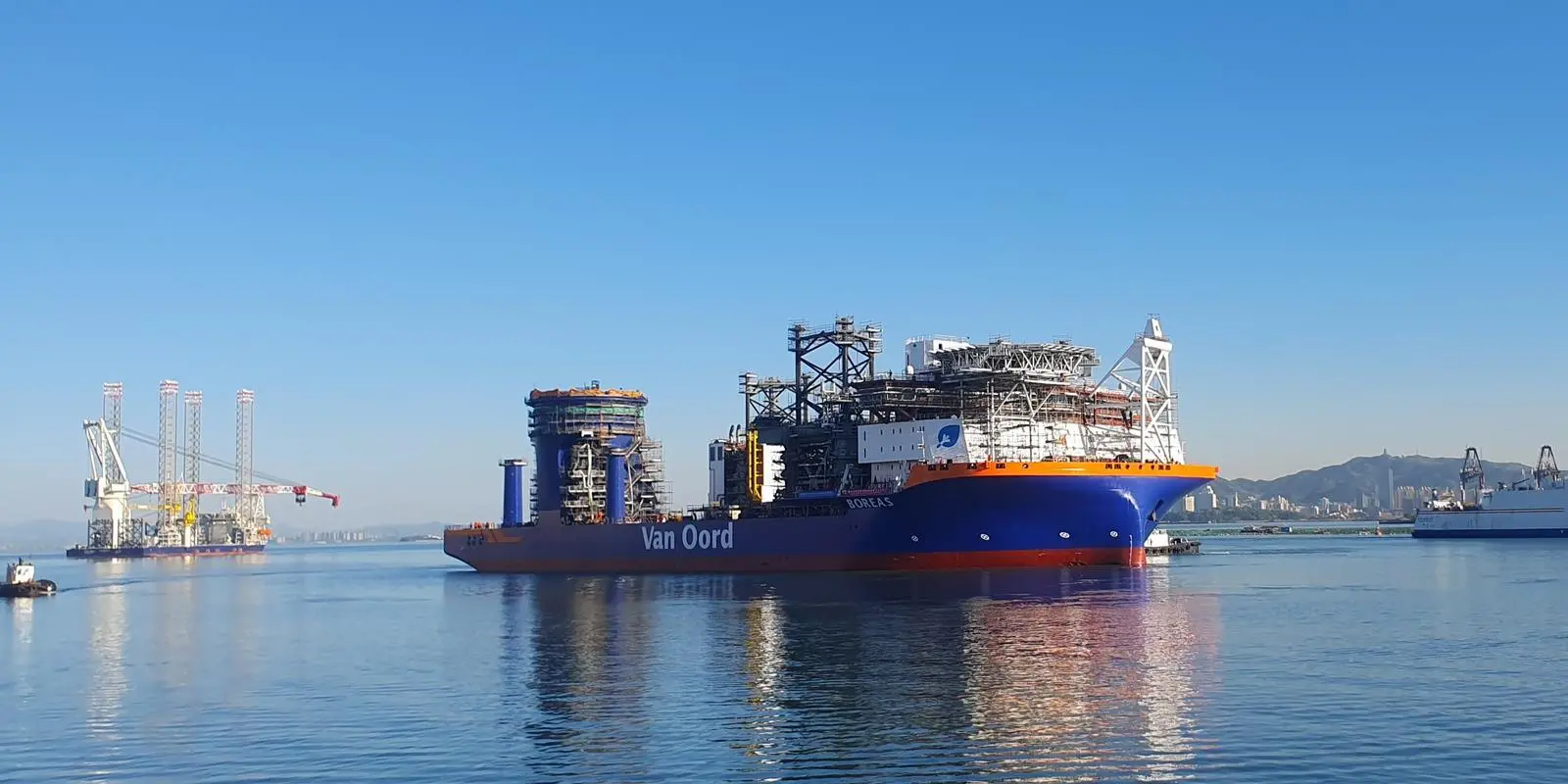
In March 2025, the newbuild Boreas, the largest offshore installation vessel of its kind, arrived at TMA Logistics in the Port of Amsterdam, where the vessel will undergo its final completion and commissioning phase before embarking on its first offshore wind project.
The Boreas is an example of how Van Oord is implementing the energy transition. The vessel is the first of its kind capable of running on methanol, a fuel that will reduce its footprint by more than 78%. In addition, it is equipped with cutting-edge Selective Catalytic Reduction (SCR) technology to reduce NOx emissions to an absolute minimum.
A battery pack of about 6,000 kilowatt hours can manage peak loads and regenerate energy to further reduce fuel consumption and the corresponding emissions.
In February 2025, Van Oord also installed a series of advanced selective catalytic reduction (SCR) systems on its cable-laying vessel Nexus.
Five SCR units in all were installed, one for each engine. The SCR technology contains a catalytic converter behind the engine which reduces nitrogen (NOx) emissions to an absolute minimum. It works by a catalyst which reacts with injected urea, chemically removing NOx from the vessel’s exhaust emissions. The upgrade means the Nexus is now fully IMO Tier III compliant.
Van Oord said it is committed to reducing its emissions and becoming net-zero. It is currently assessing its existing fleet and determining the right modifications for optimising energy efficiency and reducing greenhouse gas emissions.
Related Articles
 ALTERNATIVE FUELS GREENPORT
 ENERGY & TECHNOLOGY GREENPORT
 PROJECTS & INITIATIVES GREENPORT