![GreenPort[PortStrategy]](https://www.portstrategy.com/greenport/wp-content/uploads/sites/4/2026/09/GreenPortPortStrategy.svg)

Green Ports Initiative in Spain
In current times society is becoming more and more sensitised about environmental protection – as Sara Blanco Monge, Systems Engineer at Isdefe explains.
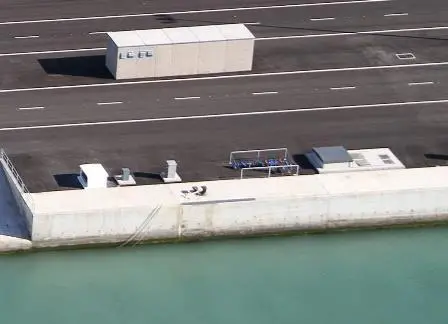
This growing concern has also reached the ports sector, which has to comply with safety and environmental protection regulations in their facilities as in every other industry. The future of a port and its industry depends on the correct relationship between three factors: economic, social and environment.
If the port and its industry want to be competitive then a joint approach between the port and the rest of authorities and companies is required. Together they must generate the proper conditions for a sustainable development in these three areas.
Ports must engage in strategic thinking about their future. As they create a huge part of the infrastructures in a territory, they are forced to plan their operations in a strategic way. The process of developing a strategic plan is very complex, involving technical, organisational and port policy analysis and decisions. But this process will contribute to fully integrate the ports in the host community, being able to achieve the concept of a Green Port.
The EU, and the Commission in particular, have been integrating such requirements into all their policies including, of course, transport. They have recently published their strategic goals for the Maritime Transport Policy. One of the objectives is to ensure that modal “back-shift” from short-sea shipping to road is avoided, or the promotion of alternative fuel solutions in ports, such as the use of shore-side electricity.
Already in 2006 the EU adopted a framework for energy end-use efficiency and energy services (Directive 2006/32) with the objective of achieving efficiency in energy use and other energy services to help reducing CO2 emissions and other greenhouse gases.
Member countries have started developing their own plans with different energy efficiency measures and indicators to verify compliance with objectives set by the EU.
In Spain, the Ministry of Public Works approved a plan for savings, energy efficiency and emissions reduction in transport and housing. Its main target is to promote environmentally friendly modes of transport, encouraging also the use of so-called “Motorways of the Sea”. It includes specific measures to reduce CO2 emissions in maritime transport, as the following:
- Energy efficiency in Maritime Terminals.
- Promotion of energy efficiency in port services.
- Generation and use of renewable energies in ports.
- Promotion of rail-port connections.
Based on this strategy, the stated-owned company Isdefe has developed a business area for Green Ports. This company provides engineering and strategic consulting services, technical assistance and program management to the Spanish Public Administrations and other International Administrations and Public Bodies. The main goal of the company is supporting the Ministry of Defence and the Public Administrations (national and international) in technological and strategic interest areas, through a consulting and engineering service of utmost quality.
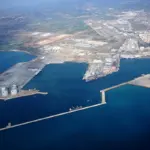
Recently this company has participated in the development of various projects co-financed by NATO and Spanish Ministry of Defence under the NSIP program, targeting the expansion and modernisation of port infrastructure in Rota Naval Base. Under this framework the following environmental actions have been performed:
- Waste / oily water collection: the port has its own waste / oily water collection systems. The global management of these services is owned by the Port Authority, they are responsible for conditions and operation of the systems, avoiding spillages and ensuring the quality of sea water.
- Emissions reduction: all piers are equipped with shore-side electricity, so all ships in port have the possibility of connecting their electrical system to the external power. They can shut down the auxiliary engines which represent a reduction of emissions, noise and vibration.
- Energy business plan: the guidelines and targets to rationalise and optimise energy management have been set. The objective is reducing significantly energy consumption, adopting more efficient management models, taking advantages of existing resources and capacity of energy generation for self-consumption.
As a significant milestone, the Rota Naval Base is certified in the Environmental Management System EN ISO 14001. It is the first Spanish Green Port, and it serves as a reference model for other port facilities in the civilian context.
This experience is being transferred to other Spanish civilian ports. Actually ports of Melilla and the Balearic Islands are collaborating with Isdefe in several projects to reduce emissions in the ports areas. The solution adopted in all cases is the implementation of a shore-side electricity system for ships. The calculation of emissions reduced is orientative because it depends on multiple factors, but the results are conclusive: the environment improvement in terms of noise, vibration and emission of greenhouse gases makes the projects successfully for the ports and the surrounding cities.
Based on this background, the main environmental targets that the port sector should try to reach in becoming a Green Port are the following:
- Waste management
- Provide an appropriate service for the collection of ship-generated waste, transference to a treatment facility approved by the competent authority and where appropriate, the treatment itself.
- Negotiate with service providers the terms and conditions of the service, including technical specifications to be met by operations and waste reception facilities, as well as the means available at the port. They must conform to applicable laws.
- Study the feasibility of installing in the port’s own collection and waste treatment system (e.g.: oily water), seeking the less environmentally-harmful treatment systems. Thus, the full service management is responsibility and competence of the Port Authority.
- Establish the guidelines which ships must follow to discharge the waste water into the harbour, so that the operation is performed with the maximum safety to avoid spills of pollutants (Waste Management Plan).
- Emissions reduction in the port area
- Development of energy efficiency plans in maritime terminals, contributing to an efficient use of energy and reducing CO2 emissions to the environment.
- Study the possibility of using renewable energies generated in the port for their own consumption, as these energy sources are “clean”.
- Development of feasibility studies to implement a power supply system for ships connection while they are in the port, so that they can turn off their auxiliary engines and consequently reducing the emissions of greenhouse gases, noise and vibration in the port area.
- Promote the use of low emissions vehicles in the port area, or use hybrid and / or electric vehicles.
- Supplies and consumption control
- Implant measures to reduce the consumption of natural resources (water, energy, paper, fuel, etc.), using meters or other control systems, as well as developing a proper maintenance program to detect leaks.
- Make purchases of sustainable material, environmentally friendly, encouraging a responsible supply chain.
- Port environmental management
- The main target has to be the economic development, together with a progressive improvement of environmental and social conditions under which the port operates. For this, the impacts of port activity must be identified in relation to the three dimensions: economic, social and environmental, so that the port’s development is sustainable.
- When addressing the environmental management of the port, it is necessary to know the current situation. An environmental assessment is required to analyse all aspects and impacts on the environment. With the results of the diagnosis, an Environmental Management Plan must be developed, setting out the actions and measures to be taken for their control, if possible with indicators to have an objective point of view. It is important that these measures be effective and cost efficient in order to contribute to self-regulation.
- The collaboration between all ports authorities is very important to share their experiences, successful projects and knowledge in new technologies. This can be done through meetings, congresses and participating in all initiatives related to Green Ports.
- The development of periodic environmental reports must be encouraged to announce the environmental actions that are performed in order to contribute to the quality of the environment in which the ports are located. These reports should be publicly available.
- The final target must be to get certifications in Environmental Management Systems, being an external company who certifies the Port Environmental Management System according to recognised standards.
In the beginning this initiative was perceived as an element that could reduce competitiveness by introducing new costs in the production chain of the port, but now the ports themselves understand that a good environmental behaviour can be a convincing commercial argument.
In conclusion it should be noted that the development and sustainable management of the ports are required for their acceptance in the communities where they are located and to comply with environmental legislation.
Ports must implement environmental management systems that cover all aspects that are within their jurisdiction. This will help to integrate them fully into the host community.
The application of environmental policies in ports introduces new business opportunities that can position the port ahead of its competitors and society. In fact there are business models that are as profitable for the port authorities as for the rest of the agents involved (shipping companies and terminal operators).
The infrastructure required to implement the concept of Green Port in civilian port facilities is fully proven in the military.
Related Articles
 ALTERNATIVE FUELS GREENPORT
 ENERGY & TECHNOLOGY GREENPORT
 PROJECTS & INITIATIVES GREENPORT