![GreenPort[PortStrategy]](https://www.portstrategy.com/greenport/wp-content/uploads/sites/4/2026/09/GreenPortPortStrategy.svg)

Joining up European shore power infrastructure
Four major Northern European ports are set to reduce emissions from container ships through a shared €18.8 million EU grant supporting new shore power infrastructure.
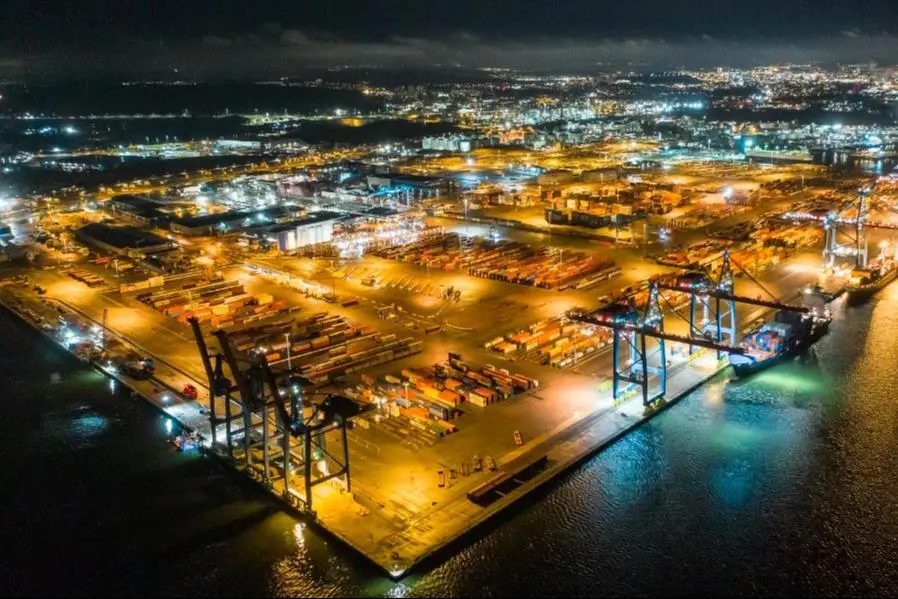
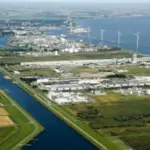
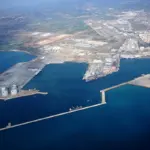
The funding, provided by the EU’s “Connecting Europe Facility” for the project “EU.OPS.Network,” will enable Aarhus, Gothenburg, Bremerhaven and Stockholm to establish Onshore Power Supply (OPS) systems by 2030.
“We are very pleased that the European Commission and the CEF Committee recognise our high ambitions for the green transition,” says Anne Zachariassen, COO of the Port of Aarhus and project coordinator.
“As some of Northern Europe’s most important ports, it’s fantastic to collaborate in reducing the shipping industry’s climate footprint, a global challenge we face together. OPS for container ships is essential for all ports involved.”
Regulatory approach
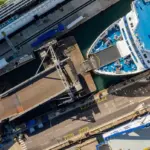
OPS allows docked container ships to connect to electrical grids, reducing the need for onboard diesel engines and significantlycutting carbon dioxide and nitrogen oxide emissions.
This investment aligns with upcoming 2030 EU regulations mandating that ships over 5,000 gross tonnage connect to onshore power when docked. With this infrastructure, emissions from container ships can be drastically reduced, resulting in improved air quality and working conditions at these ports.
The Port of Gothenburg, a leader in the initiative, aims to reduce emissions by 70% in its port area by 2030. The project will fund Gothenburg’s installation of a high-voltage substation, essential for OPS, which alone is expected to cut 5,600 tonnes of CO2 emissions each year.
This collaborative initiative marks a substantial advancement in port infrastructure, establishing Northern European ports as leaders in sustainable maritime solutions.
Related Articles
 ALTERNATIVE FUELS GREENPORT
 ENERGY & TECHNOLOGY GREENPORT
 PROJECTS & INITIATIVES GREENPORT