




Learning more about Geelong’s rare dolphin neighbours
Australia’s GeelongPort is joining forces with the Marine Mammal Foundation to help the local community learn more about critically-endangered dolphins that are native to the area.
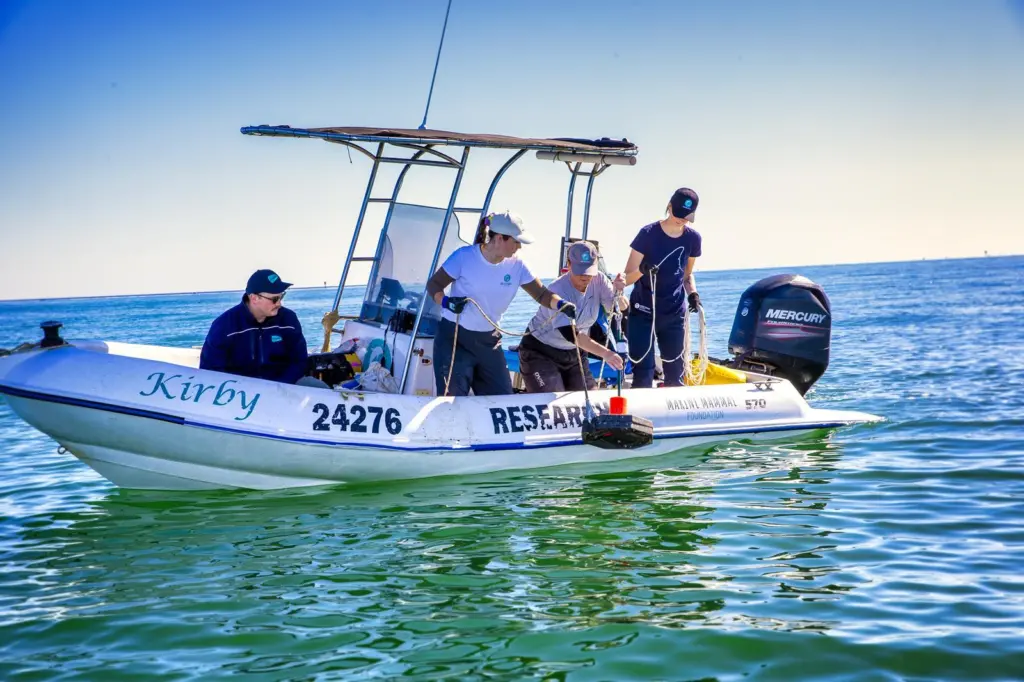
Recent surveys conducted by the Foundation showed that the Burrunan dolphins – which are only found in Victoria, Tasmania and South Australia – call Corio Bay home. The trouble is that Corio Bay is the waterway access to the port.
Data about the rare species is limited, but that is all about to change due to the partnership between the port and foundation, whose mission is to protect the marine environment through research, community engagement and educational initiatives.
Acoustic monitoring
The partnership involves GeelongPort helping the foundation monitor the dolphins in Corio Bay through a non-invasive method of recording the vocal sounds of marine mammals.
Innovative passive acoustic monitoring stations are being used to eavesdrop on the dolphins on a 24-hour basis, even when the researchers are not on the water.
The stations will also be able to assess the marine soundscape and identify if other marine animals are using the area.
GeelongPort general manager of sustainability, Dr Lisa Mills, says the partnership with the foundation is an important opportunity to discover how Burrunan dolphins use Corio Bay as a regular habitat.
“Through our support of Marine Mammal Foundation’s research programmes, GeelongPort hopes to ensure the Burrunan dolphins are better understood and protected for future generations to enjoy,” she says.
Dr Kate Robb, the director of the Marine Mammal Foundation, says that Project Burrunan is the only research programme of its kind in Victoria.
“Limited boat-based surveys conducted in Corio Bay, coupled with citizen science reports, indicate this region is significant to the Burrunan dolphin,” she says. “However, we have limited information on their regular presence in the area, much less their behaviours while using this habitat, such as foraging, resting and calving.”
“By understanding how the dolphins are using Corio Bay we are able to establish the significance of the area for the dolphins, but also assess any impacts on the species. While we would love to be on the water across all of our study locations, it is not feasible.”
“That led us to think outside the box to explore a new method of detecting dolphin presence and marine soundscape assessment.
“It is incredibly exciting to hear for the first time how the Burrunan dolphins are using different areas on a 24-hour basis and enables a greater understanding of their movements, as well as highlighting areas of high biological importance.
“We have been really excited that on each of our preliminary on-water surveys we have observed Burrunan dolphins in Corio Bay, with a fantastic sighting recently of a large mother-calf pod. From the images collected we will be able to identify each of the dolphins and match them against our extensive Burrunan dolphin fin identification catalogue.”
Dr Mills says outcomes from this project could help conserve Corio Bay’s small and threatened population.
“GeelongPort is pleased to help the foundation gain data on the rare Burrunan dolphins in Corio Bay and information that is critical to their existence.”
Related Articles
 ENERGY & TECHNOLOGY GREENPORT
 NEWS GREENPORT
 PROJECTS & INITIATIVES GREENPORT