![GreenPort[PortStrategy]](https://www.portstrategy.com/greenport/wp-content/uploads/sites/4/2026/09/GreenPortPortStrategy.svg)

PODCAST: Unlocking the UK’s green growth revolution
Andy Reay, ABP’s head of offshore wind, outlines how the operator is building supply chain partnerships, which can secure the UK’s leading position in the global offshore wind race.
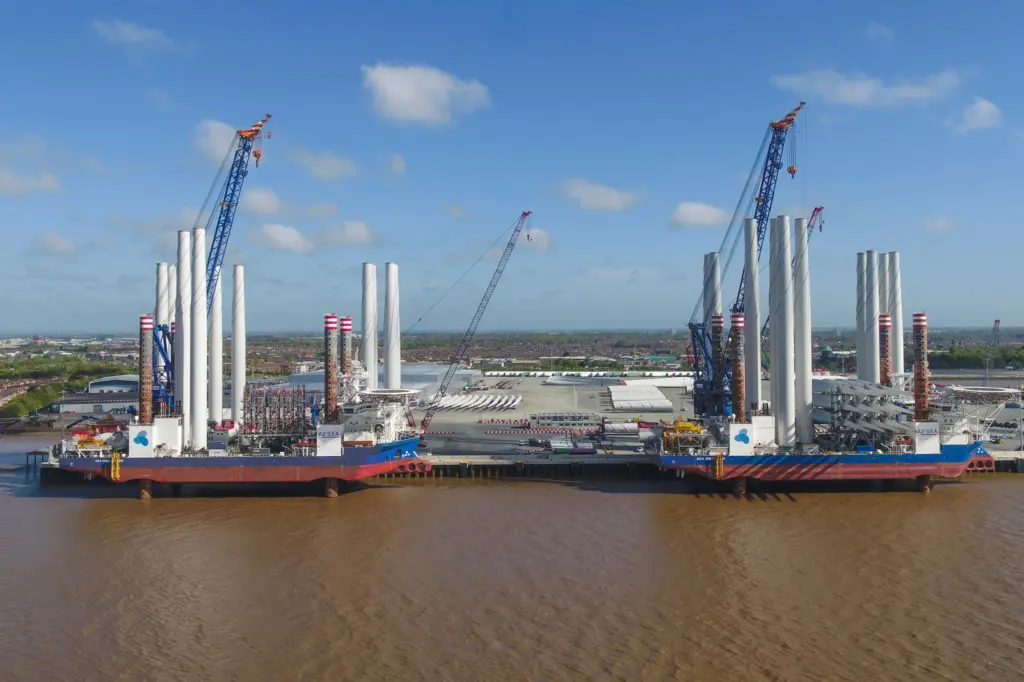
As gateways to the UK’s energy transition, Associated British Ports (ABP) operations provide the perfect base for offshore wind projects, holding the key to the green growth revolution.
Laying the foundations for a sustainable future is important to ABP as the UK’s largest port operator. Not only do we make a significant contribution to the national economy, handling a quarter of all UK seaborne volumes, we also have nationwide geographic reach, with a network of 21 ports across England, Scotland and Wales.
As a responsible business, we recognise the critical role we play in enabling the UK’s energy transition and catalysing the green growth opportunities that can deliver a more prosperous future for the country, as well as coastal communities.
In support of our green growth ambitions, we celebrated a major milestone in February 2023, when we launched our ‘Ready for Tomorrow’ sustainability strategy, which sets out our plans to achieve net zero from our own operations by 2040 at the latest.
Clean energy infrastructure
Our sustainability strategy is central to our business and is backed by a GB£2 billion investment in decarbonising our own operations and enabling large-scale clean energy infrastructure projects such as Floating offshore wind (FLOW) in Port Talbot.
We plan to invest around GB£500 million to develop new and repurposed infrastructure in Port Talbot to enable the port to host manufacturing, installation and supply chain activity for the FLOW sector, transforming it into a FLOW construction and manufacturing hub.
The development of Port Talbot is projected to have a significant positive effect on the local economy and create much needed jobs. It presents an interesting case study because the port offers a holistic package to the floating offshore wind sector, combining natural physical features, the space to develop the right infrastructure and access to skilled labour. The project has the potential to create 16,000 new, high-quality jobs and attract GB£5.5 billion inward investment in the wider regional economy.
In addition, earlier this year we were proud to announce our participation in a cluster of ports in and around the Cromarty Firth, which all are adding different elements of value to the offshore wind supply chain.
We want to create an asset which works in harmony with existing port infrastructure and we will use the knowledge we’ve gained in our experience and our significant track record of delivering successful projects to investigate the potential of creating new port infrastructure on the site. We recognise that offshore windfarms are an important part of the renewable energy mix to enable the UK’s net zero goals, which is why we plan to continue to play an active role in bolstering the offshore wind and renewables supply chain.
We are in a fortunate position to be able to draw on the wealth of over 30 years’ experience in servicing the UK’s offshore energy industry, which means that we have a holistic view of the factors that make projects successful. With many of our ports located in close proximity to major British offshore windfarms, we have a solid track record in developing new facilities and providing services tailored to meet every aspect of offshore wind development, maintenance and operation. This means that we are well equipped to offer an attractive proposition to offshore windfarm developers.
Supply chain resilience
Green Port Hull is a well-known example of a large-scale offshore wind project ABP has helped deliver on the Humber.
This was a GB£310 million offshore wind facility, representing a joint investment by Siemens Gamesa and ABP to create a blade manufacturing and turbine pre-assembly facility. It has helped attract a vast array of supply chain companies to invest in the Humber area, building a local network of businesses to support them. From site selection and planning, to funding and skills, the wider Green Port Hull project has helped over 200 companies put down roots in the Humber region.
This is a powerful example of the economic value and benefits that port-enabled offshore wind projects can bring to local communities. Siemens Gamesa has subsequently invested a further GB£189 million to expand the blade manufacturing facility, which is a further testament to its continued success.
Other ABP locations which help illustrate the critical role played by ports in supporting offshore wind projects include the Port or Grimsby, which is home to Europe’s largest offshore wind turbine operations and maintenance (O&M) centre and the Ports of Lowestoft and Barrow, which provide bases for significant O&M hubs.
Over the years, ABP has invested millions to support growth in the UK’s offshore wind industry, alongside its customers. Furthermore, our extensive property portfolio at key strategic port locations ideally located in close proximity to major offshore wind development zones, means ABP is well placed to support the continued growth of the sector.
We believe that international collaboration on offshore wind projects will help foster the sharing of best practice and will accelerate progress towards building more resilient supply chains, faster.
Working towards this goal, ABP recently signed a memorandum of understanding (MoU) to cooperate with Taiwan International Ports Corporation (TIPC), in a ceremony at the Kaohsiung Port Cruise Terminal Port of Kaohsiung Passenger Terminal. The MoU opens the door for information and experience sharing between the two signatories on FLOW-related port facilities and for the exploration of future business collaboration opportunities.
Attracting investment
Many of the components required to make the UK a global leader in offshore wind are already in place, including the ambition, supply chain connections and decades of technological innovation and expertise.
However, we need UK Government to help build greater confidence, which will help stimulate investment and demand, both through certainty on seabed leasing and timeline and through a demonstration that we have learnt the lessons from AR5 about reflecting real world costs.
There also needs to be a focus on stimulating UK supply chain development by having targeted and marginal co-investment support for scale infrastructure development and rewarding genuine UK commitment through Contract for Difference (CfD) reform. An example of the former is the FLOWMIS scheme, which is designed to enable and facilitate the development of FLOW port infrastructure.
Consenting also needs to happen at pace and with priority. There is a huge opportunity for government to set the scale of ambition and paint the picture of what the next ten to twenty years of FLOW could look like, by developing a strategy and then working with ports and supply chains to deliver it.
At ABP, we are serious about supporting the offshore wind industry. We have already invested millions in crafting detailed development plans and working with dedicated project teams who are passionate about the benefits that a future powered by green growth will bring.
Gaining confidence that the port assets we build will be used long-term, will help us enable a greener and more prosperous future for generations to come.
Related Articles
 ALTERNATIVE FUELS GREENPORT
 ENERGY & TECHNOLOGY GREENPORT
 PROJECTS & INITIATIVES GREENPORT