![GreenPort[PortStrategy]](https://www.portstrategy.com/greenport/wp-content/uploads/sites/4/2026/09/GreenPortPortStrategy.svg)
Polluted site redevelopment
Redevelopment at one EU port has restored valuable habitat and provided flood protection
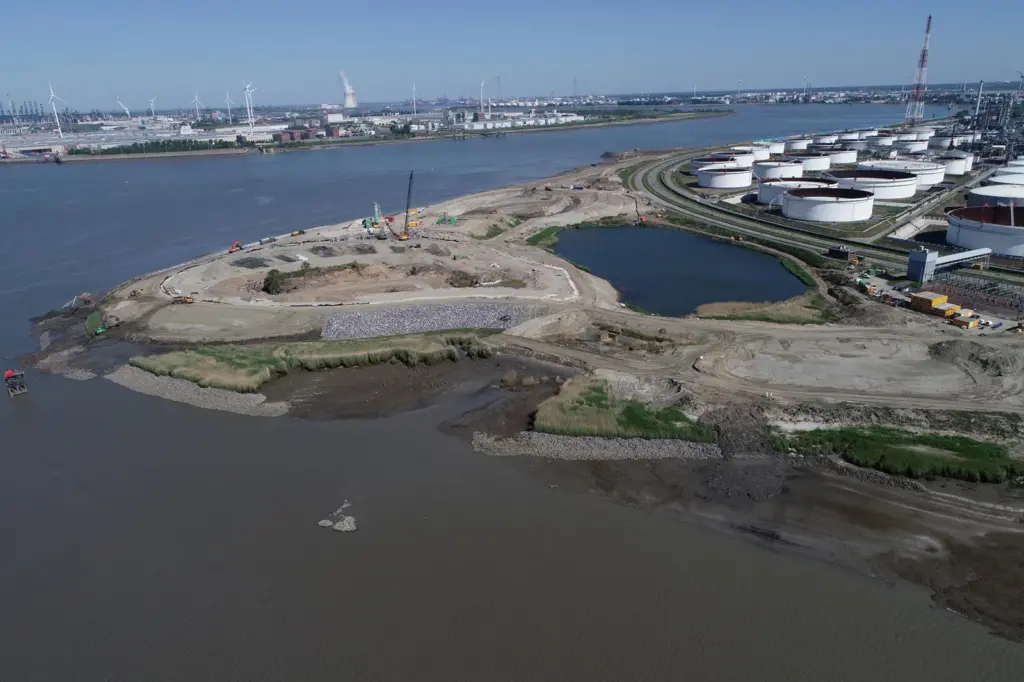
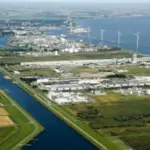
Jan De Nul and Envisan have completed the large-scale redevelopment of the site surrounding the Fort Sint-Filips in the Port of Antwerp.
“Fort Sint-Filips requires expertise in various disciplines such as civil, environmental and hydraulic engineering,” said An Smet, director, Envisan.
”With our environmental department, we are also fully committed to circular solutions for a better planet. We have transformed this blackspot in the Port of Antwerp into a new habitat.”
Transformation
Ms Smet said that the contamination was stored on site, which is not only the most technically and economically feasible solution, but also avoids unnecessary transport to a treatment centre.
It also means being unable to avoid unnecessary CO2 emissions.
Over the past two years Jan De Nul and Envisan, together with their partner companies, have redeveloped the heavily polluted port site on the right bank of the river Scheldt.
The fort was encased, the dike around the site was raised and a new, higher flood defence was constructed in order to protect the city and the port area behind it from flooding. Downstream from the fort, an estuary was created by the construction of a dam, stimulating the development of a tidal habitat in the Scheldt.
These works are part of the Flemish Government’s Sigma Plan to protect Flanders from flooding of the river Scheldt and to restore the rare river habitat. In order to protect Antwerp and the port area around the fort from flooding, a dike and a flood wall were built around the site, which are suitable for dealing with the future consequences of climate change.
In order to be able to carry out these works, the heavy historical pollution, caused by years of dumping oil waste, first had to be safely contained within an underground, watertight wall of bentonite cement. The nearby buffer basin and surrounding land were also remediated.
Just beyond the fort, an estuary was created by the construction of a low stone dam. This tidal dam is perpendicular to the direction of the current, thus locally slowing down the flow of the water. As a result, mud flats and salt marshes, which are created by the play of high and low tide and are important for the biodiversity in and around the Scheldt, have less chance of being washed away. The result is an area of 20 hectares of a valuable tidal habitat.
For the construction of the dam, Jan De Nul and partners reused dredged material previously dumped on the site. The project received European support for this through the Smartsediment initiative. This supports the estuaries on the North Sea with large-scale maintenance works to create a sustainable estuary.
Related Articles
 ALTERNATIVE FUELS GREENPORT
 ENERGY & TECHNOLOGY GREENPORT
 PROJECTS & INITIATIVES GREENPORT