![GreenPort[PortStrategy]](https://www.portstrategy.com/greenport/wp-content/uploads/sites/4/2026/09/GreenPortPortStrategy.svg)


Seaweed farming to boost coastal resilience
Seaweed farming is supporting climate resilience and marine biodiversity in Maharashtra, as DP World-backed projects help fishing communities adapt to climate change.
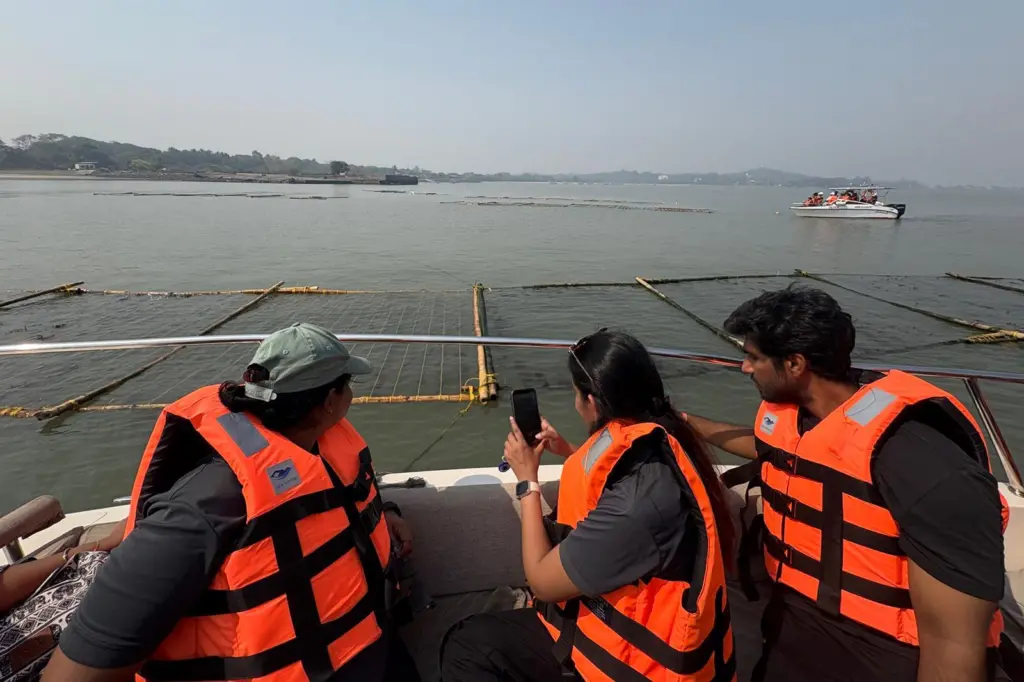
More than 250 seaweed cultivation units have been established in Raigad, India, by DP World and partners to strengthen the port ecosystem while diversifying coastal livelihoods.
“Seaweed farming offers coastal communities a resilient livelihood in the face of climate change. When communities are supported with sustainable solutions, they can build economic security while contributing to the long-term health of their marine environment,” said CM Muraleedharan, regional director – India, shipping solutions AMEA – marine services, DP World.
“This reflects our strategic commitment to sustainability, where community resilience and ecosystem health are fundamental to how we deliver lasting impact.”
Marine biofilters
The initiative, led by DP World in partnership with the Indian Network on Ethics and Climate Change (INECC) and ClimaCrew, introduces seaweed cultivation as a low-impact income stream requiring no land or freshwater.
The programme responds to declining fish catches and increasingly unpredictable fishing conditions due to climate change.
Seaweed farms act as marine biofilters, improving water quality while creating habitats for species such as prawns, crabs and small fish, enhancing marine biodiversity.
The units currently produce 20–25 tonnes of wet seaweed biomass per cycle, with potential to reach 50–75 tonnes as participation grows.
Engaging the local fishing community, the initiative strengthens climate resilience by stabilising incomes while contributing to a healthier port ecosystem and advancing sustainable blue economy practices.
Related Articles
 ALTERNATIVE FUELS GREENPORT
 ENERGY & TECHNOLOGY GREENPORT
 PROJECTS & INITIATIVES GREENPORT