![GreenPort[PortStrategy]](https://www.portstrategy.com/greenport/wp-content/uploads/sites/4/2026/09/GreenPortPortStrategy.svg)

Solar power fuels decarbonisation at Yokohama
APM Terminals Japan has signed a 20-year renewable energy agreement to cut port emissions and advance port electrification at Yokohama.
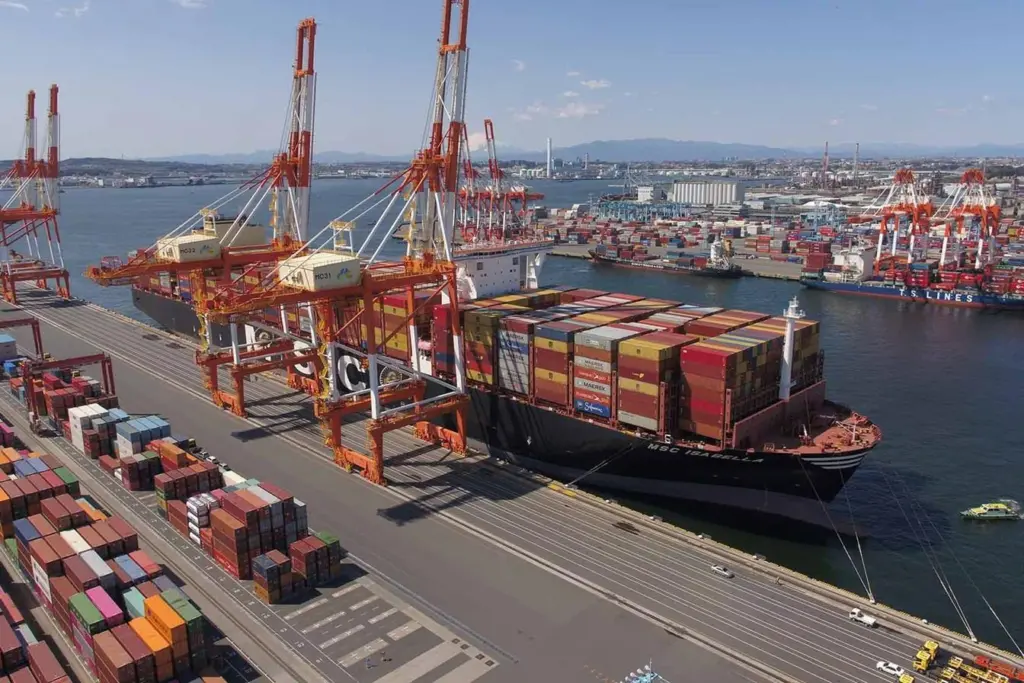
The terminal operator, part of the Maersk Group, has entered a long-term offsite corporate Power Purchase Agreement (PPA) with FPS Inc to supply renewable electricity to its operations at the Port of Yokohama.
“Securing this PPA is a critical stepping stone towards our journey to operate our terminal at the Port of Yokohama on 100% renewable electricity and to further advance our vision of port decarbonisation,” said Masahiko Shirai, managing director, APM Terminals Japan.
Port decarbonisation
The agreement, which commenced on 1 April 2026, is expected to reduce Scope 2 greenhouse gas emissions by around 2.6 ktCO2e annually through the replacement of fossil fuel-based grid electricity with solar power.
It’s a deal which forms part of Maersk’s wider strategy to source 100% renewable electricity by 2030 and achieve net-zero greenhouse gas emissions across its value chain by 2040.
Under the agreement, electricity is supplied from newly developed solar power facilities across the Tokyo region with a combined installed capacity of 5.5 MW.
The system has been designed to maximise solar consumption while meeting real-time matching and physical delivery requirements, with any remaining electricity demand supplemented through market-based sources.
APM Terminals said the physical PPA model supports long-term port electrification by providing stable renewable electricity supply while reducing exposure to energy price volatility.
The arrangement also contributes to Japan’s energy transition by adding new solar power capacity to the national grid and increasing the share of renewable electricity available to terminal operations.
Related Articles
 ALTERNATIVE FUELS GREENPORT
 ENERGY & TECHNOLOGY GREENPORT
 PROJECTS & INITIATIVES GREENPORT