![GreenPort[PortStrategy]](https://www.portstrategy.com/greenport/wp-content/uploads/sites/4/2026/09/GreenPortPortStrategy.svg)
Strict targets for energy self-sufficiency
ECOPORT II, Valenciaport’s ongoing project to consolidate an environmentally friendly port community, has set itself tough objectives of developing renewable energy sources and installing electric charging points for ships.
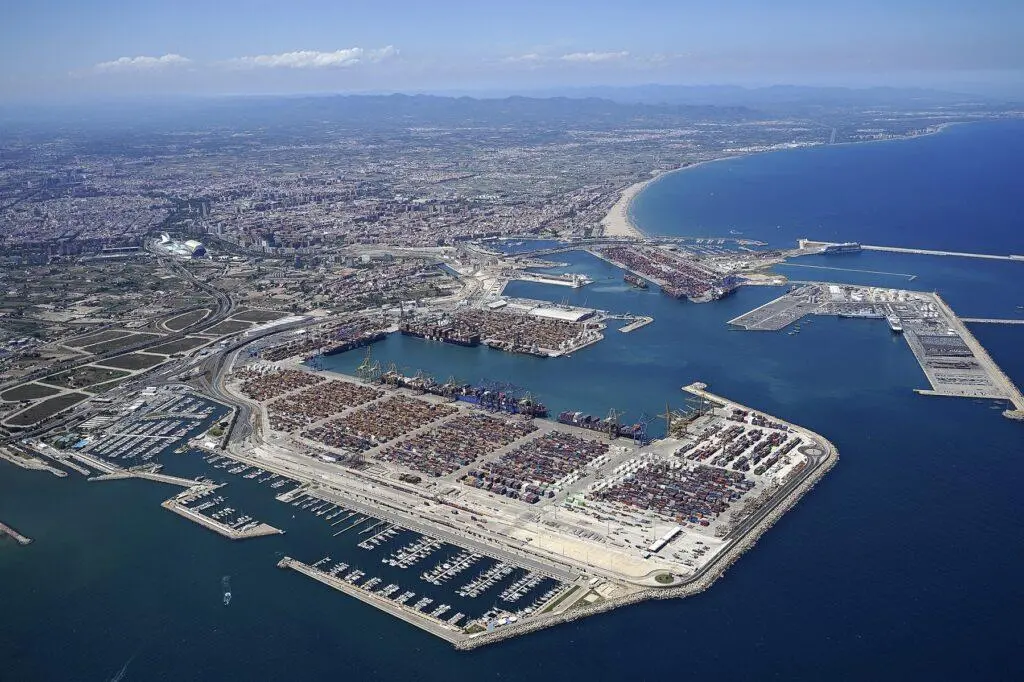
These objectives, discussed at a recent project working group meeting, are in line with Valenciaport’s Net Zero Emissions plan, which aims to achieve carbon neutrality and energy self-sufficiency at its facilities in Valencia, Sagunt and Gandia by 2035.
The ECOPORT II project plan envisages an investment of €900 million, of which €605 million will come from the Port Authority of Valencia and €295 million from private investment.
Project plan
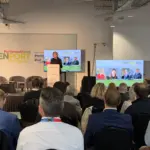
The recent project working group meeting, took stock of the actions carried out during 2025 and addressed the challenges and projects to be tackled in the future.
Among the planned actions going forward are the provision of charging points (OPS) for ships at the various terminals, plus building on the 18% of electricity already produced thanks to photovoltaic installations at the ports.
The working group also discussed projects such as the CLEVER TOOL, created within the framework of the ARSINOE project to support the APV in the Climate Change Observatory.
Attendees at the meeting were also informed about the ongoing ‘Empower Next Port Professionals with Innovative Skills through XR Immersive Training Programs’ (NeXTraIn.PortS) project, which aims to structuring the training model between the ports of Valencia, Rotterdam, Livorno, Venice and Piraeus.
It’s a project in which Fundación Valenciaport is in charge of mapping the job profiles of the port logistics sector in relation to the energy and digital transition.
Valenciaport has been promoting environmental policies for nearly 30 years through the auspices of the ECOPORT project.
The project has 38 member companies working to develop and evolve a shared methodology for implementing environmental management systems in ports and the communities that they serve.
Related Articles
 ALTERNATIVE FUELS GREENPORT
 ENERGY & TECHNOLOGY GREENPORT
 PROJECTS & INITIATIVES GREENPORT