![GreenPort[PortStrategy]](https://www.portstrategy.com/greenport/wp-content/uploads/sites/4/2026/09/GreenPortPortStrategy.svg)

Trans-Pacific green corridor moves forward
The creation of the first-ever green shipping corridor across the Pacific is moving ahead with the unveiling of a implentation plan by the US ports of Los Angeles and Long Beach and China’s Port of Shanghai.
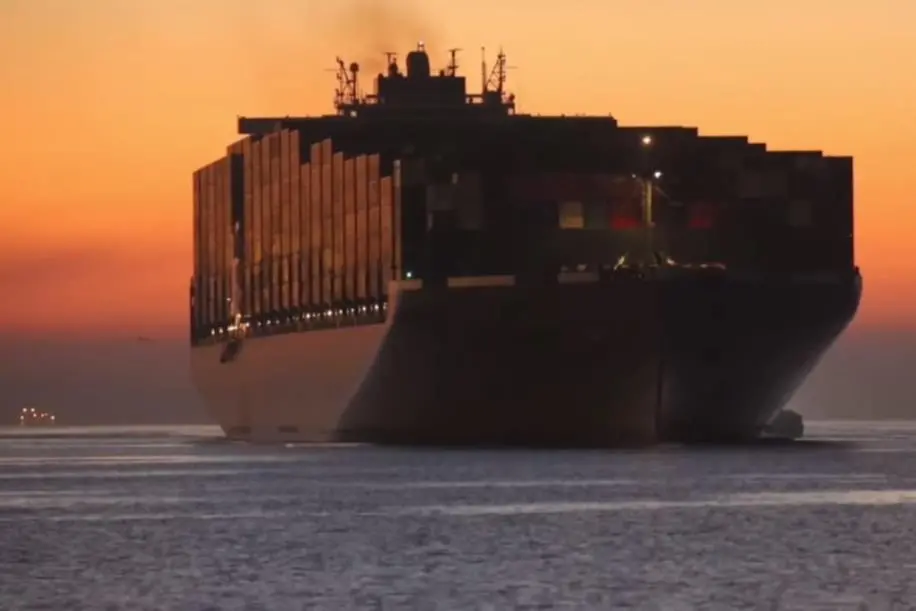
The Green Shipping Corridor Implementation Plan aims to accelerate emissions reductions on one of the world’s busiest container shipping routes across the Pacific Ocean and it builds on the agreement between the ports made last year.
“This trans-Pacific green corridor will be a model for the global cooperation needed to accelerate change throughout the maritime industry,” said Gene Seroka, executive director of the Port of Los Angeles.
“For perspective, most of the emissions associated with moving cargo by ship occur in the mid-ocean part of the journey between ports. This corridor will help reduce mid-ocean emissions while continuing the work we have done to cut emissions within our ports.”
Decarbonising supply chains
The plan is the first of its kind and was developed with support from C40 Cities as part of its effort to reduce carbon emissions from the largest cities in the world.
It will showcase cutting-edge goods movement technologies, decarbonisation applications and best management practices to enhance efficiency and catalyse technological, economic and policy efforts to progressively decarbonise shipping and port-related activities.
As part of the plan, the carrier partners will begin deploying reduced or zero lifecycle carbon capable ships on the corridor by 2025 and work together to demonstrate by 2030 the feasibility of deploying the world’s first zero lifecycle carbon emission container ships.
Participants of the Green Shipping Corridor Partnership will take steps to reduce carbon emissions and harmful pollutant emissions impacting air quality, through methods such as expanding use of shore power and supporting the development of clean marine fueling infrastructure.
Cargo owner partners have set goals to contract with carriers to use zero lifecycle carbon emission shipping services and in an effort to measure progress toward decarbonization, all partners will develop metrics to track decarbonisation progress.
Carrier partners include CMA CGM, COSCO Shipping Lines Co., Ltd., Maersk and ONE. Core partners include the Shanghai International Port (Group) Co., Ltd., the China Classification Society and the Maritime Technology Cooperation Centre of Asia.
Related Articles
 ALTERNATIVE FUELS GREENPORT
 ENERGY & TECHNOLOGY GREENPORT
 PROJECTS & INITIATIVES GREENPORT