![GreenPort[PortStrategy]](https://www.portstrategy.com/greenport/wp-content/uploads/sites/4/2026/09/GreenPortPortStrategy.svg)
Using macroalgae to improve water quality
Fundación Valenciaport has launched a bioremediation pilot at the Port of Gandía, using macroalgae to improve water quality and advance sustainable port infrastructure.
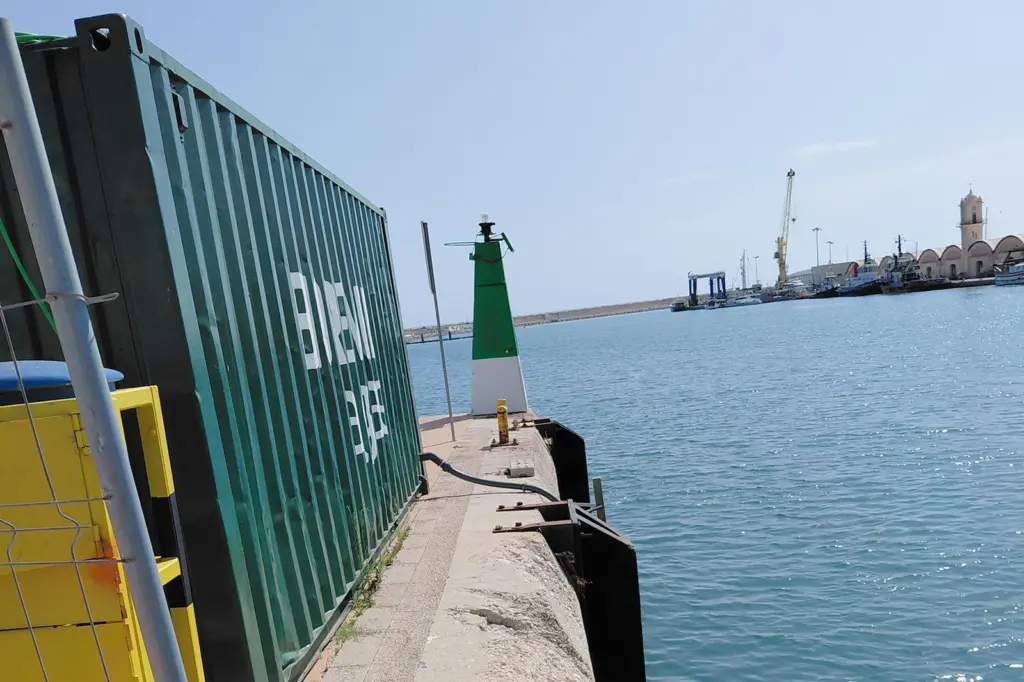
The initiative is testing Bioremed Algae, a biotechnology system developed by Mediterranean Algae, which treats 6,000 litres of water per hour, naturally removing excess nutrients and heavy metals while supporting carbon capture without the use of chemical additives.
“With this pilot project, Fundación Valenciaport reaffirms its commitment to finding disruptive solutions to environmental challenges,” the organisation said.
Natural biofilter
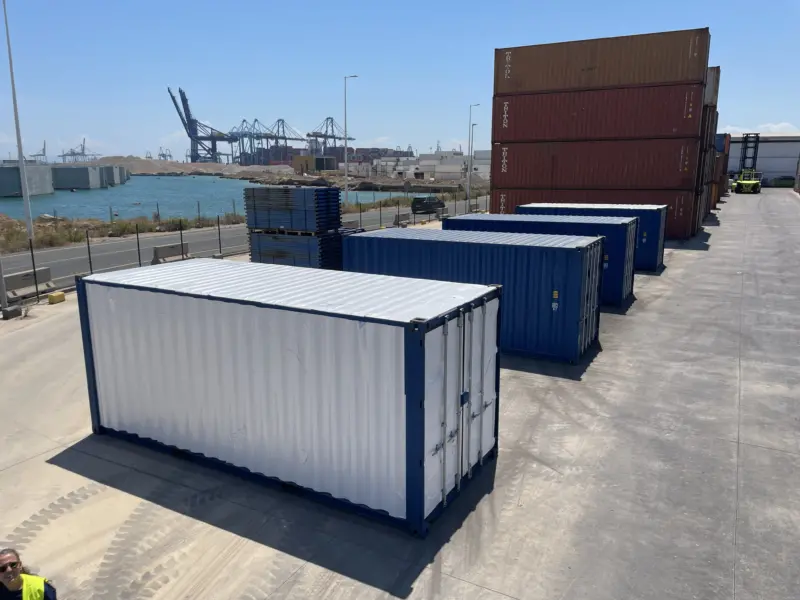
The pilot uses native macroalgae from the genus Ulva, commonly known as sea lettuce, harvested locally and cultivated within a biofilter housed inside a standard shipping container.
Occupying just 16 square metres of quay space, the installation required no construction work, demonstrating how compact port infrastructure can accommodate environmental technologies with minimal operational disruption.
According to Fundación Valenciaport, the bioremediation system functions as a nature-based climate infrastructure by reducing nitrates and phosphates, absorbing pollutants including heavy metals, enabling carbon capture through natural biological processes and producing biomass with potential future value.
The project forms part of the Interreg Euro-MED co-funded TREASURE programme, which aims to improve environmental quality across Mediterranean ports.
Fundación Valenciaport is coordinating the Gandía pilot in collaboration with the Port Authority of Valencia through Opentop, which supports the testing and validation of emerging biotechnology solutions.
Alongside the Port of Gandía, the TREASURE project includes five additional demonstration sites in Tuscany, Valletta, Piraeus, Bar and Durres, all focused on advancing environmental innovation across Mediterranean port operations.
Related Articles
 ALTERNATIVE FUELS GREENPORT
 ENERGY & TECHNOLOGY GREENPORT
 PROJECTS & INITIATIVES GREENPORT