![GreenPort[PortStrategy]](https://www.portstrategy.com/greenport/wp-content/uploads/sites/4/2026/09/GreenPortPortStrategy.svg)
Responsible marine construction
In this article, GreenPort talks to Dr Ido Sella, co-founder and CEO of ECOncrete on how construction projects are becoming more sustainable.
There is an urgent need for marine infrastructure construction projects to ensure a more sustainable outcome.
With the majority of human population residing along coastlines and the intensive process of coastal armoring due to increased storminess and prediction to sea level rise, an increased focus should be given to the neutral marine resources.
Concrete structures and coastal development can be incredibly damaging to marine life and to natural habitats and more must be done by waterfronts asset owners to ensure the regeneration and protection of native marine life.
Global marine biodiversity is under threat from many human causes. The extinction of one species, or one micro ecosystem, has cascading impacts that can ultimately affect the entire food web. Coastal waters are one of the most highly productive ecosystems in the marine environment and as such, provides a range of ecosystem services such as biodiversity, carbon sequestration, nursery grounds and primary production.
Therefore, it is in our own vested interest to promote responsible construction methods that will allow marine infrastructure such as ports, breakwaters and urban waterfronts to support the development of balanced and healthy marine life.
New standards
ECOncrete is looking to set new standards in responsible marine construction.
Our technology allows concrete infrastructure to provide a range of ecosystem services by supporting the development of marine life on them. ECOncrete’s patented technology modifies the local concrete and making it friendly to the environment, as well as creating the spaces needed for marine organisms to develop and grow.
ECOncrete technology has been tested and validated in a variety of marine conditions and shown success in temperate, tropical and estuarine ecosystems. Across studies and projects, the technology has shown to increase biodiversity, reduce the dominance of invasive species by promoting native ones and generate an active carbon sink through the growth of marine life. The technology, ecological and structural performance have been documented in various peer-reviewed scientific papers.
The technology also promotes bio protection thereby bettering the durability and longevity of structures by the growth of organisms like oysters, barnacles, tube worms and coral, which adhere to the concrete.
In addition, it can be integrated into any concrete made coastal and marine infrastructure and shift them to promote biodiversity rather than damaging it. It is the only environmental concrete technology that is integrated directly into the construction process of marine infrastructure, making them promote ecosystem services while servicing their original purposes.
We provide our clients with a technology that allows them to use local materials and local work force and to construct their waterfront to service both human activities and nature at the same time.
ECOncrete’s bio-enhancing technologies have been developed so that they can be easily implemented into standard manufacturing methods in a cost-effective and scalable manner. It’s based on an admixture and unique surface modifying agents and specifically designed liners and form inserts that can be incorporated into any concrete casting methods.
The company works closely with industry leaders, ranging from concrete machinery providers to concrete and cement giants and world-leading marine engineering firms. Our aim is to provide the next-generation concrete solutions to allow responsible coastal and marine construction that addresses both structural and environmental performance. By using the technology, assets owners such as ports can gain advantages in permitting and mitigation process, increased carbon sequestration capabilities as well as form the scientifically proven bio protection that provides structural benefits and lower maintenance needs.
Sustainable development
Port developers appreciate solutions with ecological benefits that do not compromise structural or operational performance. We have seen this on several of our projects, including the Port of Vigo, Rotterdam, Hamburg, San Francisco and San Diego.
For instance, our new single layer armour concrete unit, the COASTALOCK, provides the needed strength and durability to effectively attenuate wave energy and limit coastal erosion similar to other concrete armour units available in the market, but at the same time provide missing ecosystem services and ecological uplift.
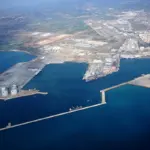
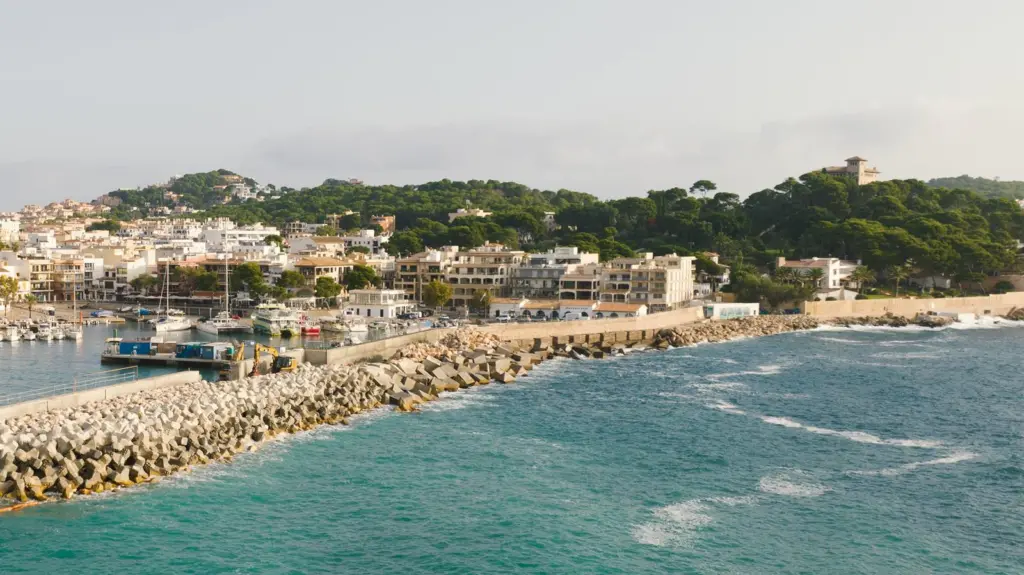
Recently our technology was used at the Port of Cala Ratjada in Mallorca, Spain, see box out. This port was severely damaged in recent years from Mediterranean winter storms and required an extensive reconstruction of the outer breakwater by concrete cubes and single layer concrete armor units. ECOncrete’s technology to enables diverse marine ecosystems develop on the breakwater, which in turn also strengthens the infrastructure.
Our technology was also recently used in the construction of a new pier at the Port of Malaga and seawalls at the Port of Vigo, for shoreline stabilisation measure at Neptune Marina (NJ, USA) and at a French Navy port reconstruction.
In addition, ECOncrete technology has been recommended by the Dutch government and the US Nature Conservancy for offshore wind infrastructure construction, as well as by Natural England for scour and cable protection.
Offshore turbines require scour protection and sometimes massive concrete foundations to anchor them in. This can lead to local ecosystem destruction and the proliferation of invasive and nuisance species. However, by incorporating our bio-enhancing concrete solutions, the offshore wind industry can significantly reduce its overall environmental impact and even provide ecosystem services that were never associated with these concrete infrastructures in the past.
A good example of this is our novel Droplock Ecological scour protection system, recently launched by our partnership with Holcim US, with the support of the USA Department of Energy and the BIRD Foundation.
The new ecologically beneficial concrete scour protection units for offshore wind turbine foundations were installed this year for the first time 12 miles off the shore of Long Island, NY in coordination with the New York State Department of Environmental Conservation.
Together with our partners Holcim, we worked to redefine offshore scour protection through the development of a novel concrete unit that requires up to 30% less material, minimises native habitat degradation and supports ecological uplift in offshore wind projects.
We hope to do more of these projects in the future. In addition to this, we will continue to ensure that it ECOncrete continueds to grow as an environmentally responsible company.
Since its creation 10 years ago, ECOncrete has grown globally with projects in all parts of the world, from coastal protection to offshore infrastructure.
As innovators, we have set a new standard in the industry for responsible marine construction and our scientific research and development never stop in our quest to change the ways future marine infrastructure will look and function.
…………………………………………………………………………………..
Port protection with ecological benefits
One project for ECOncrete in 2022 was to create a breakwater at the Port of Cala Ratjada in Mallorca, which could also provide ecological benefits to local marine life.
The port faces strong hydrodynamic conditions and land erosion. Additionally, damage to the breakwater from Mediterranean storms in recent years prompted the port to seek further shoreline protection solutions.
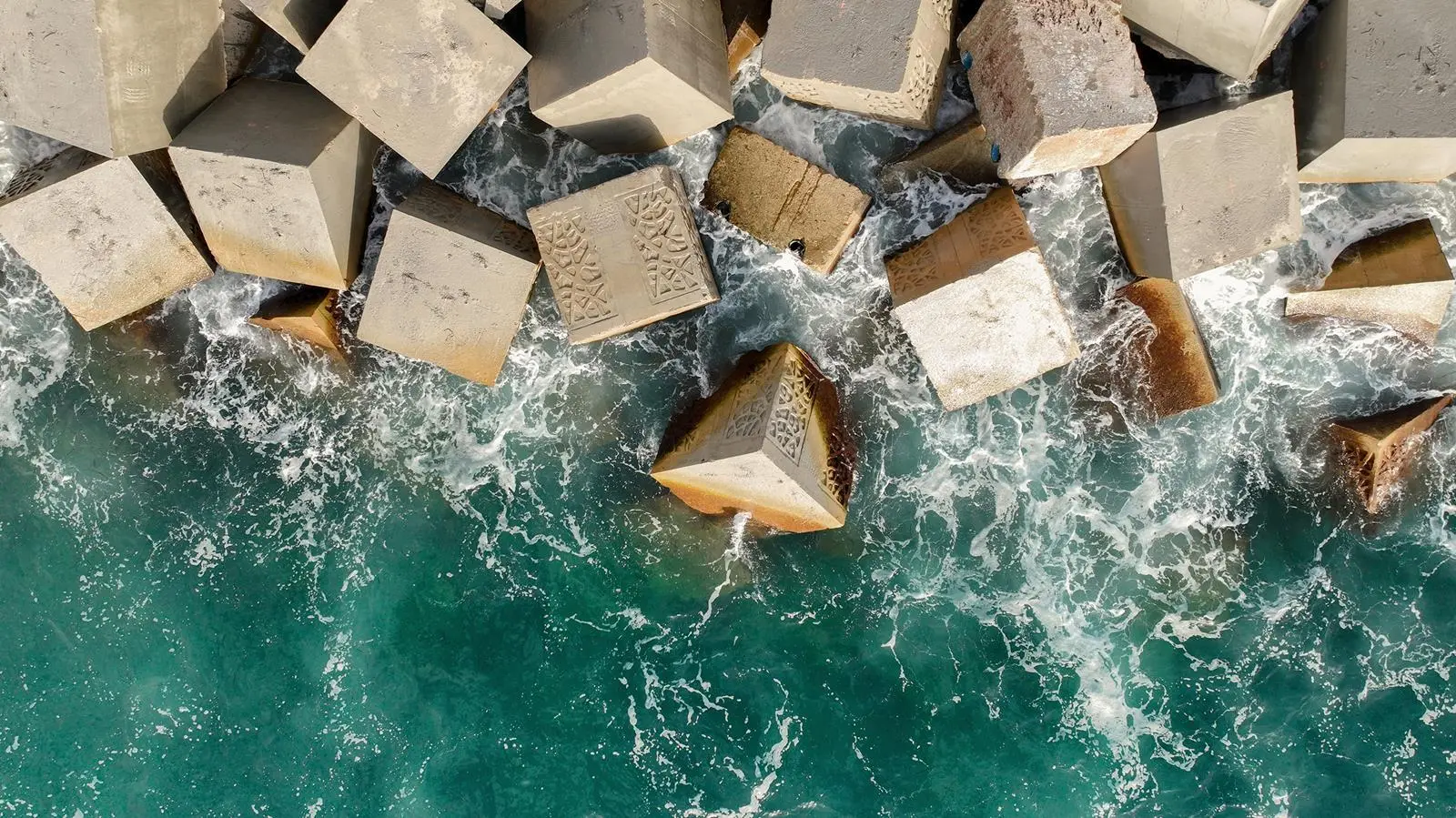
ECOncrete produced 215 6m3 single layer armor units using the company’s own micro surface texture and 50 units of 12.5m3 concrete cubes were produced with the company’s admixture and cast into mangrove texture lined moulds.
The bio-enhancing features of the concrete enables diverse marine ecosystems to flourish, which in turn strengthens the concrete infrastructure.
The Ports de Illes Balears included a specification for marine infrastructure to use “ecological concrete” after an initial environmental impact assessment (EIA).
This is the first timethat Spain has required these compensatory measures in a bidding document and is a model for other regulatory bodies across the world to follow suit and require the use of effective ecological construction technology in the marine field.
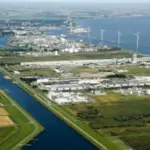
Also in 2022, ECOncrete was called upon to biologically enhance the quay wall of the new port extension at the Port of Rotterdam. The nature based design of the units mimics favourable habitat conditions of local native target species. The units are due to be installed imminently.
Related Articles
 ALTERNATIVE FUELS GREENPORT
 ENERGY & TECHNOLOGY GREENPORT
 PROJECTS & INITIATIVES GREENPORT