



Bridging the capacity gap
Excepting some hot spots such as Southeast Asia, container trade is generally experiencing tough market conditions making the task of bridging the gap between container vessel capacity – actual and on order – more than challenging. There are actions that can reduce the scale of the problem but seemingly not one big ‘lifesaver’
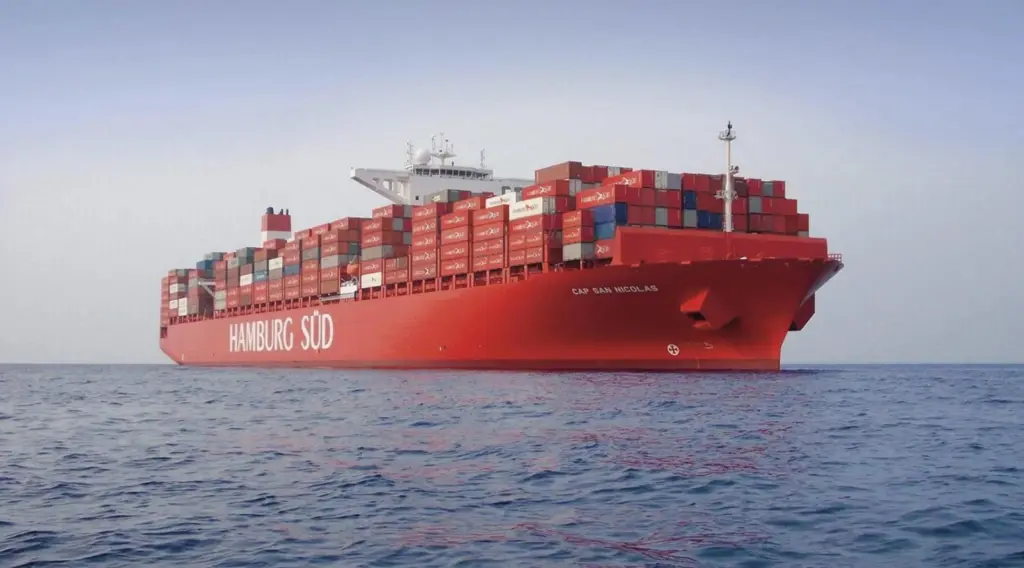
What seems like day after day we hear of new container vessel orders and new commentaries on the record size of annual order books. What is remarkable about this is that this is in an environment when actual and forecast container demand is not at its healthiest, with freight rates falling commensurately and pushed to bargain basement levels on certain trades as a result of growing competition between liner operators. But still the new orders keep coming – notably recently 24 methanol fuelled 16,000TEU vessels for Evergreen and 10 LNG dual-fuel 11,500TEU vessels for MSC.
At the end of June, Alphaliner forecast that a total of 385 vessels totalling 2.22m TEU capacity will be delivered over the course of 2023. For 2024, an even higher figure is forecast of 391 vessels offering a combined capacity of nearly three million TEU.
How will all this new capacity be absorbed is a key question?
As indicated, large parts of the world are beset by what amounts to stagnant trading conditions, although there are some healthier regions such as Southeast Asia. Nevertheless, the point stands that with global fleet capacity now already up at around 26 million TEU it is not going to be an easy task to accommodate all the booked new vessel capacity.
There is the proposition that an uplift in demand will help – for example, one forecast from BIMCO foresees head-haul and regional trade demand growth of 1-2 per cent in 2023 followed by 5-6 per cent in 2024. Effectively, negative y/y growth through the first half of 2023 but a return to growth thereafter. Against such a scenario, however, BIMCO acknowledges that risks remain and accordingly it also presents a downside scenario of growth of 0 -1 per cent and 2.5 – 3.5 per cent in 2023 and 2024 respectively.
For its part, the IMF predicts global GDP growth of 2.9 per cent in 2023 and 3.1 per cent in 2024 but underlines the balance of risks remain weighted on the downside.
In short, there is no certainty of positive growth and certainly not enough momentum to fill the gap between demand and available capacity in the short term.
So what other solutions are there, if any?
OTHER SOLUTIONS
There is the proposition that against a background of factors such as the implementation of the EU Emissions Trading Scheme there will be a significant uplift in container vessel scrappage, possibly with some vessels with an operational life as low as 15 years. There are some signs of an uptick with owners such as MSC and Wan Hai offloading old tonnage for demolition but there is not a flood as yet, although there are those that do believe this could happen.
There will inevitably be cascading of vessels with newer, larger tonnage pushing older vessels into secondary trade lanes, for example, in conjunction with Latin American and Australasian services. Indeed, there are already indicators that this trend is underway with various ports progressing dredging, infrastructure and terminal projects to accommodate the anticipated larger tonnage or in some cases to catch up with events which have already overtaken them.
A lowering of the operational speed of vessels may help a little plus exceptional factors such as congestion in the Panama Canal but in real terms these will be lower scale contributions to bridging the demand/capacity gap. With speed, BIMCO notes: “While average sailing speed has decreased following the reduction in congestion there is so far no evidence of the structural shift downwards due to EEXI/CII that had been previously indicated by major liner operators. We therefore predict that changes will be gradually phased in during 2023 and 2024.”
Last but not least, there will be little in the way of a contribution to achieving a good demand-capacity balance from major container penetration advances. In general terms, there are no large scale market areas left to penetrate that can soak up huge tranches of capacity. Those days are gone.
Looked at against this overall background, the tactic of major shipping lines diversifying their business interests as per Maersk and its integrator approach, and others heading in a similar direction, does appear to have some merit. It’s early days yet, however, lets see how the diversified major operators fare in an extended period of tough trading conditions which appear to be on the agenda over the remainder of this year at the very least.
Related Articles
 INSIGHT & OPINION
 INSIGHT & OPINION
 INSIGHT & OPINION