


Shadow fleet targeted
The newly appointed International Maritime Organization Secretary-General, Arsenio Dominguez, has called on Member States to step up and help tackle the issue of an expanding ‘shadow fleet’ of vessels operating around the globe.
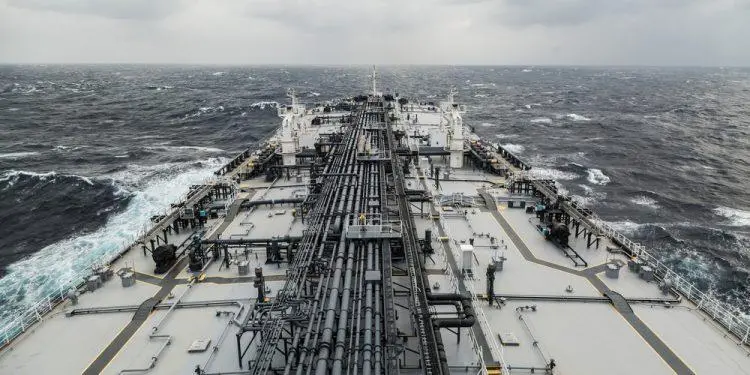
It is well known that a growing number of ships are operating outside IMO regulations, evading safety conventions and operating without proper insurance cover, while breaking international sanctions to carry, for example, Russian, Iranian or Venezuelan oil cargoes.
All Member States, when carrying out inspections of vessels calling in their ports, have the opportunity to tackle this situation, said Dominguez. “They have Port State Control capabilities – Member States have to verify compliance with IMO instruments.”
Speaking about the shadow, or dark, fleet at a press conference at IMO headquarters in London, the Secretary-General said: “We call on Member States to uphold their responsibilities when it comes to implementing regulations and we continue communications with all of them to enhance this part of the organisation.”
Dominguez, who took up his new role at the beginning of 2024, set out the IMO’s plans and focus areas for the next four years, including around safety, decarbonisation and environment, supporting Small Island Developing States and Least Developed Countries, improving public awareness and image, and enhancing relations with people and stakeholders. However, the more immediate challenges of the Red Sea and the Black Sea dominated the discussions.
He condemned the attacks on international shipping in the Red Sea and highlighted in particular the impact on seafarers.
“The seafarers are innocent victims being affected by this situation,” he said. “They are doing their daily job in order for all the goods to be transported around the world for the benefit of the whole population – and they should not be targeted.”
The focus of news coverage of attacks on shipping and the diversion around the Cape of Good Hope continues to be on trade and the economy, he observed. While emphasising the importance of freedom of navigation and calling for the de-escalation of tensions, he said: “But my first and main message is the seafarers. We need to think about them and what they are going through.”
Asked about the ongoing seafarer shortage and the likelihood that this will be exacerbated with the transition to new fuels, Dominguez outlined the work of the international task force to analyse training and safety regulations, and an ongoing study into ways of attracting new seafarers into the industry. However, he admitted: “The current situation doesn’t paint the best picture and we have an uphill battle to attract seafarers. We have to enhance the credentials of the industry.”
UNPRECEDENTED TIMES?
With the shortage of water in the Panama Canal and the crises in the Red Sea and the Black Sea, is shipping facing unprecedented times? “I have been in the job for a month but I have been part of this amazing organisation and sector for over 25 years. We have had challenges in the past. But it is unprecedented,” he said. “However, this industry is resilient and continues to demonstrate how it is ready to serve the world.”
He told journalists: “Shipping is resilient and has been for many years. We saw it through the financial crisis and the Covid pandemic and we see it now. It is how we face these challenges. It is also important that we continue to regulate shipping for safety and security.”
While solutions to issues are sometimes not just within the remit of the IMO, he said: “We can contribute to solutions by reaching out to relevant parties and bringing everyone to the table.”
In the Red Sea, practical solutions have included exchanging information to analyse risks, assessing additional security and speaking to the countries in the region which are mostly affected in relation to trade. Egypt, for example, is suffering the economic impact after 24 per cent of Suez Canal traffic has ‘disappeared’.
Dominguez said he wanted to work on the ‘image’ of the IMO. “We normally tend to be on the news when something wrong happens, an incident or accident. But there is not enough highlighting all the good things that happen.”
He praised the achievement of the IMO in adopting the revised Greenhouse Gas Strategy in 2023, which is “giving that certainty that the industry was calling for” and also highlighted the success of the sulphur cap introduced in 2020.
The Secretary-General said he appreciates every opportunity to highlight the seafarers and the work they do. To coin a phrase, he said: “No seafarers, no shipping, no shopping.”
Related Articles
 INSIGHT & OPINION
 INSIGHT & OPINION
 INSIGHT & OPINION