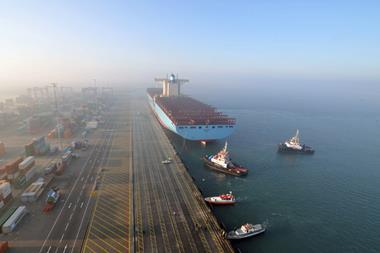

Between now and 2010, the container world will be largely augmented by massive ships according to the analyst Drewry. Between now and the end of this decade there are two ships on order designed to carry less than 500 teu. They will join an existing fleet of 138 ships this size. During the same period, 1,493 ships with a capacity of over 8,000 teu will join an existing fleet of only 283 ships today.
The implications for the port industry are not so difficult to opine. The existing line haul hubs will expand to cope and the lesser favoured will accommodate relatively smaller ships formerly used as main line carriers. Singapore and Port Kelang say. Or Shanghai and Qingdao. The implications for insurers are also reasonably plain. Larger more expensive equipment to insure, more builders' risks, the chance for much larger incidents and catastrophic losses and the emerging challenge of aggregation spotting.
Today, as evidenced by the fire on the Hyundai Fortune, individual cargo insurers may be on for severely aggregated cargo claims on board the new big ships, but unfortunately few are well equipped to manage the risk well, so as to ensure that their exposure is limited to a certain amount in the event of a large claims event.
It may be that one of the unintended consequences of the new concentration on shipping information as a result of this decade's War on Terror sees cargo insurers and other risk managers asking for access to all data which is gathered today in such a systematic way. This may be one way for cargo insurers to get a handle on how many boxes they will insure on an individual journey. Ironic, eh?