![PortStrategy[GreenPort]](https://www.portstrategy.com/wp-content/uploads/2026/09/PortStrategyGreenPort.svg)



Is it working?
Following the 9/11 attacks, the IMO went into a frenzy of unprecedented activity. Chris Austen analyses the upshot of all this on the ports sector.
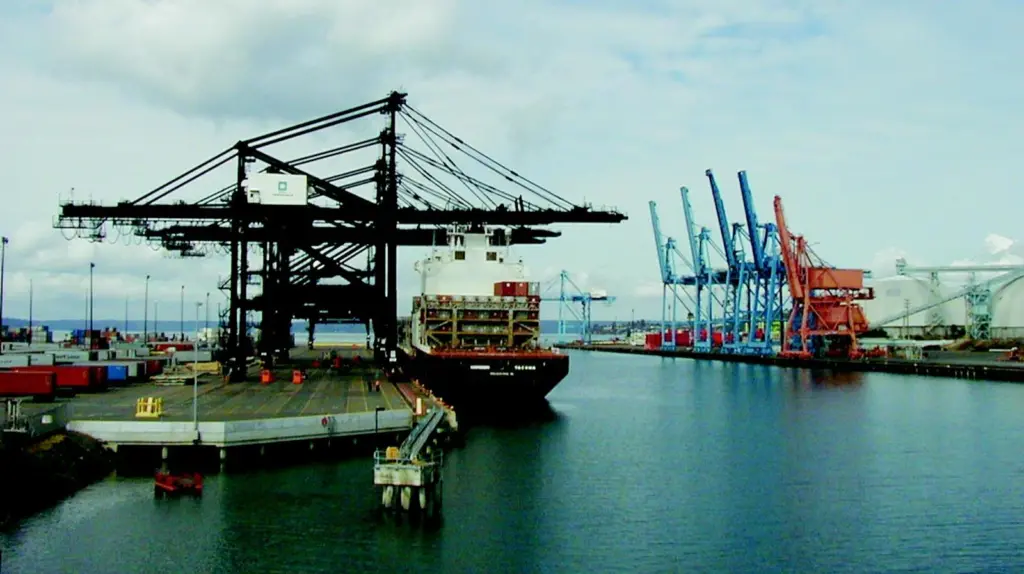
With the introduction of the ISPS Code, a whole new breed of security “experts” was borne. Huge amounts of money have been spent on consultants and equipment. Before 9/11 the subject of maritime security was unlikely to draw the interest of enough people to fund a one-day seminar. Now the conference calendar bulges with seminars, workshops and trade shows, with companies clamouring to offer solutions to port and ship security problems. It is now over a year since the ISPS Code came into effect, more than two and a half years since the Code was finalised and issued. What has been the real impact on the standards of security in the maritime industry? Are ports and ships more secure now than they were two years ago?
The need for maritime security is not new. Maritime and Underwater Security Consultants (MUSC) for example, have been specialists in the business of ship and port security for over 30 years.
In the 70s and 80s clients tended to be governments that had specific concerns about the activities of terrorists or smugglers – in some cases terrorism and smuggling were closely associated; private companies suffering significant theft of cargo; or insurance underwriters who might ultimately have to foot the bill for damage, loss, injury and death. With a few exceptions, the terrorist groups were national rather than international in their outlook and their aims were defined and focused (e. g. independence, increase of political influence, regional control, etc. ) In all cases, we were approached because our clients believed they had a genuine security problem. They perceived that by failing to address their particular situation, they faced the risk of losing economic or political strength. These are issues that concentrated the minds of government ministers and ceos. And our clients would work with us to understand our analysis of the situation, review the options to counter the threats and support a plan of action.
Following the introduction of the ISPS Code there has been a significant change in the profile of that client base. Now, a large proportion of clients are driven to seek our services, not because they consider they are under a specific threat but because of the need to comply with the law. They consider that the risks to their business are not from terrorist attack but from loss of trade through noncompliance with legislation.
This reframing of the paradigm of maritime security has been largely instrumental in the growth of a new type of maritime security industry. The classification societies, maritime safety consultants, marine engineering companies, defence equipment manufacturers and others, identified a market opportunity and began to promote their services to assist port and ship operators to meet the requirements of the new Code.
RIDICULOUS OVER-REACTION?
But for many in the maritime industry, the Code was seen as a ridiculous over-reaction to the 9/11 attacks. Port operators who had few problems with petty crime, where the quayside formed part of the tourist attraction of their towns and cities, where there was no recent history of terrorism and whose governments were not involved with the Afghan or Iraqi conflicts, saw no reason why they should be compelled to implement measures to counter a threat that they never believed existed.
The impetus for implementation of security has been largely driven by the desire to avoid penalisation due to non-compliance with the ISPS Code. Much effort has therefore been spent in examining the wording of the Code so that no more than the bare minimum is done to achieve compliance, finding the lowest cost for security assessments and plans. Many governments have been half-hearted or inactive in providing guidance to ports, in training of government inspectors and in enforcing compliance with the Code. The result has been that a large number of ports have gone no further than preparing weak and poorly constructed security plans. Fences remain inadequate, closed circuit television ineffective and guard forces unproductive.
Much resentment has also been generated in the seafaring community by the actions of some port authorities (notably in the US) where seafarers have been prohibited from leaving their vessel and where ships have been obliged to employ local guards (at the ship operator’s cost).
The ISPS Code came in, not out of concern for the seafarer but because of the realisation that the ship could be used as a weapon or could transport a weapon that could be used as an attack against a state. In other words, the concept of the maritime security risk has been transformed from “the ship is UNDER threat” to “the ship IS the threat”.
We therefore have a situation where:
seafarers are now considered part of the terrorist risk – and are treated that way ports, generally, do not consider themselves under risk from terrorism maritime solutions, inspections and audits have been sold to the industry by organisations with little knowledge in maritime security matters, no experience in counter terrorist operations or crime prevention.
This is of course not the whole picture. Some ports are beginning to realise significant benefits from the improvement to their security. But has the overall impact of all the effort and outlay that has been expended following the introduction of the Code been worthwhile? Is it working?
A quick look at the statistics for attacks on ships published by the IMB will show that after July 2004, when the ISPS Code came into force, there was no reduction in the number of incidents reported. In January 2005 there was a sharp drop due to a complete cessation of attacks in the seas off the Indonesian province of Aceh where a longstanding and violent independence movement has contributed to making those waters some of the most dangerous in the world for violence against ships. The Asian Tsunami at the end of 2004 severely disrupted the activities of the coastal pirates. But by May attacks started to be reported again and as we enter the second half of 2005 the monthly rates have risen to their pre-Tsunami levels.
As for signs of improved security in ports, discussions with insurers who specialise in cargo cover report no significant decrease in claims for theft in port areas.
The conclusion that we may draw from this is that, so far at least, the ISPS Code has not significantly increased global standards of security in the maritime world. If it doesn’t even curb petty cargo theft, what can it do to deter determined and organised terrorists?
Chris Austen is ceo of Maritime & Underwater Security Consultants. A former naval officer, he has worked on a variety of counter-terrorism, antipiracy and crime prevention operations in Europe, Africa, Southeast Asia and Central America. He provided input to the IMO for the development of the ISPS Code and to the World Customs Organisation and UN Economic Council for Europe on supply chain security and trade facilitation.
Related Articles
 CONTAINER & CARGO HANDLING
 EQUIPMENT
 EQUIPMENT