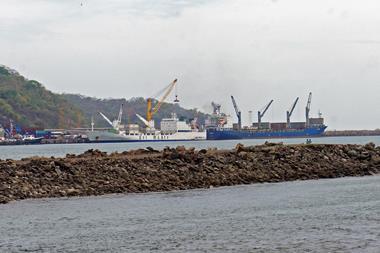


The International Transport Forum’s (ITF) comprehensive ‘Ports Policy Review of Chile’ reveals that large gaps have opened up where regulation has not kept pace with reality.

It urges stakeholders and regulators to find common areas, such as integration with the local community, optimising logistics networks to avoid congestion of cargo in transit, methods to mitigate environmental factors, and the creation of sustainable jobs in the industry in terms of longevity and worker security.
The report examines ways of improving policy to improve the bottom lines; setting up of a joint port and logistics strategy; and producing incentives for piloting. It advises liberalisation of cabotage and modernisation of the governance of ports.
However, the report acknowledges that there are significant challenges if these aims are to be achieved, since they involve co-ordinating public and private sectors, both of which have their own individual requirements.
It also recognises that ports will seek to optimise their operations and to maintain their competitive edge through permanent improvement in infrastructure and services, and that this must be reflected in policy.
In order to come up with the best possible strategy for ports, government will have to meet with all relevant stakeholders, the report suggests.