


ITF: Full decarbonisation by 2035 achievable
New International Transport Forum (ITF) research into decarbonisation for shipping has revealed that almost-complete decarbonisation could be attained by 2035 if currently-available technologies are deployed to their maximum.
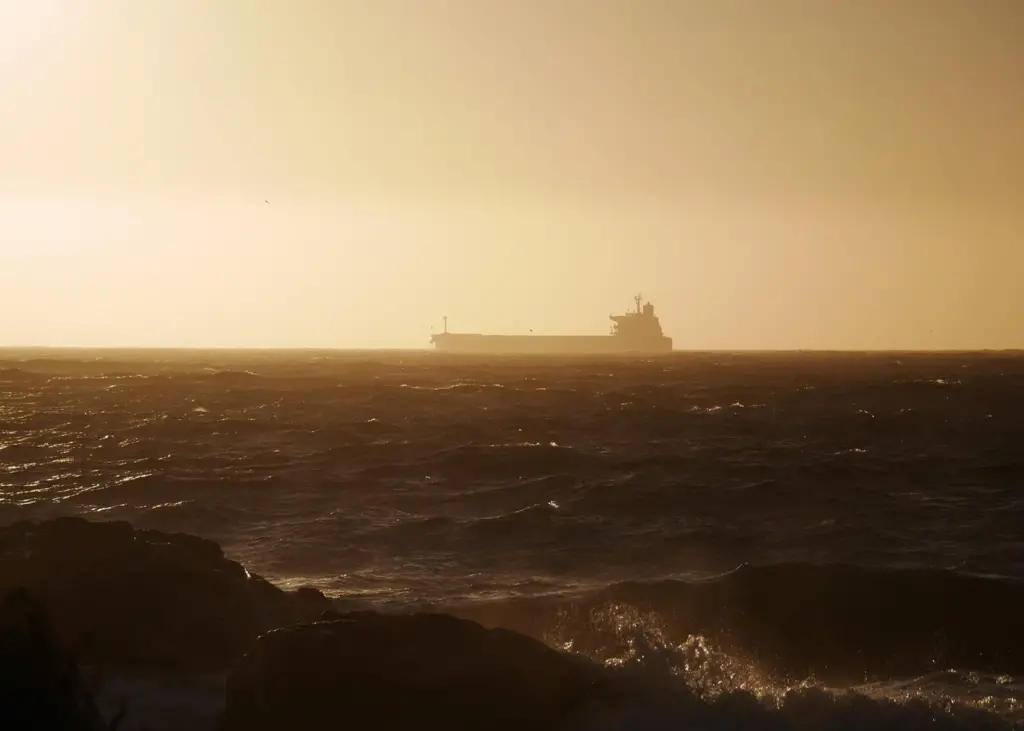
Decarbonization Pathways for International Maritime Transport: A Model-Based Policy Impact Assessment formulated four potential decarbonisation routes for shipping which predict leftover carbon emissions from 44 to 156m tonnes by 2035, with a carbon dioxide (CO2) emission decrease ranging from 82% to 95% of the projected 2035 level.
The paper, authored by Ronald Halim, Lucie Kirstein, Olaf Merk and Luis Martinez, explored the technical possibility of reaching the Paris Agreement’s objective of “[endeavouring] to limit” world temperatures to 1.5°C, as well as the necessary supporting policy measures.
It projected the transport demand for container, dry bulk, wet product and chemical, oil tanker, gas and general cargo ships based on the Organisation for Economic Co-operation and Development’s world trade projection of 25 commodities, then tested the effect of mitigation measures on CO2 emissions until 2035 using a model.
“We present four possible decarbonisation pathways which combine all the technologies available today,” the research’s abstract explains, with the document also exploring the barriers and relevant policy measures to advance international maritime transport’s decarbonisation.
Further findings
Another conclusion made by the article was that a major component of decreases needed could be achieved through alternative fuels and renewable energy.
Technological measures are on offer to boost vessels’ energy efficiency “and could yield a substantial part of emission reductions”, the ITF claimed, as well as saying that operational measures could be responsible for obtaining an important segment of the necessary emission-reductions.
Other conclusions made by the research were that intervention by government can help speed up the technical feasibility and commercial viability of certain measures and that financial incentives are vital to lowering the price gap between conventional and more-sustainable fuel choices.
The Paris Agreement, which was adopted by consensus in December 2015 and had been signed by 195 United Nations Framework Convention on Climate Change members as of June, wants to keep global temperatures “well below” 2°C above pre-industrial times, as well as try to limit these temperatures to the 1.5 figure.
In April, the International Maritime Organisation adopted a strategy which aims to lower total annual greenhouse gas emissions by at least 50% by 2050 in comparison to 2008 — while simultaneously pursuing efforts towards phasing them out completely.
Related Articles
 CONTAINER & CARGO HANDLING
 TERMINAL OPERATIONS
 DIGITAL