



Jakarta port profile
Jakartas key port is taking a leaf out of Rotterdams books on management, as Mike King discovers
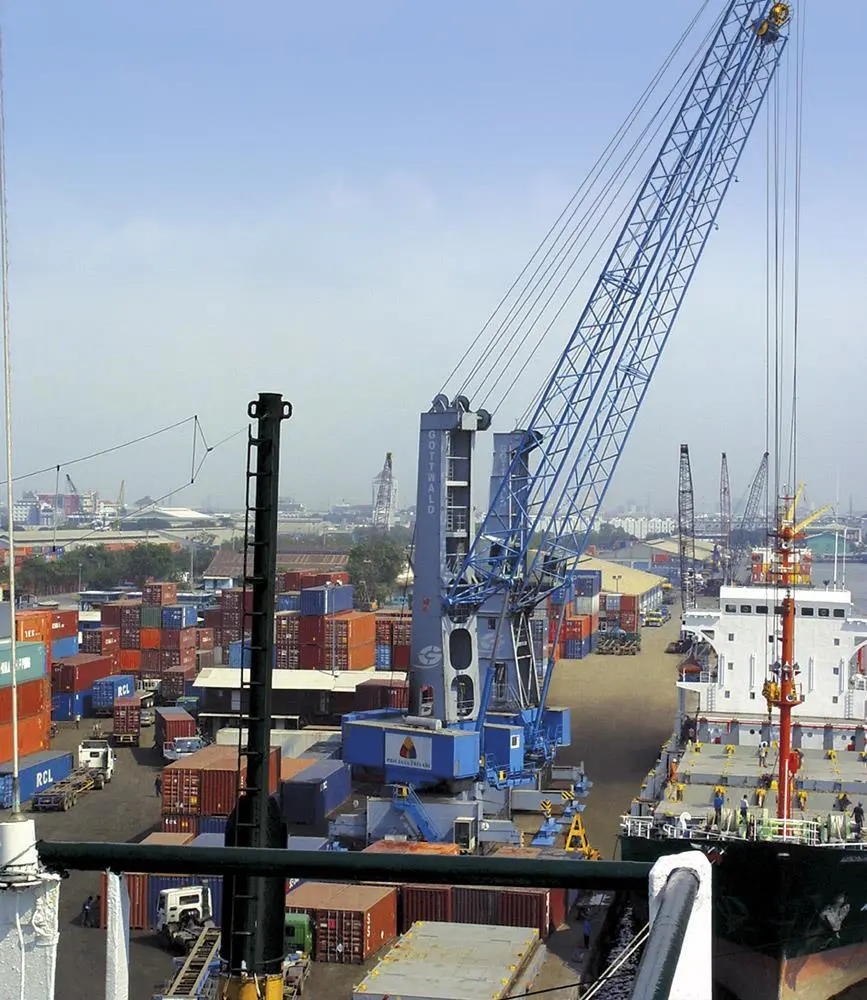
Earlier this year Jusuf Kalla, Indonesia’s Vice President, visited the port of Rotterdam to learn how performance at Jakarta’s Tanjung Priok Port (TPP) might be improved.
He rightly identified ‘flow of goods’ and ‘port management’ as areas of comparative under-performance at TPP. He also made the bold claim that with rapid modernisation the port could rival Singapore as an international hub for South East Asia within five years.
Firm political leadership and reforming zeal are needed before TPP can even consider such a lofty aim.
Indonesia, both South East Asia’s largest economy and its most populous nation, is highly reliant on TPP’s sprawling mass of private and public terminals, storage facilities and vast network of shipping services which together handle two thirds of the country’s imports and exports. PT Pelindo II, the state-owned port authority that runs TPP, would not supply throughput figures, but sources estimated total volumes in 2008 at close to 120m tonnes and more than 4.2m teu .
Average container clearance in Indonesia takes, at 27 days/teu, almost twice as long as at Singapore, while costs are a third higher at some $660/teu, according to The World Bank.
As with any major port, TPP’s efficiencies and its failures directly affect the livelihoods of many millions. But the link between the country’s main international gateway and everyday business is unusually close. Any small trader or restaurateur can reel off the current freight rates, container surcharges, customs fees and documentation applicable at TPP. Unfortunately for Mr Kalla’s ambitions, they also talk about congestion, shipment delays and the “extra fees” demanded by battalions of officials.
This is no surprise. National newspapers in Indonesia routinely refer to the “corruption-ridden Customs and Excise Office at Tanjung Priok Port” or “port mafia” when reporting the latest investigation into graft at TPP.
However, with government support, TPP is now making progress. President Susilo Bambang Yudhoyono’s Democrat party has made tackling corruption and bureaucracy at the port a priority, and with some success. A former chief inspector from the TPP Customs Office is currently being charged with receiving more than $8m in bribes from seven companies in 2007 and 2008. Agus Sjarief Apen was accused of extorting money by making clearance processes more difficult, taking bribes to overlook irregularities and inflating official tariffs and administration fees.
The new National Single Window (NSW), a centralised electronic system for licensed importers and exporters, has helped streamline import and export procedures at TPP since it was trialled last year. On its launch the Finance Minister said NSW would also allow port users to bypass illegal fees paid to port officials.
“NSW is very useful,” says one leading port agent. “There are still problems with the server and some personnel, but it has speeded things up. We do still have to pay some ‘extra’ fees, but there are now a lot less offices to clear.”
A leading ship’s agent explains that congestion or delays at the port are now usually caused by inadequate roads to and from TPP and ships missing their loading windows rather than systemic problems with Customs or port management procedures.
Apart from seeking out those who have turned corruption into an institution, managers at TPP also face the global slowdown in trade. All the port users and agents contacted by Port Strategy reported lower vessel calls and cargo volumes. Exports from Indonesia are forecast to fall 20% this year and this was reflected in TPP’s container traffic which fell by a quarter year-on-year in February.
President Yudhoyono’s administration has now pledged to bankroll subsidies for key export industries such as mining, rubber, cocoa and palm oil to boost trade.
Controversial plans to boost foreign exchange returns by forcing the use of letters of credit (L/C) – issued by a bank to bind a customer to make a specified payment by a set date – for export shipments valued at more than $1m have also been shelved. The new regulations were due to be phased in from early April but exporters complained they could jeopardise long-standing export contracts.
Despite the downturn, Hutchison Port Holdings confirmed it would still push ahead with the investments at Jakarta International Container Terminal.
President Yudhoyono stands for re-election this summer and should he win has pledged further economic reform including the privatisation of the country’s entire port system in a bid to improve services. TPP’s chances of meeting the ‘Singapore’ challenge might be slim, but Indonesia’s premier gateway has more hope of success with government support, than without it.
Related Articles
 NEWS
NEWS
 CONTAINER & CARGO HANDLING
 OPERATIONS