First, we did away with diesel engines on stacking cranes and welcomed electrification. Next, stacking cranes face a strict diet to reduce weight, more aerodynamic designs, and the introduction of solar cells – or so Kalmar would have us believe..
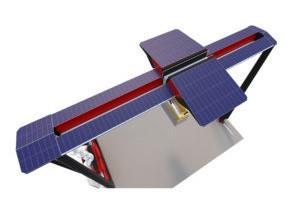
Ismo Matinlauri, business development director at Kalmar, has identified a number of opportunities for ASCs moving forward in a recent blog post published by the company called Future of ASC – A look beyond electrification.
To develop the product further, Mr Matinlauri said Kalmar needs to “think big”: “Let’s look at the whole ASC as such. Weight is obviously a factor that affects many dimensions of the terminal design. Starting from getting savings in civil engineering side, the size of the equipment also has an effect on dimensioning of many of the components.”
By developing dimensions in a “positive way”, Mr Matinlauri added that Kalmar is able to gain savings in manufacturing cost through reduced steel consumption.
Further, energy consumption can be reduced by diminishing the wind effect that comes from the overall design and outlook of the crane, he said. “The rule of thumb is that what looks good usually also works well. New materials and components enable engineers to break free from the traditional ‘square’ thinking for developing an effective solution. To achieve this, we must include industrial designers as part of normal R&D work.”
Mr Matinlauri also identified solar cell technology as an area of future note. “The technology has taken major steps during the past years,” he said. “It has become so cheap and easy to operate that even consumers are buying the idea for their everyday use.
“Here, the number of machines plays an important role. In a terminal, there are tens of ASCs and each of them can be equipped with solar cells integrated into the base design to build a substantial environmentally sound energy source for the whole terminal.”