



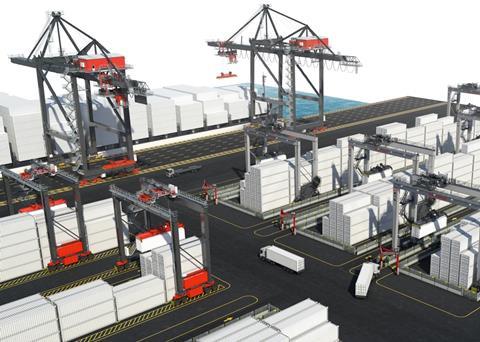
Konecranes introduced its Automated RTG system (ARTG) to the industry at TOC Europe 2013 which it claims is the first of its kind on the market and promises to take automation to the next level, not least in terms of emissions.
“As far as we know, we are the first one in the market to release this type of a system that is commercially ready-to-go”, Tuomas Saastamoinen, Port Cranes, Konecranes, told Green Port.
Konecranes ARTG is naturally hydraulic free and although it’s not necessary the crane specialist suggests that the automated RTGs should be electrically fed. This reduces the local emissions if compared to the standard diesel powered RTGs, Konecranes says by 95%.
And operators will benefit from less energy being consumed due to more controlled automated crane functions.
Less spare parts are needed for this same reason because the spreader does not hit the container - there is less noise too.
Mr Saastamoinen said to GP: "There is a great potential to save local emissions (and truckers’ fuel) by reducing truck idling. This is because the ARTG system demands strict truck traffic control and the slot times for pick up are more accurate."
The system is built around the Konecranes 16-wheel RTG and brings together an intelligent steel structure and Active Load Control system.
It includes a complete package of truck guidance infrastructure, a Remote Operating Station with a specially developed Graphical User Interface (GUI), and an IT system that interfaces with the customer’s Terminal Operating System (TOS).
The system gives customers a starting point using current yard infrastructure as they work towards automated RTG operation.

