Emerging economies can learn from the investment paths of other ports, as Gagan Seksaria explains

When attracting private capital into Africa’s port sector we shouldn’t have to re-invent the wheel.
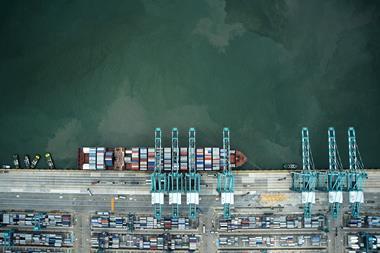
There are a great many 'how-tos' and 'how-not-tos' to learn from other economies a little further down the public-private partnership route. India especially makes for an interesting comparison as the subcontinent has been successful in attracting private investment into its 7,000 km coastline, allowing capacity to treble to over 18m teu and volumes to reach around 11m teu between 2000 and 2012.
In the same period, if you exclude the large-scale transhipment facilities in Egypt, Morocco and Djibouti, Africa’s 26,000 km coastline has only taken capacity up to approximately 17m teu with actual volumes reaching a couple of million teu below this.
It reflects a relatively slow development compared with its potential: what’s missing is large-scale greenfield projects. This in turn is due to the splintered nature of the African coast; Africa has a large number of relatively small economies which in themselves don’t warrant such development. Unfortunately, although getting cargo across borders is a cumbersome and costly affair, the business case for a ‘regional’ project focused on a cluster of countries still isn’t gaining traction.
Therefore development has been largely limited to refurbishment and expansion within existing ports, with capacity only freed up by private operators driving optimisation and technology.
Price tag
This comes with a significant price. A number of these ports, like Lagos, Dar-es-Salaam and Mombasa, are located in the metropolitan hearts of big African cities causing chronic congestion with an impact on port productivity, supply chain efficiency and cost - as well as quality of life for residents.
So, development of nearby green field projects represents a significant opportunity for the African port sector. But will there be takers for such expensive capacity? Will the market make these huge shifts fast enough?
Drawing parallels from India again, Mumbai was India’s premier container facility until 1998 when P&O Ports developed a private-public green field container port in Nhava Sheva which lay just outside the congested city. Since then, volume at Mumbai itself has shrunk from 600,000 teu in 1998 down to its present 50,000 teu, while JNPT has grown to handle more than 4m teu and has expansion plans to more than double this.
Another example is ICTSI’s Katupalli container terminal near Chennai, India’s second largest container port market. Katupalli has only been operational since January 2013 but at time of writing there are indications that it is following the same pattern.
Undoubtedly, this shift is coming to African shores. Lekki in Nigeria is poised to jump into the large and fast growing regional market: Lagos port handled approximately 1.4m teu in 2012 and volumes are rising at 15% per annum. You can see the pattern: Lagos is severely curtailed by the city, and the total capacity potential after all expansion programmes (but before the expensive alternative of off-docking is considered) will probably be limited to around 1.8m teu. On top of this, there are issues with the wider port and road connectivity. So, when deep-draughted Lekki becomes operational in 2016, it will be well positioned to corner a large share of the market almost immediately.
Right model
The other important aspect lies in getting the investment model or transaction structure right. India has faced and continues to face a number of challenges on this front which again hold a number of lessons for Africa’s political and business leadership.
Some of the more germane can be summed up as ‘inconsistency’. Beyond outdated, contradictory legislation and policy, lessons that Africa can learn include avoiding unnecessary, often arbitrary anomalous tariff regulation, and failing to deliver infrastructure commitments in a timely manner. These both slow down overall development and create distrust in foreign investors.
Further, India has allowed concession terms for some projects that are inconsistent with investor interests: while these may have been absorbed in a heated market situation the main lesson is that they are probably unsustainable in the long run. And it’s the long run that Africa needs.
There are significant benefits to be derived from observing other markets – both in successes and shortfalls – for the development of a legal framework, deal structures and transaction processes for private capital. I believe it’s our joint responsibility to make this happen.
Gagan Seksaria is chief financial officer and head of ICTSI’s Africa Region Investments.