



LNG barge granted ABS approval
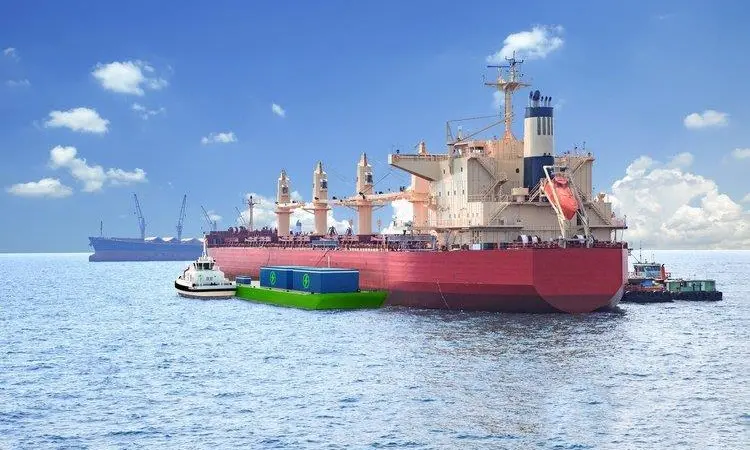
Jensen Maritime has been granted ‘approval in principle’ by ABS for its LNG bunkering articulated tug barge (ATB) – a solution for ports with “significant LNG needs” but not located near an LNG terminal.
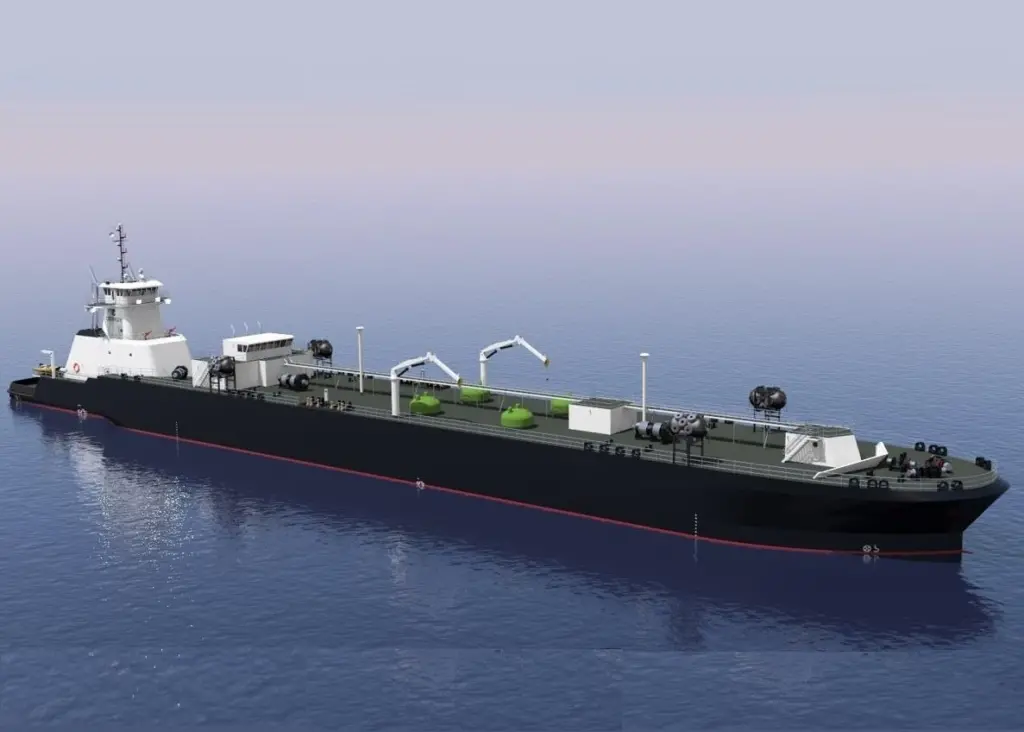
The designation establishes that Jensen’s vessel concept, which is classed as an A1 Liquefied Gas Tank Barge, is compliant in principle with ABS rules and guides.
Ideal for mobile bunkering, Jensen’s ATB is also oceans rated, meaning that it is not limited to the intracoastal waterways, like many other similar types of LNG ATBs. This flexible design feature allows the vessel to facilitate the transfer and use of small-scale LNG in places with limited infrastructure, including offshore locations.
“This vessel is exciting for so many reasons, but perhaps most notably because it offers a solution for the maritime industry, which struggles with whether to develop LNG infrastructure or vessels first,” said Johan Sperling, vice president, Jensen Maritime.
The ATB will feature two GE 6L250 engines (Tier 3), each offering at least 2,035 HP, and two Rolls-Royce 205 Z-drives, with a speed of 12 knots. It will be built with four 1,000m3 Type C LNG tanks (seven bar working pressure) – enough LNG to fill up a large containership twice before having to replenish its own supply – and will carry 30,800 gallons (14,020 litres) of fresh water and 90,100 gallons (409,603 litres) of ballast water.
“This unique concept offers customers an economical alternative to sourcing LNG terminals or trucking LNG to multiple ports. Additionally, the design was developed using Jensen’s proprietary production engineering capabilities, which makes the construction and assembly more efficient,” he added.
Safety features include a double hull, designed to help to protect the ATB’s 4,000-gallon fuel tank, and firefighting capabilities. Classed as a firefighting vessel (FFV-1), the vessel is equipped to handle emergencies on board and can satisfy most requirements to have at least one FFV-classed tug escorting LNG tankers into port. Finally, because there is no linkage between the tug and barge, the two can disconnect quickly in the event of emergency.
Expected time to build the barge is between 18 to 30 months.
Related Articles
 ALTERNATIVE FUELS GREENPORT
 ALTERNATIVE FUELS GREENPORT
 ALTERNATIVE FUELS GREENPORT