


Maersk Container Industry is calling for tougher enforcement of European legislation regarding insulation foam in reefer containers to help cut down on harmful carbon emissions damaging to the environment.
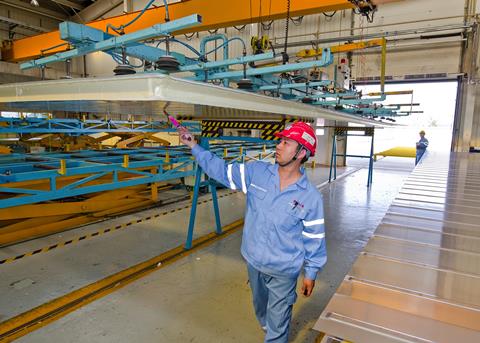
Peter K Nymand, CEO, Maersk Container Industry, said: “We urge the European Commission to ensure enforcement of existing EU legislation regarding insulation foam in reefer containers. This would benefit the environment, and it would help European innovation and environmental investments pay off.”
Current EU legislation bans the “import” or “placing on the market” of reefer containers with significant potential to damage the climate and ozone layer, outlined in EU regulation 1005/2009 (formerly 2037/2000). But Maersk says that despite this, thousands of harmful containers still circulate in Europe’s internal market.
Maersk argues that this is because the EU Commission gives a grace period for containers in circulation if they are not “placed on the market” permanently.
In its opinion, EU regulation 1005/2009 (formerly 2037/2000) has not helped decrease world demand for the type of reefer container insulation foam (HCFC141b) that can damage the ozone layer and the climate. This is because such containers can be made at a lower cost. Investigations, including the EU Commission’s own, have themselves uncovered illegal trade in HCFC gasses.
The EU Commission says that it's up to member states to implement and enforce regulation 1005/2009.
Maersk says that each container lined with its SuPoTec insulation foam prevents almost 27 tonnes of CO2 emissions - it claims that by 1 January 2013, the total SuPoTec production had offset CO2 emissions equal to what 441,000 Danish citizens emit in one year.

