



What role do equipment manufacturers have in making ports emissions-free? Lorène Grandidier, vice chair of the Port Equipment Manufacturers Association (PEMA) Environmental Committee and Strategic Marketing Manager at Schneider Electric, investigates.
The GreenPort Congress is widely recognised as an important forum for debate on air quality in ports, where a variety of technologies have been showcased and dozens of case studies have been discussed in recent years. The ninth edition of the GreenPort Congress, combined with the second Cruise Conference, continued this trend, highlighting how challenges relating to air quality are unresolved and that the issue remains a priority for the ports industry.
In the on-going debate over air quality in ports, there is one aspect where there is universal agreement – air emissions from port operations need to be cut. NGOs, port authorities, terminal operators, manufacturers, ship owners, academia - all recognise the issue. Since the beginning of the GreenPort Congress, there has been a major positive step forward that we can only applaud. Most of the discussion is now focused on available solutions, rather than whether emissions are an issue or not.
With emissions from ships at berth being the biggest source of pollution in port areas, solutions for cutting these emissions are naturally high on the agenda. Delegates this year heard about shore power and about the use of Liquefied Natural Gas (LNG) several times during the three-day conference. We take a look at these two solutions in this article.
LNG vs shore side power
Drawbacks to shore power and LNG were highlighted during the Congress, as if the port industry was looking for a single, perfect solution, that would be cost-free and 100% clean. Unfortunately, such a zero-drawback technology does not exist, but it seems that some ports are still waiting for it and meanwhile prefer to postpone investment in green technologies. And choice is no clearer for ship owners. For example, just a few months ago Brittany Ferries seemed convinced of the merits of LNG, with its order of new LNG vessels, but the company recently cancelled its order.
The air quality workshop at the Congress concluded, however, that a possible combination of technologies, thereby benefiting from the advantages of both shore side power and LNG, is the way to go. The two approaches are complementary in two aspects.
Firstly, in terms of reducing emissions, LNG reduces ship emissions at sea, while shore power enables shippers to completely cut vessel emissions at berth.
Secondly, the developmental timeframes of the two technologies are quite different. Shore power is now an industry standard, and hundreds of ships are already equipped to connect to shore power. Retrofitting ships for shore power is affordable for the shipping industry. In contrast, most LNG experts agree that retrofitting ships for using LNG as a fuel is a prohibitively expensive, thus limiting the further development of this technology. The number of ships able to use LNG in this way is therefore likely to remain limited for the foreseeable future.
When it came to shore connection technology, the Congress's air quality workshop had the opportunity to clarify several points raised during the previous sessions, mainly on the connection time (between 15 and 30 minutes) and on the international standard (ISO/IEC/IEE 80005-1) which has been in place for two years.
Discussions also returned to one question that is often raised about the environmental benefits of shore connection – is shore power really as environmentally friendly as it is described? Critics argue that while shore power reduces emissions in ports, it increases emissions at power stations.
Concern about how electricity is generated is a much broader issue, and applies to all technologies powered by electricity, from consumer goods, to a rapidly growing number of industrial applications. Should industry slow its adoption of electrification and revert to using fuels because the electricity mix is not entirely environmentally friendly? Hardly a sustainable option, surely.
Increasing the use of renewable energy is a key issue, and will impact many industries and technologies, including shore power. However, in some countries, ports can legitimately wonder if it would be a good idea to invest in shore power now, despite the fact that they are currently sourcing their electricity mainly from coal plants. Shore power is likely to generate considerable emission reductions because the average efficiency of power stations is much higher than that of ships' generators used to power vessels in port. In addition, pollution generated by power stations (including noise and vibration) is likely to be produced in less densely populated areas (in contrast to the areas surrounding larger ports) and thus impact on public health should be reduced.
The role of equipment manufacturers
For the second time in recent years, the GreenPort Congress welcomed PEMA to get its perspective on air quality improvement in ports. One of PEMA's primary roles is to provide independent, comprehensive information about available technologies to the port industry.
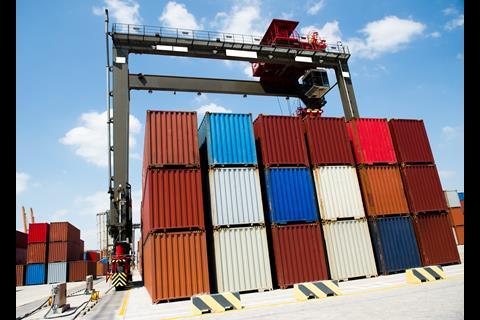
Ships are not the only source of air pollution in ports. PEMA members are also closely involved in proposing solutions to reduce other sources of emissions. In container terminals for example, the electrification of rubber tyred gantry (RTG) cranes and other machines, substantially reduces CO2 emissions, by around 52% compared to diesel RTGs.
This technology also provides a relatively quick return on investment for terminal operators. To provide a deeper overview of the energy saving and emission reduction possibilities available today through the electrification of RTG cranes, the PEMA Environmental Committee released an information paper on the topic in November 2013, PEMA IP06 Electrification of RTG Cranes in Ports and Terminals 333, which is available on the PEMA website at pema.org/publications/.
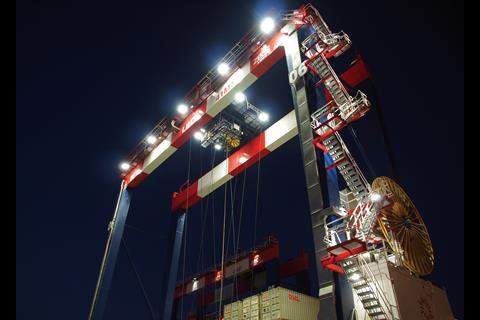
New technologies from the tyre industry and from lighting manufacturers should also be considered when looking for ways to reduce emissions. Although some may feel lighting is peripheral to effective operations, in fact, it has a significant impact on safety and efficiency. Lighting technologies have taken a huge leap forward in recent years, especially with the development of Light Emitting Diode (LED) technology. LEDs produce more light for less energy than conventional lighting. Applications where LEDs are used frequently report energy savings of between 55 and 60%. During the GreenPort Congress, attendees had the opportunity to see a demo-case of LED benefits. And to contribute to the promotion of this green technology, the PEMA Environmental Committee will soon publish a paper dealing with this topic.
The debate on air quality
In conclusion, the ninth GreenPort Congress successfully took the debate on air quality to the next stage. Reducing air pollution in ports is now no longer due to a lack of technology. Indeed, ports have at their disposal a wide variety of products that manufacturers have considerably improved in recent years to help reduce environmental impact.
However, many ports continue to conduct studies and monitoring and assessment programmes, rather than make genuine investments to reduce emissions. Ports and operators still have many questions about performance, costs and benefits of various technologies. PEMA will continue to provide information on available technologies including detailed figures and case studies. But in the absence of a more robust regulatory environment, will it be sufficient to take the step from studying emission reduction to implementing the technologies needed to achieve it?

