




Measuring up
Most ports claim to have an eye on improving performance – but what does that actually mean? Felicity Landon reports
When English potter Josiah Wedgwood, credited with industrialising pottery manufacture, took the decision to move from land transport to canal transport, the result was a massive decrease in breakages as his products made their way to markets at home and overseas.
“That change helped the evolution of Britain’s canals and enabled people like him to ship goods to somewhere like Russia without most of it breaking and is a good example of what can be achieved through change,” says Jane Massy, chief executive of Cambridge-based abdi.
“In the transport and logistics domain today, it may not be so much about breakages – but it is about freshness, efficiency, arrivals on time and things not getting stuck because the documentation hasn’t been properly completed. It is about getting the product from A to B as fast as the customer wants – which is usually immediately – in the best possible condition at the least possible price.”
To achieve all of that requires constant focus on performance and improved performance, but it isn’t just a case of throwing money at training, equipment and facilities, she says. Ports should take a close look at what they are actually achieving from their training investments: Does the training actually deliver results? Was anyone in the lecture room actually paying attention, or was it just an excuse for a day away from normal work? Did anyone measure the real impact of a particular seminar or training session?
abdi, which specialises in impact and performance measurement and value-for-money calculations to help companies assess whether their training and improvement projects are effective, says too many people just assume investment is a good thing, without taking time to analyse the result.
Health and safety is a good example, says Ms Massy. “Certainly there should not ever today be an accident in that sector unless it is something that has come from completely outside the company or individual’s control. I suspect ports spend a large amount of their money on things like health & safety. But do they link it to every cost – the cost of every hour lost and, more importantly, the cost of any injury or death? It is about being safe ports and efficient ports, and no training should be done without linking the two.”
Data everywhere
Thanks to the high degree of information and communication technology now employed within ports and logistics, this is an industry rich in data, she points out. “This is an industry that has been hugely influenced by data over the past few years, and the ability to track cargo movements, etc. I would expect the same data-driven approach around investment in their people – it is essential they apply the same mindset to any human capital investment. If you are spending money on your people, is it for productivity purposes, or for health and safety? What was the influence of training to make improvements? There should be charts on the walls and a system to keep track of what it actually achieves.”
Building up and retaining high quality has to be about absolute focus on every aspect, says Ms Massy. “That includes adding another 0.005% to the efficiency of every truckload that comes in. It means not only measuring how many tonnes pass through and what are the productivity levels, but also measuring what does it cost to do that, are you still retaining the best talent, what are the ratios around ‘reordering’, and also analysing complaints handling. You have to keep looking for every single tiny percentage to improve productivity.”
As the ports sector becomes increasing high-tech and automated, so the type of people being employed will need to be of a higher quality and more qualified, and holding on to those people is vital, she points out. Demonstrating a positive and dynamic approach to improvement is important for retaining the best talent – rather than constantly having to go out and replace people because the port is no longer seen as a particularly attractive place to work.
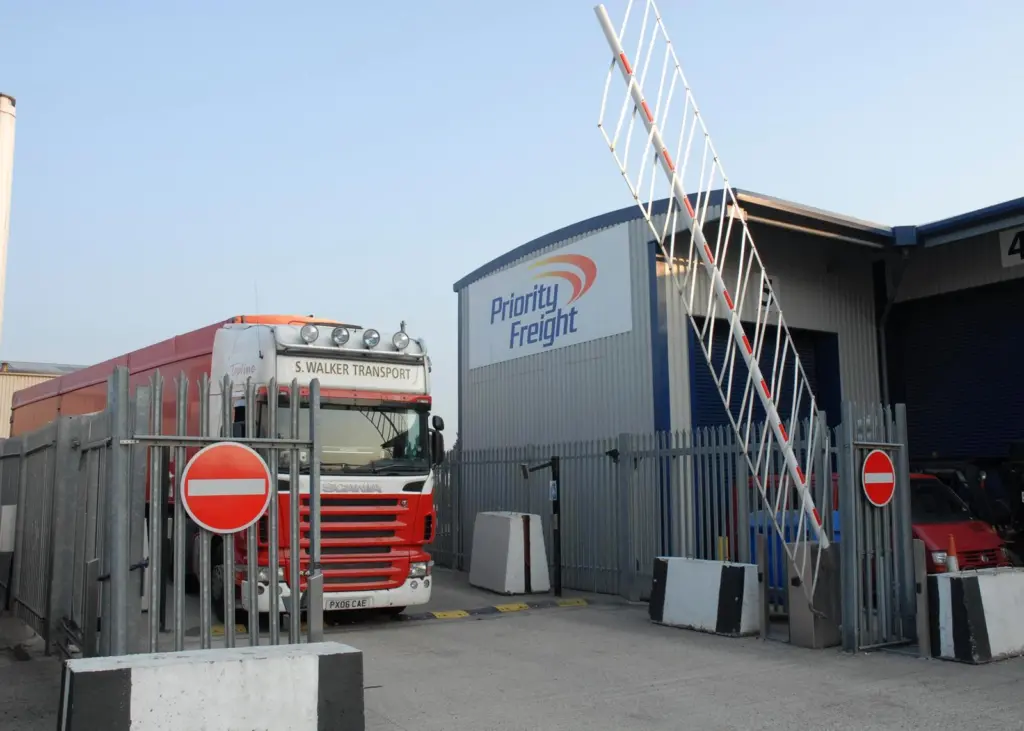
Andrew Austin, chief executive of Priority Freight, says that while logistics is, at its heart, just the movement of goods, there is a great deal more that ports could, and should, be focusing on.
“We need to drive forward beyond the basics and more into the heart of making this business more scientific,” he says. “We need to lift the reputation of the sector so we can generate thought processes rather than being stuck in the mud about transport operations – because there is so much more to it.”
Broken up
Ports often present a ‘fragmented picture rather than a cohesive approach’, says Mr Austin. “One of the biggest frustrations is that all the elements within a port – operators, customs clearance, inspections, ticket issuers, are all so fragmented. There just doesn’t seem to be an illusion of joined-up thinking.”
He says for a company like his, the priorities are speed, reliability, frequency – and then value. If individual operators within a port are ‘trying to bite each others’ heads off’, this triggers the low-cost option, he says: “And that usually results in a lack of long-term investment and long-term thinking.”
In the UK, ports should be drawing on the full benefit of their positions as significant gateways to Europe, says Mr Austin: “But in many cases you don’t think of anything except that you are happy to go in and out of them as quickly as possible without too many problems.
“I do actually think we pay scant regard to the aesthetics – I’m talking about rusty or poor signage, crumbling infrastructure. It can’t be ‘good enough’ anymore – it needs to be good.”
Related Articles
 BULK HANDLING
 BULK HANDLING
 BULK HANDLING