


NAUTICAL TERMS & COVID-19
COMMENT: One of the positive outcomes of COVID-19 is the entertainment we can derive from new terminology that has arisen during these five months. The lexicographer Susie Dent collectively termed these the ‘coronalexicon’, writes Charles Haine.
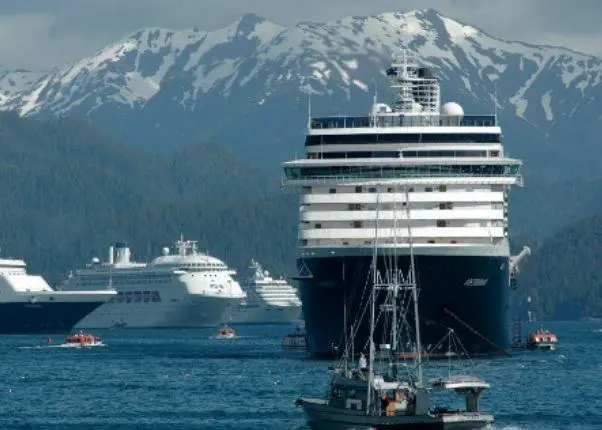
Alongside ‘quarantinis’ (cocktails made from spirits found at the back of your cabinets), while WFH, we’ve all seen ‘covidiots’ outside their ‘bubbles’. The now familiar term ‘quarantine’ has its origins in 14th century maritime trade. The significant rise in cargo exchanges between Europe and the East caused a spike in on board infectious diseases.
At peak Black Death (1348), the Port of Venice imposed isolation protocols for crews upon arrival. A hub was established on an island in the Lagoon. The minimum period of 40 days was known as ‘quarantena’ from the Italian for forty – quaranta.
Of course, nautical and seafaring terms have long enriched our languages. Some businesses are to be found in ‘deep water’ (out of one’s comfort zone), with some homeworkers left ‘all at sea’ (state of confusion) or ‘down in the doldrums’ (stuck in a rut/ when sailors had no wind).
Another good example of a familiar and well-known phrase is definitely to be left ‘high and dry’ (abandoned in a tricky situation). It is clear that social distancing, namely giving people a ‘wide berth’ is both a wise – and required – move in force throughout the world.
This is a description that stems from berthed vessels moving with the tide, as restricted by their anchor ropes and it is also relevant too, as it is for COVID-19. It is always sensible to give other craft plenty of room to avoid accidents.
During coronavirus, my team has been ‘all hands-on deck’, to ‘stem the tide’ (prevent a situation from becoming worse). Through ‘thick and thin’ (the method of using both thin and thick pulleys and ropes to hoist sails) we’ve been keeping an eagle eye out for ‘loose cannons’ (spontaneous danger/mayhem on deck when a cannon broke free) and with a collective mantra to not ‘rock the boat’.
Certainly, COVID-19 has been a ‘shot across the bows’ (warning shot). It has not been ‘plain sailing’ in ‘running a tight ship’. We’ve had to ‘batten down the hatches’ (securing a vessel’s hatchways in inclement weather).
Getting back ‘on the right tack’ involves ‘turning the corner’ (first used by sailors passing the Cape of Good Hope in Africa and Cape Horn at the tip of South America) and this is certainly relevant at the moment.
We cannot ‘turn a blind eye’ (wilful refusal to acknowledge a reality – à la Horatio Nelson at the Battle of Copenhagen) to the economic and climate challenges that lie ahead.
We need to ‘clear the decks’ (be prepared for battle) and show our ‘true colours’ (some ships would hoist false flags instead of their national flag prior to battle). We won’t want to have to ‘man the lifeboats’ (make a quick escape).
Well, for now: ‘Bottoms up!’ (when English sailors checked for the Royal Navy con-trick of putting a coin in a beer – the unsuspected holding of the coin was deemed to be accepted payment for immediate enrolment into the Navy).
I’m going to have to ‘scrape the barrel’ (searching for food scraps) for a rum-based quarantini nightcap
Related Articles
 INSIGHT & OPINION
 THE ENVIRONMENTALIST
 THE ENVIRONMENTALIST